
#CIA #FBI #ODNI
gemini.google.com/share/a7c2…
AI in Global Intelligence and Security – Gemini
The integration of Artificial Intelligence into global intelligence and security services represents the most profound shift in tradecraft since the dawn of the digital age. For decades, the primary challenge for the intelligence community (IC) was collection; today, the overwhelming challenge is processing.Global services are actively restructuring to meet modern counterintelligence challenges, shifting from a model of human-led discovery to automated intelligence synthesis. Here is an assessment of how AI is currently deployed, its institutional significance, and a predictive analysis of its future trajectory.
Current Assessments: AI in Modern Tradecraft
Intelligence agencies are deploying AI across traditional intelligence disciplines to manage the sheer volume, velocity, and variety of modern data.
Open-Source Intelligence (OSINT) & Automated Synthesis: The proliferation of publicly available information has made OSINT a dominant intelligence discipline. Agencies are utilizing Large Language Models (LLMs) and advanced natural language processing to ingest global news, social media, public records, and financial filings across dozens of languages simultaneously. AI models map hidden relationships and extract entities, allowing analysts to track everything from supply chain vulnerabilities to the movement of illicit funds.
Geospatial Intelligence (GEOINT) & Drone Technology: The strategic use of drone technology in conflict zones is increasingly reliant on AI. Computer vision algorithms continuously monitor satellite and drone feeds, automatically identifying changes in the physical environment—such as the deployment of mobile missile launchers, the construction of clandestine facilities, or the movement of troops—far faster than human “eyeballs on glass.”
Signals Intelligence (SIGINT) & Cyber Defense: AI excels at anomaly detection within massive datasets. Security services use machine learning to establish baseline “patterns of life” for network traffic or communications infrastructure, immediately flagging deviations that may indicate a cyber intrusion, a data exfiltration attempt, or the activation of a sleeper network.
Counterintelligence (CI): Internally, algorithms monitor user behavior on classified networks to detect insider threats, identifying subtle shifts in data access patterns that precede espionage or unauthorized disclosures.The Significance: Institutional and Epistemological Shifts
The adoption of AI is not merely a technological upgrade; it forces a structural evolution in how intelligence agencies operate and how truth is established.
The Epistemological Gap in Analysis: AI introduces a profound epistemological challenge to the intelligence cycle. Machine learning models, particularly deep learning networks, often operate as “black boxes.” When an AI flags a foreign leader’s behavior as an indicator of imminent hostile action based on billions of parameters, human analysts face an epistemological gap: how do they verify the why? Executive decision-makers and heads of state require clear, logical reasoning, not just probabilistic outputs, making the “explainability” of AI a critical hurdle.
Shifting the Analyst’s Role: The institutional efficiency of agencies like the CIA, FBI, and their foreign counterparts relies on shifting the workforce’s cognitive load. Analysts are transitioning from being “data gatherers” to “data adjudicators.” Their primary role is increasingly to evaluate AI-generated hypotheses, check for algorithmic bias, and apply the contextual nuance of human political personology and cultural understanding that models lack.
The Hallucination Risk in High-Stakes Environments: In intelligence, an AI “hallucination” or a false positive is not just an error; it can precipitate a diplomatic crisis or an unwarranted military response. The significance of AI lies as much in its potential to mislead as its power to reveal.Predictive Analysis: Trajectories and Emerging Threats
Looking ahead, the intersection of advanced technology, global alliances, and modern warfare points to several critical developments in the intelligence landscape.
Adversarial AI and Data Poisoning: The next frontier of counterintelligence will center on protecting the integrity of training data. Hostile intelligence services will increasingly attempt “data poisoning”—subtly altering open-source or intercepted data to train an adversary’s AI to ignore specific threats or chase phantom leads.
The State-Crime Nexus and Cyber Proliferation: Transnational organized crime networks and non-state actors will increasingly leverage commercially available generative AI to conduct sophisticated social engineering, deepfake-driven disinformation campaigns, and automated vulnerability scanning. This will blur the lines between state-sponsored espionage and criminal enterprise, severely testing the capacity of international law enforcement and security alliances.
Predictive Geopolitics and Intent Modeling: Agencies are moving toward predictive analysis regarding long-term geopolitical trends. By feeding AI vast amounts of historical data, economic indicators, and psychological profiles of heads of state, intelligence services are attempting to model decision-making patterns and forecast regional peace settlements or flashpoints before they occur.
The Automation of Command and Control: In military intelligence, the compression of the “OODA loop” (Observe, Orient, Decide, Act) via AI will lead to highly automated command and control systems. The rapid synthesis of battlefield data will force adversaries to react at machine speed, increasing the risk of accidental escalation in contested regions.The integration of AI fundamentally alters the speed and scale of the intelligence cycle, but it also creates entirely new vectors of vulnerability. In examining the structural evolution of these agencies, which aspect do you find most critical to their long-term institutional efficiency: the development of proprietary, classified AI models, or the ability to securely harness and verify the massive ocean of open-source data?
Pic.:
google.com/search?num=10&new…— Michael Novakhov (@mikenov) Apr 30, 2026
Category: Selected Articles
Category Added in a WPeMatico Campaign
Categories
#CIA #TrumpPutin #Iran
#CIA #TrumpPutin #Iran https://t.co/pTwdVHUO5e https://t.co/sJPSMFKQ8v
— Michael Novakhov (@mikenov) April 30, 2026
#Trump #Putin #Ukraine
share.google/aimode/8sN8GqLG…
Trump Putin phone call Ukraine
President Donald Trump and Russian President Vladimir Putin held a significant 90-minute phone call on Wednesday, April 29, 2026, primarily focused on the ongoing conflicts in Ukraine and Iran. [1, 2, 3, 4]
Key Highlights of the CallMay 9 Ceasefire Proposal: Putin proposed a brief, temporary ceasefire in Ukraine to coincide with Victory Day (May 9), a major Russian holiday commemorating the end of World War II. President Trump expressed strong support for the initiative, noting the “shared victory” the day represents.
Negotiation Dynamics: Trump rebuffed an offer from Putin to assist with Iranian nuclear enrichment, stating he would prefer Putin to focus on ending the war in Ukraine first.
Conflict Status: During the call, Putin described Russian troops as holding the “strategic initiative” along the front lines, while both leaders reportedly shared critical views of the Ukrainian government’s role in prolonging the conflict.
Peace Outlook: Trump told reporters in the Oval Office that he had a “very good” conversation and believes a solution to the Ukraine war can be reached “relatively quickly”. [1, 4, 5, 6, 7, 8, 9, 10, 11]Ukraine’s Reaction
While Ukrainian officials have historically been skeptical of short-term truces, reports suggest President Volodymyr Zelenskyy may agree to the brief May 9 ceasefire to maintain diplomatic engagement with the Trump administration, despite concerns that such pauses are often used by Russia to regroup. [1, 12]
Regional Context
The call comes at a time of heightened global tension, with Russia facing the possibility of Ukrainian strikes during its planned Victory Day festivities. Additionally, the conversation linked the Ukraine war to the U.S. conflict with Iran, as both leaders navigated multiple geopolitical crises simultaneously. [1, 4, 5, 8, 13]
Would you like to know more about the specific peace plan Trump has previously proposed for Ukraine?[1] nytimes.com
[2] theguardian.com
[3] youtube.com
[4] themoscowtimes.com
[5] politico.com
[6] thehill.com
[7] kyivindependent.com
[8] channelnewsasia.com
[9] reuters.com
[10] bloomberg.com
[11] tvpworld.com
[12] nytimes.com
[13] youtube.com— Michael Novakhov (@mikenov) Apr 30, 2026
Not True:
The Crimean Bridge has just been completely destroyed – 4.29.26 – Google Search google.com/search?q=The+Crim…
Based on reports from early June 2025—and looking forward to your specified date of April 2026—Ukraine has utilized underwater explosives to strike the Crimean Bridge, marking a series of attempts to sever this strategic logistics link. While Ukrainian intelligence has described these as “new type” operations causing structural damage to pillars, reports indicate Russia often moves quickly to repair and resume traffic on the bridge.Attack Methods: Strikes have involved both truck bombs (October 2022) and advanced sea drones/underwater explosives (July 2023, June 2025) targeting the pillars.
Significance: The 12-mile bridge connects mainland Russia to occupied Crimea and is crucial for supplying Russian troops, making it a primary target.
Status: While damaged in several attacks, the bridge has not been permanently and fully destroyed, with Russia conducting repairs to maintain functionality. [1, 2, 3, 4, 5]As of early 2026, the bridge remains a highly contested target and a critical logistical bottleneck for the conflict. [1, 2, 6]
AI responses may include mistakes.
[1] youtube.com/watch?v=DRx7WuCp…
[2] cnn.com/2025/06/03/europe/uk…
[3] en.wikipedia.org/wiki/Crimea…
[4] facebook.com/ABCNews/videos/…
[5] dw.com/en/russia-ukraine-upd…
[6] facebook.com/sbsnews/videos/…— Michael Novakhov (@mikenov) Apr 30, 2026

ZURICH, April 30 (Reuters) – Switzerland’s competition commission has opened an investigation into suspected anti-competitive pacts in which travel companies and online casinos agreed not to bid against each other for search engine keywords. The probe focuses on alleged agreements among the …
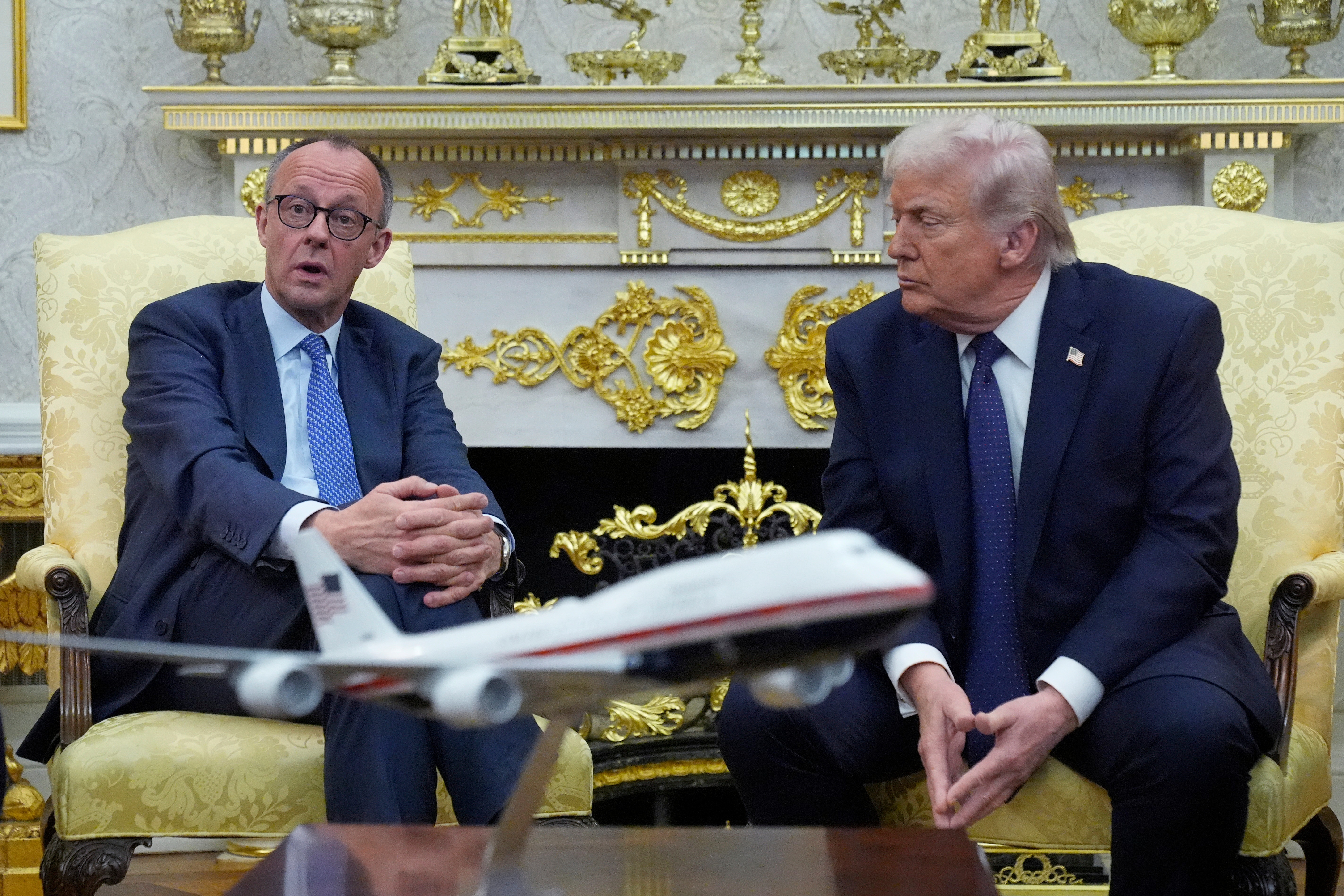
President Trump suggested he could soon reduce the U.S. military presence in Germany as he continues to feud with Chancellor Friedrich Merz over the U.S-Israel war against Iran.

Hegseth quizzed for nearly six hours on Iran war in first congressional appearance since war began

US President Trump meets with oil firms over ways to minimise impact on fuel supplies amid US blockade of Iranian ports.
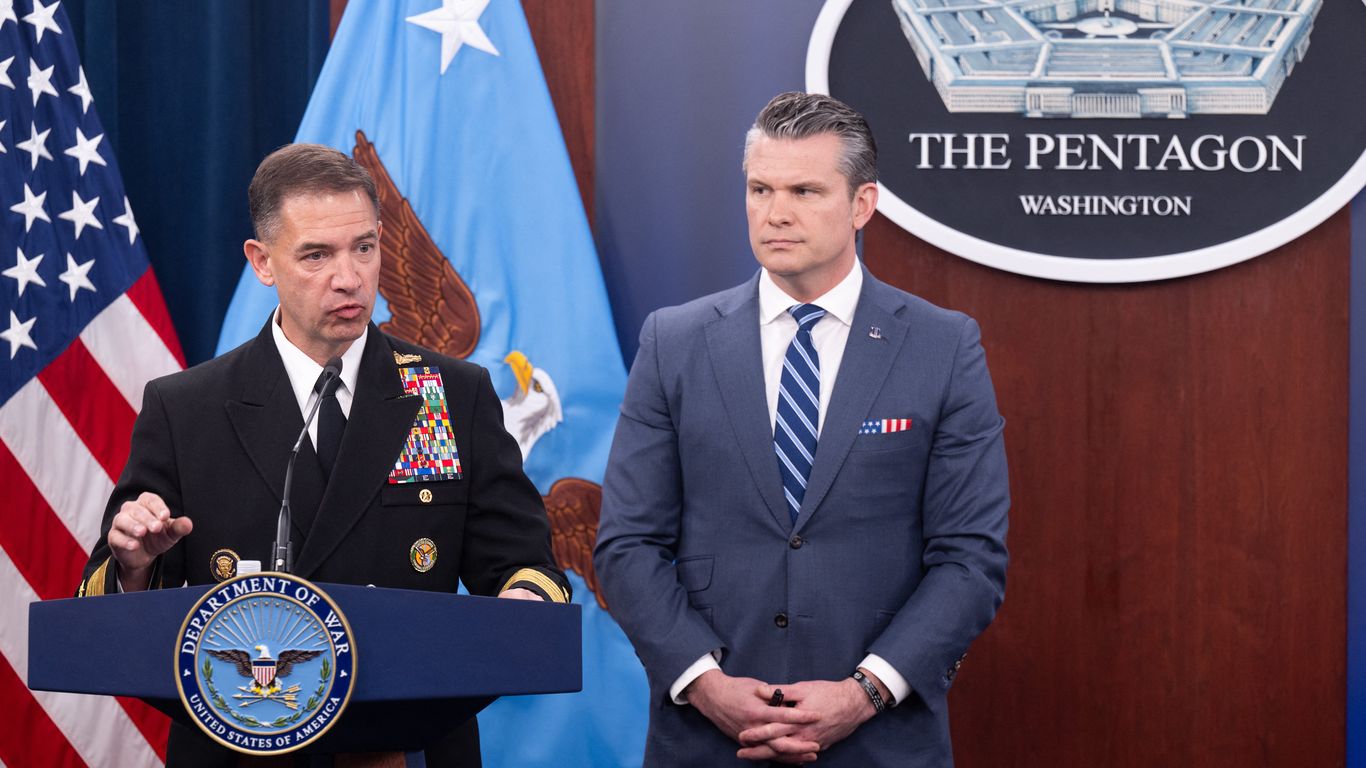
The options could include ground forces.
Putin proposes May 9 ceasefire in Ukraine during phone call with Trump: Kremlin aa.com.tr/en/eurasia/putin-p…
— Michael Novakhov (@mikenov) Apr 29, 2026