
Categories
Selected Articles

I was laid off by Meta as a ‘low-performer.’ I feel it’s part of the reason I still can’t find a job, 9 months later.

Brittney Ball headshot
Brittney Ball says she thought she would stay at Meta until she retired.

  • Brittney Ball is struggling to find work after getting laid off from Meta as a ‘low-performer.’
  • Ball says she’s been leaning on her parents, partner, and LinkedIn network for support.
  • She recently launched her tech startup, TechniDox, and enrolled in college at Trinity University.

This as-told-to essay is based on a conversation with Brittney Ball, a 36-year-old former Meta employee in Washington, D.C. It’s been edited for length and clarity.

When I got hired at Meta in 2020, it was life-changing for me as a single mom. It represented safety and stability — a place to work hard at and retire from.

So, when I was let go in February in a round of layoffs aimed at “low-performers,” it felt like a punch in the gut.

Nine months later, my severance and savings have run dry, I’m struggling to find a tech job, and I feel that the low-performer “label” is part of the reason. I’m no longer the same happy-go-lucky person I used to be, applying for jobs with excitement.

But my layoff is not just this bad thing that happened. It actually changed me for the better.

I was devastated to be laid off as part of an effort to remove ‘low performers’

I was once a single mom in a homeless shelter. I taught myself how to code and broke into tech without a college degree. Getting hired as a documentation engineer at Meta meant everything, not only to me, but to my family. I made my parents proud. I was the success story.

I really loved my time at Meta and took a lot of pride in my work and the community I built. I served as the global lead for the Black@Pride ERG and assisted with its developer advocacy team for a brief period. I truly believed I’d stay forever.

We knew layoffs were coming, but we didn’t know who would be affected. Maybe my head was in the clouds, but I really didn’t think I would be.

I was shocked to be laid off, especially since it was part of a round of layoffs targeting low performers. I was always so proud of my work, and I just didn’t think I fell in that category. It was devastating, and I had no idea what to do next.

My mindset about tech has changed

I used to be naive and filled with excitement to work for a tech company, but since the layoff, I just see it as a resource to fund my life. It no longer feels like the secure space it once was.

I took about a month after the layoff to process everything and figure out what it meant for me. That’s when I conceived the idea to create my own tech startup, TechniDox, an AI-powered documentation platform.

It really began as a way to distract myself and a space to pour my passion into, but it’s gained some traction, and I’m continuing to build it in hopes that it will grow into something bigger.

I’ve been applying to jobs, mostly at smaller tech companies, but I haven’t gotten any offers yet. I have the skills and passion, so I’m unsure what the problem is. The low-performer “label” could be the reason I’m still unemployed.

I’ve found support through family, friends, and my LinkedIn network

I know the layoff is not my fault, but it’s been devastating not to be able to turn it around in a way that helps me provide for my family as a mom.

Unemployment services have not kicked in, so I’ve been in a gray area where my parents and partner have been helping me pay bills and for groceries. I’ve always been the independent type who doesn’t ask for help, so it was initially uncomfortable, but I’ve learned that I can’t always do it alone.

My best friend has dropped everything to be with me when I needed it, and my partner supports me by reminding me to get some sunlight and stay active. I have a team of people who want to see me succeed and are helping me to achieve it, and I’m so grateful for them.

My LinkedIn network has also been super supportive. I’ve been posting about my layoff, and people have reached out to offer résumé reviews, send me referrals, or simply tag me in a post with kind words. I had no idea that I had such supportive people watching me on my journey. That has been truly heartwarming.

My layoff has pushed me to try new things

I was so focused on Meta while working there that I didn’t upskill as much as I should have. I’m focusing on learning new things and putting myself out there.

I’m reviving an old YouTube channel and posting about my company on LinkedIn as I build it. I never attended college, so I recently enrolled at Trinity University and am working toward a dual degree in journalism and computer science. During this challenging time, I’ve been finding joy in learning about things that excite me.

Even though I haven’t landed a job, I remind myself that this is also happening to so many other people. The job market is hard, but I’m not giving up.
Read the original article on Business Insider
Categories
Selected Articles

Resilient in face of Trump tariffs, world economy is forecast to grow 3.2% this year, OECD says

Resilient in face of Trump tariffs, world economy is forecast to grow 3.2% this year, OECD says [deltaMinutes] mins ago Now
Categories
Selected Articles

White House distances Hegseth from second strike on alleged drug boat

Defence secretary gave order for strikes but did not say to ‘kill everybody’, according to White House spokesperson

Good morning, and welcome to our live coverage of US politics. A top US Navy commander ordered a second round of strikes on an alleged Venezuelan drug boat on 2 September, not defense secretary Pete Hegseth, the White House has said.

The Washington Post had reported that a second strike was ordered to take out two survivors from the initial strike and to comply with an order by Hegseth that everyone be killed.

Secretary Hegseth authorized Admiral Bradley to conduct these kinetic strikes. Admiral Bradley worked well within his authority and the law directing the engagement to ensure the boat was destroyed and the threat to the United States of America was eliminated.

Continue reading…

Categories
Selected Articles

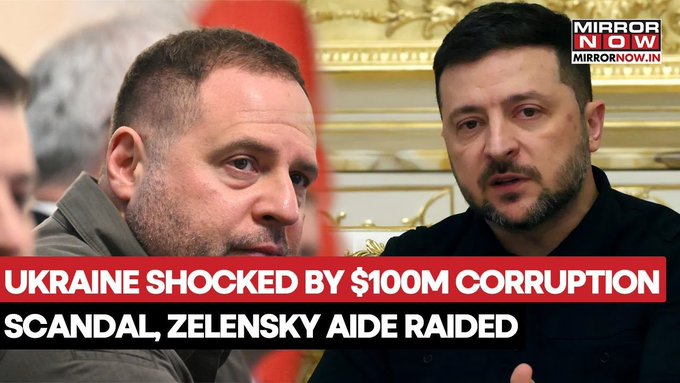
Conversations: Ukraine corruption scandal and peace negotiations


Ukraine corruption scandal –

Conversations 

 is currently experiencing a major, ongoing corruption scandal centered on a multi-million dollar embezzlement scheme in the state energy sector, which has led to high-level resignations and a political crisis. 

Key Details of the Scandal (“Operation Midas”)
  • The Alleged Scheme: Ukraine’s anti-corruption agencies (NABU and SAP) uncovered an alleged criminal organization that manipulated contracts at the state-owned nuclear power company, Energoatom, to receive kickbacks of 10-15% of contract values. The total amount siphoned off is estimated to be around $100 million.
  • Wartime Context: The scandal is particularly inflammatory as the embezzled funds were allegedly linked to contracts for building protective structures for energy facilities while Russian attacks cause severe blackouts for citizens.
  • Key Individuals Implicated:
    • Timur Mindich: A businessman and former business partner of President Zelensky from his Kvartal 95 production company, identified by investigators as the alleged ringleader (call sign “Carlson”). He fled Ukraine before a search of his home. A court has since ordered his detention in absentia.
    • Andriy Yermak: Zelensky’s influential chief of staff, who resigned on November 28, 2025, after his apartment was raided by anti-corruption agents. While not formally charged, critics accused him of trying to curtail the independence of anti-corruption bodies to protect insiders and of having a potential conflict of interest during peace negotiations.
    • Oleksiy Chernyshov: Former Deputy Prime Minister of Ukraine, accused of illicit enrichment, who allegedly received over $1.3 million in cash through the network.
    • German Galushchenko and Svitlana Hrynchuk: The Justice and Energy Ministers, respectively, who were dismissed by parliament after appearing in NABU audio recordings discussing the scheme. 
Political Fallout
  • Government Crisis: The scandal has created the most significant political crisis of Zelensky’s presidency, leading to high-profile resignations and calls from the opposition for a no-confidence vote in the cabinet.
  • Public Outrage and Protests: The revelations, including reports of a “golden toilet bowl” found in a property linked to Mindich, have caused widespread anger among Ukrainians facing wartime hardships. Mass protests in the summer of 2025 forced the government to reverse a controversial attempt to limit the powers of the anti-corruption agencies.
  • International Concerns: The scandal has raised concerns among Western allies providing billions in aid to Ukraine, making the fight against corruption a key test for continued international support and EU accession efforts. 
Zelensky has publicly supported the investigations and vowed to “overhaul” the state-owned energy companies, emphasizing the need for transparency and the inevitability of punishment. 

Ukraine corruption scandal and peace negotiations 2025
In November and December 2025, a major 

corruption scandal in Ukraine’s energy sector led to the resignation of top officials, including President Zelenskyy’s chief of staff and lead peace negotiator, Andriy Yermak. This scandal has significantly weakened Ukraine’s political position and complicated ongoing, US-led peace negotiations with Russia. 

The Corruption Scandal (November 2025)
The National Anti-Corruption Bureau of Ukraine (NABU) and the Specialized Anti-Corruption Prosecutor’s Office (SAPO) uncovered an alleged scheme to embezzle and launder at least $100 million from the state-owned nuclear power operator, Energoatom. 
Key details of the scandal:
  • Allegations Insiders allegedly demanded kickbacks of up to 15% on contracts, including for critical infrastructure like shelters for power plants.
  • Key Figures The primary suspect identified is Tymur Mindich, a former business partner of President Zelenskyy, who has since fled the country.
  • Resignations In light of the allegations, Andriy Yermak resigned as Zelenskyy’s chief of staff and chief negotiator on November 28, 2025, after anti-corruption agents searched his home. Two government ministers had also left their posts earlier in the month.
  • Public and International Reaction The scandal has caused outrage in Ukraine, where citizens are enduring daily power blackouts due to Russian attacks, making the embezzlement of energy funds appear as “looting”. Western allies, including the EU and US, are closely monitoring the investigations, as fighting corruption is a key condition for continued aid and potential EU accession. 
Impact on Peace Negotiations
The timing of the scandal has directly affected ongoing diplomatic efforts to end the war, led by US envoy Steve Witkoff and Ukrainian negotiators. 
  • Weakened Position The scandal is seen as weakening Ukraine’s negotiating leverage. Russia’s President Vladimir Putin has used the allegations to paint the Ukrainian government as corrupt and unreliable, questioning President Zelenskyy’s legitimacy as leader because wartime elections were not held.
  • Negotiator Changes Yermak was a central figure in the peace talks. His resignation and replacement by Rustem Umerov has led to concerns, as Umerov is also reportedly implicated in the same investigation.
  • Peace Plan Concerns U.S. officials held talks with the new Ukrainian delegation in Florida, and Witkoff plans to meet with Putin in Moscow to discuss a peace plan that some sources suggest might be more favorable to Russia’s terms, potentially involving land concessions and military limitations for Ukraine.
  • Domestic Pressure The scandal puts immense political pressure on Zelenskyy, who must balance the demands of his Western allies for accountability with maintaining national unity and a strong front against Russia. 

Categories
Selected Articles

Ukraine corruption scandal and peace negotiations 2025 #corruption #scandal in #Ukraine’s energy sector led to the resignation of top officials, including President Zelenskyy’s chief of staff and lead peace negotiator, Andriy Yermak. This scandal has significantly weakened Ukraine’s political position and complicated ongoing, US-led peace negotiations with Russia. In November and December 2025, a major The Corruption Scandal (November 2025) The National Anti-Corruption Bureau of Ukraine (NABU) and the Specialized Anti-Corruption Prosecutor’s Office (SAPO) uncovered an alleged scheme to embezzle and launder at least $100 million from the state-owned nuclear power operator, Energoatom. Key det

Categories
Selected Articles

Bulgaria’s government withdraws controversial budget after major protests

Bulgaria’s government withdraws controversial budget after major protests [deltaMinutes] mins ago Now
Categories
Selected Articles

Tip of an iceberg: Hong Kong’s deadly blaze raises anger over corruption and safety lapses

Tip of an iceberg: Hong Kong’s deadly blaze raises anger over corruption and safety lapses [deltaMinutes] mins ago Now
Categories
Selected Articles

A software engineer who landed roles at Amazon, Microsoft, and Salesforce shares his 5 tips for getting hired

headshot of a man in a dark shirt
Shubham Malhotra.

  • Shubham Malhotra is a software engineer at Amazon with experience at Microsoft and Salesforce.
  • He has five proven strategies that he’s used to land all of his Big Tech software engineering jobs.
  • He emphasizes the importance of internships, tailored résumés, and job search timing for career success.

Shubham Malhotra’s Big Tech journey began during his fifth semester at the Rochester Institute of Technology (RIT), where he was juggling coursework with a co-op at a real estate-focused tech firm.

While gaining experience and refining his résumé, Malhotra — who grew up in New Delhi, moved to the US to study software engineering, and is now a software engineer at Amazon — applied to roles at top tech companies.

He landed internships at Salesforce in the summer of 2021 and at Amazon AWS in the fall of 2021. During his second internship, he applied for a full-time position at Microsoft through a job portal and ultimately secured an offer for 2022.

Malhotra stayed at Microsoft for two and a half years before leaving the company in November 2024, when he relocated to the Seattle area to join Amazon.

Here are five job-search strategies he employed to secure multiple offers from Big Tech companies.

1. Take initiative during internships

Malhotra believes that completing purposeful internships on systems-focused teams was a significant factor in his success. “Breaking into Big Tech is hardest at the beginning,” he said. “For me, that breakthrough came via internships at Amazon and Salesforce, which gave me enough credibility to land my Microsoft offer.”

Treating his internships like “engineering labs,” Malhotra said he used these experiences to intentionally build up infrastructure, performance, and systems expertise far beyond surface-level coding.

“I wasn’t just doing ‘intern tasks’ — I was already solving latency and error-tolerance issues that directly affected customers and operational SLAs,” he said. “This was mostly driven by my own initiative, with support from my managers.”

During his internships at Salesforce and Amazon, Malhotra would ask his manager and senior engineers, “What’s a real reliability or latency problem on the critical path that no one has had time to fix yet?” From there, he’d volunteer to own a slice of it, then they’d scope it out together.

“Doing this complex problem-solving also helped give me great visibility within my teams,” he said.

These early experiences enabled him to craft a résumé that showcased both internships and technical depth, which he believes was key to landing his Microsoft interview. Then, the work he did to secure his internship offers meant he’d already practiced for the big leagues.

“Because I’d already been preparing through prior internship interviews, I was technically and behaviorally ready to interview for full-time positions at top tech companies.”

2. Write a résumé that works for both ATS and humans

Malhotra avoided generic buzzwords and focused on scale, reliability, and research contributions in his résumé. He also reverse-engineered company job descriptions to match his résumé with ATS filters.

“I used LaTeX via Overleaf to create a clean, technical résumé optimized for parsing and readability,” he said.

Another one of his strategies was tailoring keywords for each role, emphasizing “cloud computing,” “distributed systems,” and “backend engineering” throughout the document. Malhotra also ensured that his résumé bullets focused on measurable outcomes, rather than just effort.

“Every bullet emphasized not just tasks but quantifiable impact — like “reduced data latency by 40%” and “streamlined workflow to cut API response time by 25%.”

3. Time the market as a new grad

Malhotra wanted to ensure that he applied for Big Tech roles at the right time. “As a fresh graduate, I learned that timing your job search is just as critical as skills,” he said.

He began his application process early, around August, when most tech companies kick off full-time recruitment.

“From August to mid-November, companies fill the bulk of their head count for the next year,” Malhotra said. “After a brief halt, a second hiring window opens between February and April of the following year.”

Malhotra signed his Microsoft offer in October 2021. For his most recent move to Amazon as an experienced hire, his offer was also finalized in October with a November start date.

4. Scale interview prep to the role’s specific challenges

Malhotra prepped for coding interviews using LeetCode, CodeChef, and HackerRank, identifying weak areas and tracking performance.

For behavioral rounds, he followed the STAR method and mapped his stories to leadership principles. He also ramped up his preparation for interviews using white papers, books, and real-world architecture case studies to help him discuss company-specific challenges.

5. Don’t take shortcuts

Malhotra said he chose his college specifically for its co-op structure, helping him gain early real-world experience and build a strong US-based engineering track record.

Feeling confident in this background, he decided to try an out-of-the-box approach to his job search. Instead of relying on referrals, Malhotra cold-applied and followed up via LinkedIn with tailored pitches.

His cold outreach strategy centered on emailing recruiters with short, personalized pitches that included how he found their contact information, a brief introduction of himself, a clear ask to review his résumé for specific roles, and a note on why he was excited about the company.

His “short, personalized pitch” strategy played the biggest role in his Amazon transition.

“I leaned heavily on concise, personalized emails and LinkedIn messages to recruiters, plus a few warm intros,” Malhotra said. “Most of my serious interview loops, including the one that led to my current offer, started from that outreach rather than just submitting an application and hoping.”

He also developed personal projects, such as a handwriting recognition tool utilizing AWS Textract, which he hosted on the cloud with authentication and shared functionality.

“I treated job hunting like system design — mapping companies, targeting roles, cold emailing with personalized subject lines and value propositions,” Malhotra said. “I always kept a ready-to-send project repo or research paper link handy to prove my value.”

Malhotra is happy at Amazon

He’s working on deep-seated infrastructure problems that he believes have a real impact. “It’s exactly the kind of work I wanted when I first set my sights on Big Tech,” he said.

If he had to look for another job in today’s market, he says he’d use the same five strategies, but with one additional point.

“I’d run the same system again — just with a bit more compounding from public work and relationships,” Malhotra said. “I’d add an even stronger emphasis on building signal in public while things are going well — open-source contributions, writing, small talks, and a tighter network of engineers and hiring managers. Those make your résumé, outreach, and timing work even harder for you when the market tightens.”

Read the original article on Business Insider
Categories
Selected Articles

Ads are coming to ChatGPT … someday

Sam Altman
Last year OpenAI CEO Sam Altman said he thought ads were lame. Now he seems more interested.

  • Lots of tech leaders like to say they hate ads.
  • Then they decide that, actually, they don’t hate ads, because ads can help them make money.
  • It seems like OpenAI and Sam Altman are headed that way with ChatGPT.

ChatGPT turned three years old the other day, which means we’ve spent three years in an AI frenzy.

It also means hundreds of millions of people have been using ChatGPT for years and … not seeing any ads at all, whether they’re using the paid version or the free one.

That’s not totally astonishing: We’ve gotten used to consumer internet products like Google, Facebook, and Instagram taking off without ads for a few years. And then, the deluge.

So how much longer will ChatGPT remain ad-free? And what happens when it isn’t?

Over the weekend, we got a hint that an ad push may be underway, via some code from ChatGPT’s Android app unearthed by developer Tibor Blaho:

Scouring apps for yet-to-be-released features is a long-standing tech hobby, and sometimes it really does yield results. It’s also entirely possible that what Blaho found is … something other than an ad product road map.

But it still seems very, very likely that ChatGPT will have ads at some point.

We know this in part because OpenAI executives, starting with Sam Altman, have suggested they will be coming (in 2024, Altman said ads were gross; this year, he allowed that maybe OpenAI could make “some cool ad product”).

We know it because OpenAI has been stocking itself with talent from Meta — one of the most successful advertising companies in the world.

And we know it because it’s simply logical: Altman says ChatGPT has around 800 million weekly users, and only a small percentage of them pay. At some point, his company will want to convert those non-paying users into revenue-generating ones, and ads are the obvious way to do that.

Meanwhile, The Information reports, OpenAI focus groups show that some ChatGPT users already assume ads play a role in the results they’re seeing. (I’ve asked OpenAI for comment; while we’re here, I’ll note that OpenAI has a business partnership with Axel Springer, which owns Business Insider.)

But all of that is different from saying ads are coming soon, or knowing what kind of ads OpenAI would want to put into ChatGPT. And it certainly doesn’t address the core question about what happens when you inject ads into an answer machine: Does that machine give you the best answers? Or the answers someone has paid to give you?

Which brings us to the next question: If ads do show up, what would they look like? Because sticking ads into an AI assistant isn’t like putting them next to search results or inside a news feed. There’s no feed. There’s just the answer.

There are a few obvious possibilities, none of which are mutually exclusive:

• Search-style intent ads

This is the Google model: You tell Google exactly what you’re looking for — “dumpling spot near me,” “best Chromebook” — and advertisers bid to appear next to those queries. If ChatGPT is now a legitimate Google rival, why not use Google’s business model, too?

• Personalized ads based on everything ChatGPT knows about you

This is the Meta model: Instead of bidding on queries, advertisers target people, based on what it has learned about their behavior, on and off Meta’s properties.

• Old-school text links

The simplest version: “You asked for the best toaster, here are three recommendations, one of which is sponsored.” That’s basically affiliate marketing. It’s low-key and probably the least lucrative.

• Multimedia ads

You are probably typing things into ChatGPT and reading its results. But it doesn’t have to work like that: ChatGPT can already talk and show you images. Via Sora, it can show you video. The magic device famed designer Jony Ive is building for the service likely won’t have any screen at all. All of which means that Altman and Co. may have a choice to serve you ads that aren’t tiny boxes of text on your phone.

But no matter what route OpenAI takes, all of its ad plans will have the same peril: the possibility that injecting paid messages in a service you count on could change your relationship with that service, and weaken that trust.

It’s a gnarly problem, even for a company that’s used to moving quickly and fixing messes after the fact. They might move more slowly on this one than some people think.

Read the original article on Business Insider
Categories
Selected Articles

Illegal cash-for-cars operators involved in unregulated vehicle disposal targeted in operation

During the operation, officers identified individuals collecting end-of-life vehicles without permits and failing to bring cars to authorised treatment facilities.