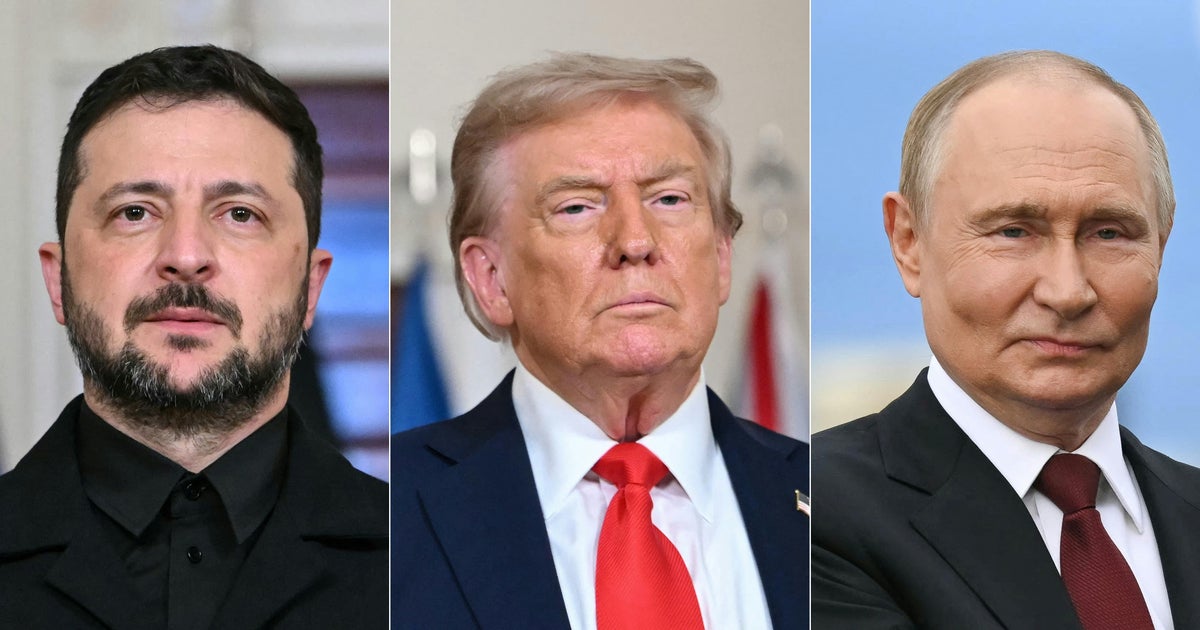
Trump administration officials have proposed a 28-point peace plan designed to end the Russia-Ukraine war — a framework that would require Ukraine to give up territory and swear off NATO membership.
 Advertising and Donations - advertising-newsandtimes.com
Vanessa Nunes/Getty Images
If you’re feeling like your workload has increased in 2025, you’re not the only one.
A new EY survey of 15,000 workers found that nearly two-thirds of employees believe their workload has increased in the last 12 months.
AI isn’t directly to blame, but, as with most workplace trends today, it’s a big part of the story.
“Our research doesn’t show that AI is actually increasing workloads,” Kim Billeter, EY’s global people consulting leader, told Business Insider.
Instead, broader anxieties about AI in the workplace — including fears of skill erosion, a lack of training, and uncertainty over how technology will affect roles — were adding to a sense of pressure to perform, she said.
“That mix of pressure, uncertainty, and fear of falling behind has left many feeling stretched thin,” said Billeter.
Training is a particular sticking point, she added, given that employees are often expected to develop new skill sets while continuing to deliver on their existing responsibilities.
EY’s findings were reported in the latest edition of the Big Four firm’s Work Reimagined Survey, an annual report exploring the changing workplace, published earlier in November. The report is based on responses from 15,000 employees and 1,500 employers across 29 countries.
Perception is not a wholly accurate measure of reality, but employee workloads could be rising globally, Billeter told Business Insider.
“Economic pressures will likely be driving a ‘do more with less’ mindset, meaning fewer people are handling more tasks. Role complexity is growing as organizations shift to skill-based models, requiring employees to learn continuously while managing existing responsibilities,” she said.
On the AI front, poor integration and limited training may create temporary spikes in workload, she said.
As Business Insider recently reported, many US workers have been voicing frustration over the growing flood of AI-generated junk cluttering their workflows — dubbed workslop. AI workslop may look well-organized, informative, and professional, but lacks substance, leaving whoever receives it with more work sifting through the ‘slop.’
Just because people are using AI doesn’t make them more productive, a disconnect known as the “productivity paradox.”
EY’s survey found that 88% of respondents use AI at work; however, most of their usage is limited to basic applications, such as search and document summarization. These may save a few hours here and there, but won’t change how work gets done or how the business performs, EY said.
Only 5% of respondents qualified as advanced users who blend multiple tools and extract far more value from AI by using it as a thought partner rather than a simple tool.
Overall, EY found that companies are missing out on 40% of the AI productivity gains they could achieve with the right strategy.
Addressing workload challenges and balancing the productivity paradox requires focusing on the human side of AI adoption, said Billeter.
Gaining an AI advantage is “inextricably connected” to the talent foundation, she said.
EY has identified five key areas, termed the “Talent Advantage,” that it says businesses should combine with their investment in AI tools: AI adoption excellence, learning, talent health, organizational culture, and reward structures.
“Simply investing in technology is not enough. The AI era demands the ability to build strong human foundations and advanced technology in a synchronized and integrated fashion to unlock meaningful transformation in the workforce,” said Billeter.
Have a tip? Contact this reporter via email at pthompson@businessinsider.com or Signal at Polly_Thompson.89. Use a personal email address and a nonwork device; here’s our guide to sharing information securely.
Robin Marchant/Getty Images
Bobbi Brown built a billion-dollar beauty brand only to find herself feeling pushed out of it in 2016.
Though she is one of the beauty industry’s most influential founders, she coped after exiting Estée Lauder in the same way many would after leaving a job.
“My neighbors came over and I drank tequila with them,” said Brown at The Wall Street Journal’s CMO Council Summit on Wednesday.
Brown, who recently published her memoir, “Still Bobbi,” said she considers herself fired from the beauty conglomerate, even though it never officially terminated her.
Roughly two decades after the corporation acquired her makeup brand, her work contract was canceled, and she was given a new role without involvement in daily operations, Brown said in a recent “Master of Scale” podcast episode.
“My new position was to be the face of the brand, but get out of the day-to-day,” Brown said on the podcast.
Estée Lauder didn’t immediately respond to a request for comment from Business Insider.
When she left the company, Brown still had four years remaining on a 25-year non-compete contract that prevented her from being associated with another makeup company — but at 59, she wasn’t quite ready for early retirement.
“I don’t have girls waiting for me at the tennis courts, or a book group,” Brown said on the podcast, adding that her kids were also out of the house by that point.
Brown said on the podcast that she no longer feels “tortured” by her departure, but at the time, she was angry and hurt. She said at the WSJ CMO Council Summit that her former employees, many of whom she had hired, were given orders not to contact her.
After meeting with Estée Lauder’s legal team that day in 2016 and deciding to leave, Brown said on the podcast that she called her husband, a real-estate developer, who met her in the city.
He told her he was glad she’d left — he’d been waiting a long time to “get a little bit” of her, she said. Then he suggested they turn a historic building he had just bought into a hotel, Brown said. They eventually went on to do just that, creating The George, in Montclair, New Jersey.
In the days following her exit, the makeup founder began to figure out how she wanted to move forward.
“The third day, I started just going to the city and meeting people for breakfast and lunches, because I never had time for that,” Brown said at the WSJ CMO Council Summit.
Brown kept herself busy, taking on hobbies like hip-hop dancing, and building a TikTok presence.
“I love to dance,” Brown said. “Any wedding or Bar Mitzvah, I don’t leave the floor.”
She soon started to take on new projects. Richard Baker, who was owned Lord & Taylor at the time, reached out to Brown and suggested that she create a curated shop called the Just Bobbi Shops. In 2019, MasterClass asked her to lead its first-ever makeup course. She also earned a health-coach certification, focused on her own wellness, and published a book called “Beauty from the Inside Out.”
“It just hit me: I wasn’t done,” Brown said on the podcast. “I had more things to teach, and the world had changed. I had changed since I left the company.”
Brown said she wanted to launch a new business before her non-compete agreement ended, but her husband wouldn’t let her. So she counted down the days, even purchasing a charm with the date the agreement was set to expire — October 2020.
That exact month, she launched Jones Road Beauty, a makeup brand focused on creating “no-makeup makeup” looks with clean formulas.

Both President Donald Trump and Chinese President Xi Jinping declared victory after their recent meeting in South Korea, which resulted in a one year truce in the economic war between the two superpowers. Yet the thaw hides a harsh reality: the United States and China did not return to the status quo ante but entered a new phase in which Beijing has gained the upper hand. To rectify this situation, Washington needs to understand what went wrong—and use the truce, however long it lasts, to strengthen its hand when the next escalation inevitably occurs.
[time-brightcove not-tgx=”true”]
It didn’t have to be this way. The pivotal moment came when Trump briefly imposed 145% tariffs on China in April. These soaring duties were designed to halt trade, force manufacturers to leave China, and coerce Xi into submission. They broke the seal on true “decoupling” between the two economies, with Treasury Secretary Scott Bessent conceding in April that the tariffs were “the equivalent of an embargo.”
Trump was unprepared and wrongly assumed that American tariffs were an unbeatable weapon because our large trade deficits—nearly $300 billion with China in 2024—enable Washington to impose broader tariffs on adversaries than they can impose in response. The duties swiftly sent the U.S. stock market plunging and intensified fears of a recession at home. The Trump Administration just as quickly dropped them.In the following months, China’s exports to the United States nosedived, but the country managed to expand its total exports and found new markets for over 80% of the goods it previously sold to the U.S. Trump had played what he believed was his best card: sky-high tariffs. And it turned out to be a dud.
Although this moment is often overlooked in the United States, Trump’s abortive experiment became a turning point for Beijing, which vowed to “fight to the end.” Beijing responded by weaponizing its most powerful chokepoint: the critical minerals and magnets essential to modern industry, a sector in which China has a near-monopoly. In two phases—first in spring, then in autumn—Beijing ramped up a policy designed to control the global industries that depend on these Chinese inputs, from car manufacturing to clean energy. The impact was immediate. “We have had to shut down factories,” Jim Farley, Ford’s Chief Executive Officer, bemoaned, “It’s hand-to-mouth right now.”
Before his Oct. 30 meeting with Xi, Trump admitted that his threat of an additional 100% tariff on China was “not sustainable.” In contrast, Xi had played his best card—and it succeeded beyond his wildest dreams. Trump’s approach to China has run aground, giving Beijing unprecedented advantage in the economic conflict. Remedying this perilous situation will require a degree of discipline and ingenuity that the Trump administration has lacked to date.
The geopolitical consequences have been significant. By agreeing to delay its new critical minerals policy by a year—in effect, leaving the weapon on the table and promising not to use it as long as the U.S. behaves—Beijing has managed to entrap Washington in an open-ended negotiation in which both sides are acting as ifChina has the upper hand. Even if the U.S. pursues its usual China policy—supporting Taiwan in line with its longstanding commitments or penalizing Beijing for supporting Russia’s brutal war in Ukraine—the Chinese government may again try to exercise a veto by brandishing its rare earth chokehold.
To extricate ourselves from this predicament, the U.S. must intensify efforts to increase its supply chain security and industrial strength. In recent years, the United States has been gradually “de-risking” from China, including by investing in industrial policy at home, imposing tariffs on the most relevant Chinese exports such as electric vehicles, and restricting exports of the highest-risk items such as advanced semiconductors. This steady, methodical approach was working because the U.S. economy and society could bear the adjustments, many allies were on board, and it did not trigger a rapid escalation with China.
Today, this effort needs to accelerate, especially in pressing areas such as developing critical minerals supply chains that don’t rely on China. Washington’s recent investments in rare earth firms MP Materials and Vulcan Elements as well as minerals agreements with Australia and Southeast Asian countries are a good start. Yet even in the best-case scenario, America is likely three to five years away from breaking this Chinese chokepoint. De-risking alone is not enough.

The U.S. needs a China strategy fit for purpose at a time when China has demonstrated an increased willingness to weaponize its leverage. Trump’s impulsive, go-it-alone approach is uniquely ill-suited to the long-term and cross-cutting nature of the challenge that China poses. The costs to the U.S. strategic position are already apparent.
China will be watching several areas closely. Will the U.S. make meaningful investments at home? How will Trump’s strained relationships with longstanding U.S. allies evolve? Beijing is especially focused on gauging whether the U.S. uses this break from brinksmanship to devise credible, hard-hitting escalation options that could be employed against China in the future. Beijing fears that Washington will deploy the threat of powerful chokepoints and retaliatory measures of its own—the kind of U.S. leverage that would make Beijing hesitate before wielding its critical minerals weapon again.
Despite its best efforts, China remains highly dependent on U.S. software and semiconductors. This year, the U.S. produced 25 times more high-end artificial intelligence chips than China, and Chinese AI start-up DeepSeek was forced to delay its latest model because of a shortage of semiconductors. Most significantly, China is still dependent on the dollar. Although it has tried to lessen its reliance on the greenback for over a decade, China continues to settle roughly two-thirds of its foreign trade in dollars.
Beijing is aware of its vulnerabilities. It worries that broader U.S. high-tech export controls could further constrict China’s access to older AI chips from firms like Nvidia, as well as to cloud computing services and chip design software that Chinese companies still rely on to build and train advanced AI systems.
China also fears that America could start wielding its most powerful chokepoint: the dollar. Beijing has been predicting an intensifying “financial war” for years. Yet despite years of rising economic confrontation, the U.S. still has not targeted any major Chinese company—not even perennial candidates such as the surveillance firm Hikvision—with full-blocking sanctions, which would cut them off from the dollar system entirely.

Thus far, Trump has been reluctant to use these more powerful levers to push back against Beijing, and has chosen to lean heavily on his preferred tool of tariffs. That is somewhat surprising, as he has seen first-hand how effective America’s chokepoints can be in delivering targeted, high-impact pressure. In 2018, Trump’s penalties on the Chinese telecommunications firm ZTE nearly put the company out of business and compelled Xi Jinping to appeal directly to Trump for a reprieve. There may, of course, be other reasons not to deploy these tools—such as the risk of collateral damage to diplomatic allies—but Trump has not been sensitive to such concerns in other policy areas.
The United States finds itself in a profoundly worrying strategic position. Unless Washington can signal a serious plan to counterpunch, Beijing will keep pressing its advantage. But this administration may simply not be equipped to take this on, given its propensity to shoot from the hip, Trump’s penchant for tariffs, and the lack of a rigorous policy process to weigh tradeoffs and assess risks. Without a meaningful China strategy, Washington will struggle to match Beijing’s determined, focused efforts to increase its own global influence and box in the United States.
And by the time Trump realizes that Beijing has outplayed him, it may well be too late.