
The outcome in Mississippi adds to a national pattern in which Democrats are making legislative gains in red states.
Month: November 2025
Drone sightings disrupt flights at Belgium’s main airport [deltaMinutes] mins ago Now
Christian Rodriguez for BI
- This post originally appeared in the First Trade newsletter.
- You can sign up for Business Insider’s daily markets newsletter here.
If there’s one piece of clothing that’s become synonymous with the finance industry, it’s the vest. Stroll around Manhattan at lunchtime on any given weekday, and you’ll see swarms of sleeveless coats in all their glory.
Their ubiquity earned a nickname years ago: the Midtown uniform. It’s become an internet meme, the first item in a finance bro starter pack, and eyeroll fodder for hipsters who dislike all things basic.
Christian Rodriguez for BI
So, with the vest way past the peak of its hype cycle, why are they still such a staple on Wall Street? I hit the streets to find out.
One common reason I heard is that bankers simply like to flex — not necessarily their visible arms, but where they work — as many firms give out branded vests.
“It’s an earned status thing. You put in a lot of work to get to equity research for your team, to get to the PM role for a team, to be able to get to that said firm,” one analyst told me. “That’s why you wear it.”
Christian Rodriguez for BI
But the status signalling goes beyond having your firm’s logo on your chest. In fact, many of the vests I came across were more generic, from outlets like Charles Tyrwhitt, Zara, and Arc’teryx.
Wearing any vest at all seems to be shorthand that you’re part of the club, that you belong.
“People like to have the vest on to make it known that they are part of that,” said Jonathan Grossman, who is two years into working at UBS.
Christian Rodriguez for BI
Bankers will even wear them inside the office, citing frigid air-conditioned temperatures, Grossman said.
“They do claim that it’s cold inside, but I don’t buy that,” he said. “They want to look cool. They want to look part of the act.”
Even those in finance-adjacent industries, such as commercial real estate, have started wearing vests. Despite its casual nature, a vest lends you a degree of credibility with financial industry clients, said Laz Rabanales, who works at Okada & Company.
Christian Rodriguez for BI
“I’m not a banker, I’m a commercial real-estate agent, and I kind of want to appeal to that industry,” Rabanales said. “When you’re dressed as that person, then they’ll most likely want to talk with you and work with you.”
But there’s not always a deeper meaning behind sporting a vest. With November rolling around, practicality often seemed to be good enough of a reason.
As one banker succinctly explained: “It’s cold out.”
Read the original article on Business Insider
A popular ethnic Chinese Malaysian rapper and filmmaker was detained Wednesday to assist police in their investigation into the murder of a Taiwanese social media influencer, the rapper’s lawyer said.
“Democrats calling for Republicans to be assassinated has just been APPROVED of,” one conservatvie commentator said.
Kevin Lamarque/Reuters
- The government shutdown is the longest in US history, affecting services nationwide.
- The shutdown began on October 1 due to a funding impasse in Congress.
- Americans are seeing disruptions in benefits, travel, federal paychecks, and more.
At day 36, the government shutdown is the longest in US history.
Americans are feeling the impact: Airports are experiencing widespread delays, trash is piling up at national parks, safety net programs are running out of money, and federal workers are furloughed or on the job without pay.
The government halted nonessential operations beginning at 12:01 a.m. on October 1. Without a funding agreement in Congress, it’s unclear when it will reopen.
The previous shutdown record-holder was a 35-day funding lapse between late 2018 and early 2019. Other historical shutdowns range from a couple of hours to a few weeks.
How Americans are impacted
From travel to benefit checks, Americans are directly impacted by the shutdown.
The Supplemental Nutrition Assistance Program — which 42 million Americans rely on to afford groceries — has been in jeopardy. The program ran out of funds to pay November benefits, though a late-October court order requires the Trump administration to partially pay SNAP with emergency funds. On Tuesday afternoon, however, Trump said that benefits wouldn’t go out until the shutdown ends.
Thousands of low-income families are also at at risk of losing access to Head Start programs in November, with childcare centers in 14 states already closing their doors.
Temporary Assistance for Needy Families (TANF) and Special Supplemental Nutrition for Women, Infants, and Children (WIC), could see a disruption of benefits until the government reopens, though Social Security, Medicare, and Medicaid payments are continuing as normal.
Government employees across agencies told Business Insider they have missed weeks of pay. Over two dozen said they are cutting back on kids’ activities, home repairs, social spending, and more until the government reopens. Many are worried about losing their jobs in the Trump administration’s layoffs, though the latest workforce cuts are currently blocked by a court order. The White House has signaled these federal workers aren’t guaranteed back pay.
Select law enforcement like border patrol, Secret Service, and deportation officers remain on the payroll, as do military personnel. The administration pulled from a Homeland Security budget and an anonymous multi-million dollar donation to cover the costs.
Meanwhile, airport employees and travelers are concerned about what the shutdown means for the upcoming holiday travel wave. Staff told Business Insider they are overwhelmed, understaffed, and on the job without pay.
National museums, parks, zoos, and historical sites are partially operational or fully closed.
What comes next
The Senate has yet to agree on a spending plan, a move that would reopen the government.
The House passed an initial budget agreement on September 19, but the Senate hit a stalemate the following week, largely over funding for Affordable Care Act subsidies and Medicaid. Democrats are calling on Republicans to extend the ACA subsidies beyond their December 31 expiration date and reverse the Medicaid changes made in President Donald Trump’s One Big Beautiful Bill Act.
As open enrollment begins for health insurance this month, Americans on ACA Marketplace plans could see a hike in their expected 2026 premiums.
“Democrats have SHUT DOWN the United States Government right in the midst of one of the most successful Economies, including a Record Stock Market, that our Country has ever had,” President Donald Trump wrote in an October 6 Truth Social post. “This has sadly affected so many programs, services, and other elements of Society that Americans rely on — And it should not have happened.”
Most money the government spends is carefully allocated to specific uses. To end the shutdown, Congress needs to decide on a temporary or long-term spending plan, which Trump would need to sign.
Read the original article on Business Insider
Nathan Howard/REUTERS
- Tesla’s shareholder meeting will address Musk’s $1 trillion pay package and investment in xAI.
- The meeting follows a year of political controversies and sales struggles for Tesla.
- Tesla’s board has recommended against shareholder proposals that concern increased accountability.
Tesla is facing a pivotal shareholder meeting.
On November 6, the EV maker will hold its annual meeting, where investors will vote on issues concerning the company’s future direction and the performance of its CEO, Elon Musk.
The meeting comes as the company navigates a year marked by political controversies and struggling sales. Tesla’s board also decided to exclude at least 11 shareholder proposals that focus on accountability and sustainability.
Although Tesla shares have largely recovered from the losses experienced between March and August, and the end of the EV tax credit boosted third-quarter vehicle sales, many investors have questions regarding Musk’s leadership and the company’s spending on AI.
From Musk’s proposed $1 trillion pay package to an investment in xAI, here is what’s at stake for Tesla and Musk at Thursday’s shareholder meeting.
Tesla did not immediately respond to a request for comments.
The $1 trillion question
The battle over Musk’s record-setting $1 trillion pay package has escalated into one of the most high-stakes corporate showdowns in years.
Tesla’s chair, Robyn Denholm, warned shareholders in a letter in October that Musk could walk away from the company if they fail to approve the plan at Tesla’s annual meeting next week. In her letter, Denholm said it comes down to whether shareholders still want to “retain Elon as Tesla’s CEO and motivate him” to make Tesla “the leading provider of autonomous solutions and the most valuable company” in the world.
The proposed pay package, potentially worth up to $1 trillion over the next decade, was introduced after a Delaware judge struck down Musk’s previous $56 billion compensation plan twice. The judge wrote in the ruling that Tesla’s board had been unduly influenced by Musk when it approved that 2018 deal, which was then the largest executive pay award in corporate history. As Tesla continues to appeal the judge’s decision, Musk has remained without compensation.
To unlock the full payout, Musk must hit a series of ambitious milestones. According to Tesla’s filings with the Securities and Exchange Commission, the goals include raising Tesla’s market capitalization to $8.5 trillion by 2035, selling 12 million vehicles annually, deploying one million robotaxis, and producing one million “AI bots.” If successful, his stake in the company would grow from 13% to at least 25%.
The proposed pay package is a source of controversy among investors. Proxy advisory firms ISS and Glass Lewis have both urged shareholders to reject the proposal, arguing that it grants Musk excessive power with too little oversight. Meanwhile, Musk fired back, calling the firms “corporate terrorists” during Tesla’s third-quarter earnings call.
“I just don’t feel comfortable building a robot army here and then being ousted because of some asinine recommendations,” Musk said.
Investing in xAI
As Tesla pushes deeper into robotics and AI, Musk wants shareholders to agree to an investment in his AI startup, xAI.
Musk had previously commented on X that if it were up to him, Tesla “would have invested in xAI long ago.”
Founded in July 2023, xAI has rapidly become one of Musk’s most valuable ventures. The company, which develops the Grok chatbot integrated into X, has raised over $12 billion across multiple funding rounds and was valued at about $50 billion in 2024.
In March, Musk announced that xAI had acquired X in an all-stock deal, valuing xAI at $80 billion and X at $33 billion. Musk’s rocket company, SpaceX, had also announced plans earlier in the year to invest $2 billion into xAI.
Musk owns Tesla, SpaceX, Neuralink, and The Boring Company, and many have dubbed his series of connected ventures the “Muskonomy.” Some shareholders have previously told Business Insider that they are concerned about the interconnectedness of his ventures.
“There are already big conflicts of interest at play with Musk’s roles at other companies like xAI,” Kevin Thomas, CEO of Shareholder Association for Research and Education, told Business Insider.
“If this were a merger decision, at least we’d be looking at a single entity,” Thomas added. “But letting one CEO use a public company as a piggy bank for cash, talent, and chips for his own, privately-held companies isn’t something the board or shareholders should condone.”
Accountability measures
Although Tesla’s board rejected many shareholder proposals that concern accountability, a few have made it to the ballot, according to the meeting agenda filed with the Securities and Exchange Commission:
- To assess the feasibility of integrating sustainability metrics into senior executive compensation plans,
- To publish an audit on child labor,
- To amend the bylaws and repeal the 3% stock ownership threshold needed to file derivative lawsuits,
- To elect each director annually.
Tesla’s board has recommended against all of the accountability proposals.
The proposal to amend the bylaws, which limit derivative lawsuits to the largest shareholders, was filed by New York State Comptroller Thomas P. DiNapoli.
“Tesla deceived shareholders by assuring that shareholder rights’ would stay the same after the company’s move to Texas but then immediately and unilaterally took these rights away,” DiNapoli previously told Business Insider when his office filed the proposal in July. “These actions violate basic tenets of good corporate governance and must be reversed.”
Read the original article on Business Insider
Astrid Stawiarz/Getty Images
- Michael Burry is back to posting on X, warning about market mania, and betting against AI giants.
- The investor of “The Big Short” fame compared the AI spending boom to the dot-com bubble.
- Burry’s wagers against Nvidia and Palantir could pay off if they miss forecasts, one analyst said.
Michael Burry, the contrarian investor who called the 2008 financial crisis, is back with his unique blend of dire warnings, cryptic messages, winking memes, and pop-culture references.
The Scion Asset Management chief has returned to X after a two-year hiatus to sound the alarm on the AI boom. Where advocates see a revolutionary technology that will supercharge productivity and generate massive profits, he sees hype, speculation, and excess.
Burry, whose iconic bet against the mid-2000s housing bubble was immortalized in the book and movie “The Big Short,” kicked off his comeback with a single, ominous post on Thursday.
“Sometimes, we see bubbles. Sometimes, there is something to do about it. Sometimes, the only winning move is not to play,” he wrote.
The third sentence is a nod to the movie “WarGames,” where an AI supercomputer runs thousands of simulations of nuclear war and discovers all of them end in mutual destruction. Burry’s quote underscores how perilous he believes today’s market is for investors.
Signaling he’ll be sticking around for a while, the famed forecaster has updated his profile picture and revised his bio to read: “Cassandra Unchained: Missteps to Mayhem, Coming December 2025, Stay Tuned.”
X
That line is an apparent reference to the Greek myth of Cassandra, the Trojan priestess cursed to utter true prophecies but never to be believed, and to a speech Burry gave at Vanderbilt Medical Center in 2011 titled: “Missteps to Mayhem: Inside the Doomsday Machine with the Outsider who Predicted and Profited from America’s Financial Armageddon.”
Back then, Burry delivered a step-by-step breakdown of how the subprime mortgage bubble inflated, how he predicted and placed bets on its collapse, and how the fallout revealed glaring vulnerabilities in the US financial system.
“We must remember that entire societies can and often do follow the wrong path for a very long time, and that there is nothing wrong with breaking from the social norm to ensure good outcomes,” Burry said. “Sober analysis on the part of the individual is paramount.”
Burry sees himself as a Jedi battling the Empire
Positioning himself as a rebel who’s speaking out against the AI mainstream, Burry swapped his banner image on X to a still from “Star Wars: A New Hope,” where Obi-Wan Kenobi uses a Jedi mind trick to deceive Imperial stormtroopers.
Referring to that meme, the Scion boss posted on Monday before the release of his firm’s third-quarter portfolio update: “These aren’t the charts you are looking for. You can go about your business.” He attached three images offering fresh insight into why he’s bearish on the AI frenzy.
The first chart showed that growth has slowed sharply in Amazon and Alphabet’s cloud-computing divisions, and cooled slightly in Microsoft’s rival unit.
The second highlighted that the US tech sector’s capital expenditures have surged during the AI boom, echoing their spikes before the dot-com crash and the 2008 financial crisis.
The third shows the circular dealmaking between Nvidia, OpenAI, Oracle, Microsoft, and other AI companies.
Burry nodded to the meme again in a follow-up post, writing “Move along” and attaching an image of a stormtrooper. He also shared a highlighted excerpt from “Capital Account,” a book that covers the dot-com bubble. It detailed how the telecoms boom and bust resulted in vast tracts of unused infrastructure, plunging prices, and the downfall of many high-valued companies that wound up scrambling for protection from creditors.
Burry’s posts underline his skepticism about the AI boom. He appears to see shades of the dot-com bubble in the interwoven deals between tech titans, as they pour hundreds of billions of dollars into building huge amounts of infrastructure that might end up sitting idle if demand falters and valuations come crashing down, as they did 25 years ago.
Burry placed bets against Nvidia and Palantir
The hedge fund manager backed up his words with two striking bets last quarter that were revealed on Monday. Scion purchased bearish put options on 1 million Nvidia shares and 5 million Palantir shares, with notional values of $187 million and $912 million, respectively.
The wagers dominated the firm’s US stock portfolio, which had only eight holdings in total, including just four direct positions worth a combined $68 million.
Russ Mould, AJ Bell’s investment director, told Business Insider that Burry is “clearly backing convictions with what can only be called a highly unconventional portfolio, with sizable short positions against both Nvidia and Palantir, both darlings of the current AI boom, to the tune of around $1 billion.”
Nvidia and Palantir fell 4% and 8% respectively on Tuesday. Burry’s wagers drew the ire of Palantir CEO Alex Karp, who questioned why he was shorting companies that are “making all the money.”
Both stocks have soared in price over the past few years; Nvidia became the first company to secure a $5 trillion market value last week, while Palantir was valued at nearly $500 billion at Monday’s close — more than Mastercard, Exxon Mobil, or Netflix are worth.
The pair’s valuations and high growth expectations could leave their stocks vulnerable to sharp declines if they disappoint, especially when investors are increasingly using margin and levered ETFs, Mould said.
Burry could win big if Nvidia and Palantir stumble, but the “danger” is that he “gets run over by momentum and liquidity-fueled markets” if they keep impressing investors and the Federal Reserve keeps cutting interest rates, Mould added.
Daniel Bustamante, the chief investor and founder of asset manager Bustamante Capital Management, told Business Insider that he broadly agrees with Burry’s stance on AI stocks.
The Magnificent Seven’s capital spending is “already hurting earnings growth, retail is crowded into those names, and then margin debt is at all-time highs,” he said. “You basically have all tinder soaked in gas, and all it takes is a lit match at this point to cause some serious issues.”
Read the original article on Business Insider
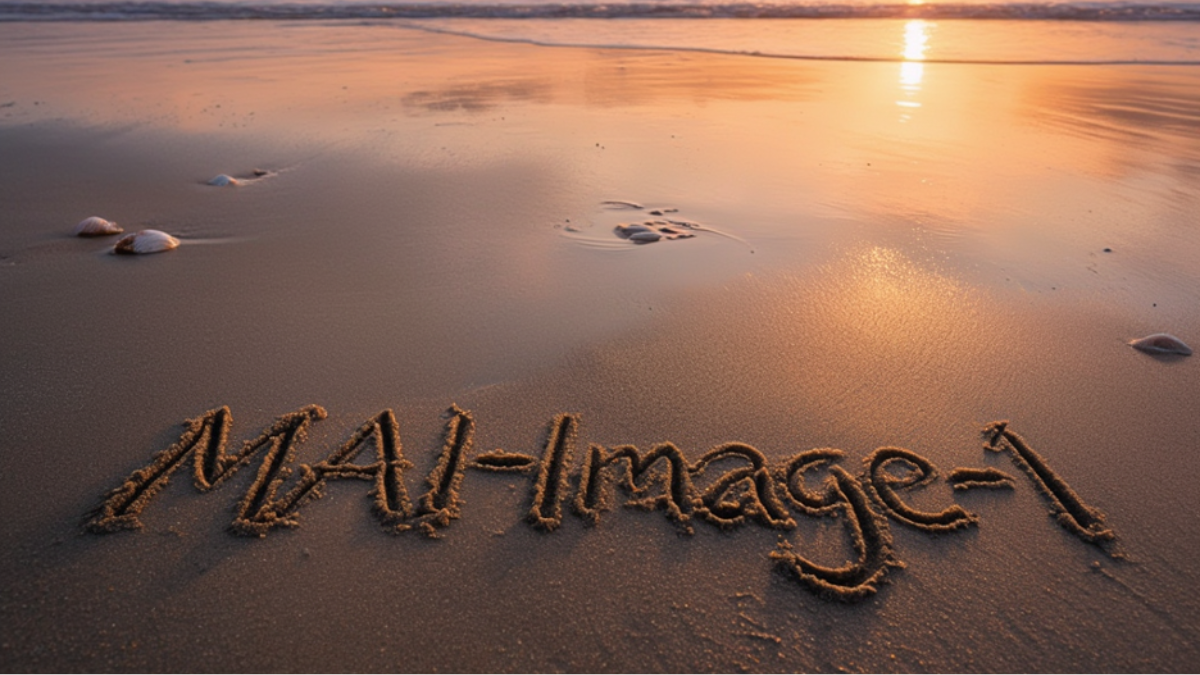
Microsoft’s MAI-Image-1: Microsoft has rolled out its first in-house AI image generator, MAI-Image-1, to Bing Image Creator and Copilot Audio Expressions
Udogie receiving support from Tottenham after alleged gun incident [deltaMinutes] mins ago Now