
“I have volunteer friends at the shelter she was at previously, and they asked me to check in on her,” Saraceno told Newsweek.
Day: November 24, 2025
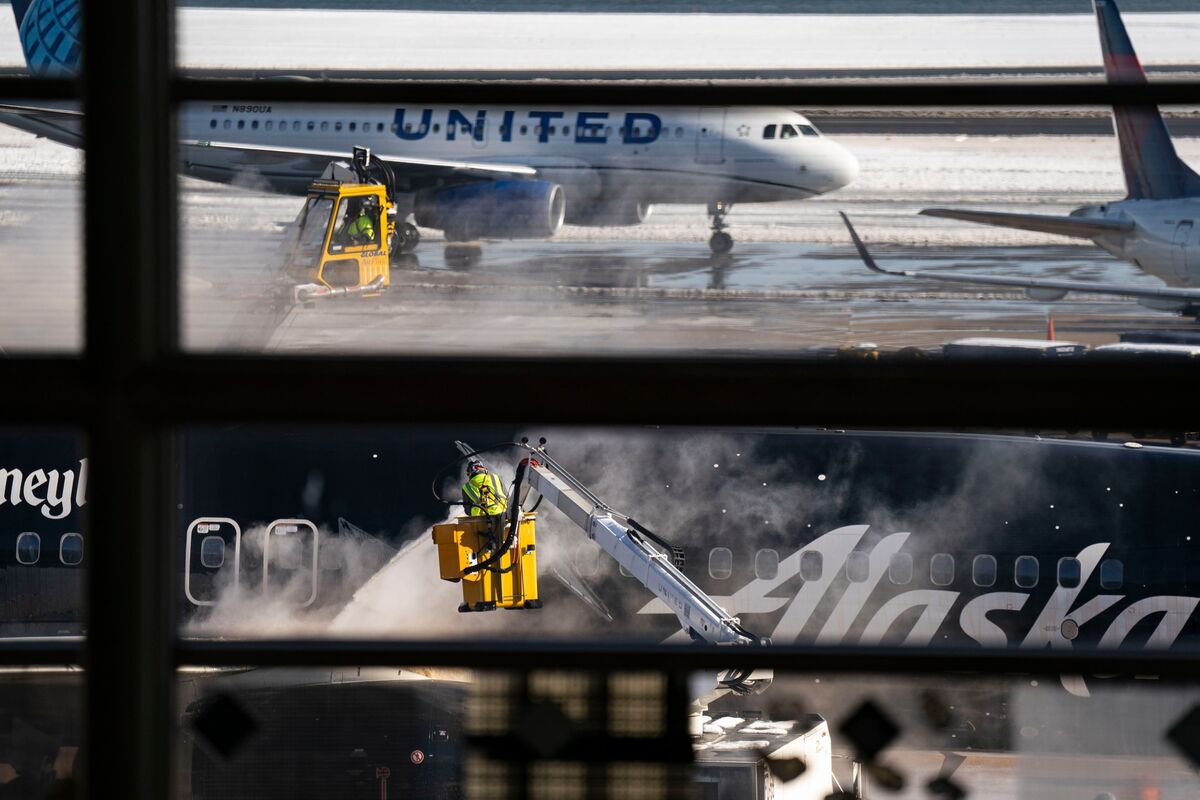
Thunderstorms and a cold snap will test the country’s air traffic system, which is just getting back on track after a record-long government shutdown.
A bipartisan Senate duo is aiming to reduce the influx of political mail to households by cutting off a key federal subsidy that boosts Republican and Democratic party committees.

This article is part of The D.C. Brief, TIME’s politics newsletter. Sign up here to get stories like this sent to your inbox.
Abigail Disney has to laugh at my question about how her advocacy is playing among her fellow super-rich. “My dinner-invitation card is not full,” she says.
[time-brightcove not-tgx=”true”]
But the Disney heiress and documentary filmmaker understands why some—including members of her immediate family—are uncomfortable with her agitating for higher taxes on wealthy individuals, her activism for higher wages for those who work in the theme parks founded by her grandfather and granduncle, and her films that hold up a lens to One Percenters’ arrogance. She does not mind that one of her brothers did not care for her film The American Dream and Other Fairy Tales or that “my parents would die” if they could see her choice of projects. Disney has an agenda, and it’s one that she knows actively works against her own self-interests.
“We don’t need any more money. We can see that pretty clearly,” she says.
Disney, who was in Washington last week for a conference of a group called Patriotic Millionaires, does not shy from her long-held belief that privilege is concentrated way too narrowly and at the expense of those who can afford it the least. Other like-minded critics of wealth and income inequalities—and they are different problems that require different solutions, she notes—joined her across the street from the Treasury Department’s headquarters to plot ways to rehash arguments that they are uniquely qualified to make, especially when it comes right from their pockets. After a quick breakfast at the posh Hotel Washington, most loaded up for a busy day lobbying lawmakers to put a bigger dent in their bank accounts.
It was a day that bordered on the surreal as former hedge fund managers, White House officials, trial lawyers, and, yes, some lucky folks who came by their wealth simply by being born into it hit the Hill to push an agenda that is completely at odds with the billionaire in the White House and the uber-wealthy in his inner circle.
Disney and her allies want a surtax on incomes over $1 million. They want working-class folks to earn their first $45,000 tax free. They want to tax businesses that don’t pay their workers enough until they realize wages are cheaper than their quarterly tax bills.
And they want money made off investments to face the same tax rate as money earned on the job. “When I get capital gains, it’s ’cause I’m sitting on my tookus. I mean, it’s literally the opposite of taxing work,” Disney says with full self-awareness.
It’s a policy-heavy message—including a potential Constitutional amendment that might be needed to go after the ultra-rich as much as she wants—but back at the hotel, Disney wants to talk in terms of morals.
“We can afford to pay more in taxes,” she says.
That realization came into clear focus way back in 1987, while sitting in a movie theater at 84th and Broadway. The film? Wall Street, with its famous “greed is good” speech.
“I’m thinking he’s the bad guy. There’s like an eruption in the theater. Literally people went crazy, hooting and hollering. This was like the best thing they’d ever heard in their lives,” Disney says.
Disney, the granddaughter of Roy Disney and grandniece of Walt, has long been at odds with many in her cohort. After college and before grad school at Stanford and Columbia, she worked for a year as a nanny in Ireland to escape the family fame. (By happenstance, her uncle happened to be Ronald Reagan’s Ambassador to Dublin during that time.) Her film projects have tackled sexual assault in the military, veterans’ struggles at home, campaign finance, foreign influence in politics, and, yes, even wealth and income inequality.
But justice has been the throughline. Decades ago she founded a nonprofit in New York focused on combating poverty. Last month, she spoke to the International Monetary Fund and World Bank meeting to decry centralized money. And last week, she lobbed a warning at G20 leaders meeting last weekend in South Africa in an essay for TIME.
Her advocacy for tax fairness has been so thorough that Snopes, the that-can’t-be-true-let’s-look-it-up catalogue, even confirmed that she wants to pay more taxes.
“It turns out that it is that hard to believe that, that someone would actually do something for the greater good and not in their own self-interest,” she says.
Disney has a complicated relationship with her wealth. (Her estimated net worth these days is around $120 million, according to The Chronicle of Philanthropy.) In her IMF/ World Bank turn in October, she all but apologized for it. “I can only speak to my own experience,” she said. “I grew up in a family with wealth and it was a family that decided to take the wealth it had and turn it into more wealth.”
But, she said, it came with a cost. “There is such a thing as too much money. And it’s bad for the world, for sure. But it’s also bad for the people who own it. … It is painful, soul-crushing, alienating, and morally corrosive.”
As we chat, she casually drops a complaint that lunch with her sister a few weeks ago in Sedona cost them $73 for burgers and sparkling water. She thinks it’s ridiculous that Disney employees in California have started a foodbank for colleagues because pay is so crummy in the parks, yet is cheap when it comes to giving to the county foodbank. She has been a persistent problem for the Disney board, especially when it comes to executive pay. She finds it appalling that the average billionaire produces in 90 minutes the same level of greenhouse gases the average person creates in a year. And don’t get her started on Elon Musk, who may become the first person on the planet to claim the title of trillionaire.
“It’s hard to watch us get here because I don’t hear very many people feeling revolted by the idea of a trillionaire,” she says. “It would take the average worker 16 million years to get to a trillion dollars. Sixteen million years is longer than there have been human beings.”
She shakes her head in disgust, yet she knows the answer is not going to come easily or quickly. That doesn’t mean she does not see the urgent need for action. “This is absurd. Can we not all agree that there is a point at which there’s too much money?”
Make sense of what matters in Washington. Sign up for the D.C. Brief newsletter.
“I’m not running for President and never said I wanted to and have only laughed about it when anyone would mention it.”
Modernizing airpower in the Indo-Pacific remains a top priority for the Pentagon, the U.S. Air Force said.
A convicted Texas bank robber has been arrested for trying to rob the same bank that led to him being locked up in federal prison for nearly a decade.
Delta Beverages
- THC beverage CEOs said new hemp product rules could kill their industry.
- Jack Sherrie, CEO of Delta Beverages, said he’s working with others in the industry to save THC-infused drinks.
- Industry leaders are trying to get legislation passed that would legitimize and regulate THC drinks.
CEOs are scrambling to save the THC beverage industry after a newly passed hemp crackdown threatens to wipe out a billion-dollar drink category.
Jack Sherrie, founder and CEO of Delta Beverages, said he’s working with competitors and others in the industry to save their companies, many of which are small, founder-led businesses.
“It’s funny, we were competing and now we’re coming together,” Sherrie told Business Insider. “We call it a co-opetition.”
“I don’t think there’s anything wrong with capitalism and competition, but I think that we’re definitely going to have to work together as a unit to get something passed,” he added. “And we’re all very well aware of that.”
Delta sells seltzers infused with THC derived from hemp, which was made legal by a provision in the 2018 Farm Bill that allowed for hemp-derived products containing a limited amount of THC.
Under the funding package that reopened the government this month, Congress effectively closed that loophole. The new hemp measure, set to take effect in November 2026, bans products that contain more than 0.4 milligrams of THC per container. As a result, it would effectively ban many hemp-derived THC products currently on the market, like Delta.
“This quite literally is going to end up killing the hemp industry,” Sherrie said, adding that the measure was quietly and suddenly slipped into the bill last minute, taking many in the industry by surprise.
Delta Beverages
Jake Bullock, CEO of Cann, another THC beverage company, shared similar concerns with Business Insider after the measure was passed, though he said he did not view it as a ban but instead a “one-year shot clock” for the industry to secure legislation it has long needed.
Sherrie and Bullock both said they were optimistic that new legislation could happen. The goal now is to get Congress to pass rules that will regulate the industry and ensure some hemp-derived products can continue being sold.
The CEOs said the restrictions were aimed at highly potent synthetic products, often candies, that are marketed toward kids and sold in accessible places like gas stations, rather than THC drinks, which are generally far less potent.
They also said they believe Congress is open to passing legislation that would legalize and regulate THC beverages, which have grown in popularity, especially among Gen Z, as Americans have cut back on their alcohol consumption.
Sherrie said the industry is working closely with lawmakers to propose a THC beverage bill, hopefully by the end of December.
Meanwhile, it’s been a tough time for founders like Sherrie, who said sleep was nonexistent for him during the week the bill made its way through Congress and to President Donald Trump’s desk.
“A lot of us are entrepreneurs. We’re small businesses. We’re not some giant corporation trying to take over the world,” he said. “We’re trying to thrive, and we’re just trying to do our best.”
Read the original article on Business Insider
Eva Alexandridis, the founder of 111SKIN, told Newsweek what today’s aspiring entrepreneurs are missing.
Newsweek spoke to personal trainer Denise Chakoian to find out what’s actually behind the holiday miles.