
The BBC Newsnight interview, which the prince hoped would clear his name, backfired when he said he did ‘not regret’ his friendship with Epstein.
Day: October 20, 2025
This comes after the competition held in February 2025 received more than 6,784 applications.
As China’s economic footprint expands across Central Asia, Beijing is quietly pursuing another, subtler form of influence – one that reaches beneath the soil rather than above it. Alongside highways, pipelines, and industrial parks, China is investing in archaeological diplomacy that uses shared history and cultural discovery to deepen ties with its neighbors.
Uzbekistan has emerged as a key partner in this effort. Beyond trade and infrastructure, the two countries are now working hand in hand to uncover the remnants of ancient civilizations that once thrived along the Silk Road. This collaboration combines science and strategy, offering a soft power approach that complements China’s growing hard power presence in the region.
Across Uzbekistan’s Surkhandarya, Samarkand, Ferghana, and Khorezm regions, joint Chinese-Uzbek teams are making discoveries. One notable example is the joint Chinese-Uzbek team working at the Chinar-Tepa site in the upper Surkhandarya River valley, where researchers have uncovered more than 30 ancient house foundations along with a rich collection of cultural artifacts.
Another major project has revealed the remains of an Iron Age city-state in the Surkhandarya River basin in southern Uzbekistan. These findings are the result of three excavation seasons conducted between 2024 and 2025, during which the joint team surveyed 47 sites across the basin and identified the area as a major center of ancient Bactria. This cooperation is not just confined to the field.
In October 2023, Ferghana State University and Chinese partners launched a joint archaeology department. Their subsequent joint studies of the ancient city of Kuva have revealed key insights into urban planning, including city walls, moats, and roads dating back centuries. Meanwhile, China’s funding for the restoration of the ancient city of Khiva highlights another layer of cultural collaboration on the preservation of shared heritage.
For both countries, archaeology is more than an academic pursuit; it’s a bridge between culture, economy, and future cooperation. For Uzbekistan, cities like Samarkand, Bukhara, and Khiva are already world-renowned tourist destinations. The government’s ambition to attract up to 15 million foreign visitors underscores tourism’s growing role in national development.
Unearthing new historical sites expands this potential, offering travelers a richer experience that spans both the pre-Islamic and Islamic eras. Each discovery deepens the cultural map of Uzbekistan, and each new site means more visitors, more investment, and greater economic diversification for the state.
Beyond the economic dimension, the partnership with China is also cultivating a new generation of experts in archaeology and heritage preservation. Many members of these joint excavation teams belong to the post-2000 generation, young professionals who are gaining firsthand experience through collaboration.
With access to cutting-edge technologies such as drone-based aerial photography, geomagnetic surveying, and 3D modeling, Uzbek archaeologists and students are learning to combine traditional excavation with modern science. Over time, this knowledge transfer strengthens the country’s human capital base, empowering Uzbekistan to pursue its own archaeological research and heritage conservation independently on a larger scale.
For China, promoting joint archaeological exploration aligns closely with the Belt and Road Initiative’s vision of soft connectivity. By supporting the excavation and preservation of Silk Road heritage, Beijing presents the BRI not as a new geopolitical project but as a revival of ancient and mutually beneficial exchanges that once linked East and West.
In this way, China may aim to frame its modern economic and infrastructural expansion as a continuation of history, a return to a natural order rather than an external intervention. This narrative serves a broader diplomatic purpose. By emphasizing shared history and cultural revival, China seeks to project itself as a responsible and benevolent power in contrast to actors often associated with military presence or political conditionality.
Such efforts help to reduce the perception of China as a threat in Central Asia and position Beijing as a cultural and academic partner instead of a dominating economic force. Cooperation in archaeology also provides a unique space for people-to-people engagement. For young Uzbek scholars and students, working alongside Chinese teams offers not only technical training but also a personal connection with China.
While growing trade and infrastructure ties strengthen Beijing’s relationships with political and economic elites, cultural heritage projects expand its reach into academia and civil society. Together, these layers of engagement in economic, cultural, and educational fields help to humanize China’s presence in Central Asia and build lasting soft power foundations.
China’s growing involvement in archaeological cooperation across Uzbekistan and the wider Central Asian region illustrates that diplomacy is not only conducted through trade deals or infrastructure projects but also built through the work of excavation, preservation, and shared discovery.
For Uzbekistan, the partnership strengthens tourism, education, and national pride while helping to build the skills of a new generation of researchers. For China, it provides an opportunity to reshape its image from a dominant investor into a trusted cultural partner. The combination of archaeological collaboration with expanding media and educational exchanges reflects a strategic shift in Beijing’s approach.
China is no longer focused solely on strengthening elite-to-elite ties but is increasingly investing in long-term people-to-people engagement. This approach helps to build the foundation for genuine soft power, gradually reshaping how local communities perceive China and its role in the region.
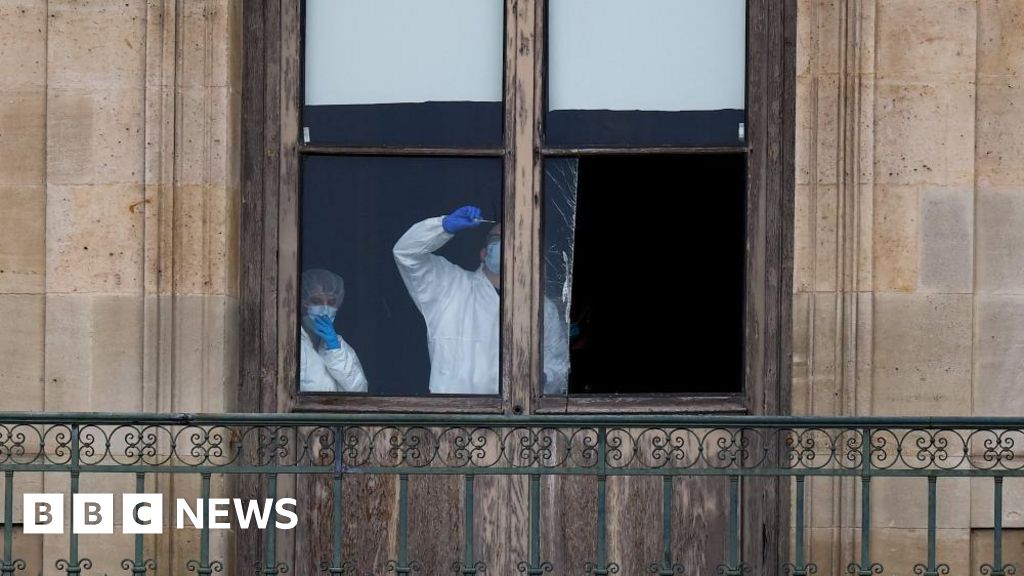
A manhunt is underway to find the four thieves before the jewels – which once belonged to French royals – are broken up.
Prices at the pump fell under $3 nationwide for the first time since Trump’s return to the White House.
Discount retailer looks for successor for Mike Schmidt, who is stepping down as chief financial officer
The discount retailer B&M has ousted its finance chief after reporting a £7m accounts blunder that will cut its annual earnings – its second profit warning within two weeks.
The company told investors it looking for a successor to Mike Schmidt, who is stepping down as chief financial officer, after the accounting error.
Isreal blamed Hamas for a ceasefire violation, with the renewed clashes casting doubt on the next phase of the peace plan.
“This was an unsafe and unprofessional maneuver that posed a risk to the aircraft and its personnel.”
South Korea’s Hyunmoo-5 missile has begun mass production, with the goal of deploying it by the end of the year.
Meeting called for end of sitting week inviting backbench MPs to argue for or against dumping the policy after Barnaby Joyce announced resignation
Coalition backbenchers are preparing for a showdown on net zero as pressure mounts on Sussan Ley’s opposition to resolve its position, with speculation more MPs could join Barnaby Joyce in quitting if the policy isn’t dumped.
Liberal and Nationals MPs have been invited to remain in Canberra after the upcoming sitting week for a three-hour, closed-door debate on energy policy, including net zero by 2050.