
Chris Jones made his mark, but not in the way you’d expect from a player of his caliber.
Day: October 7, 2025
On October 6, the Kyrgyz government banned the use of powder-like coal with particle sizes between 0-13 mm in Bishkek and the surrounding Chui region as part of a broader effort to combat air pollution and improve public health.
According to the Ministry of Natural Resources, Ecology, and Technical Supervision, this fine-grade coal is inefficient for household heating and generates significant dust, contributing to particulate air pollution. The new regulation applies only to private households and does not affect heating plants or boiler facilities.
As part of its wider decarbonization strategy, the Ministry of Finance has partnered with domestic banks to launch the Improving Air Quality project. This initiative supports the transition to modern, environmentally friendly heating systems and promotes cleaner household energy use.
Funded through a $50 million loan from the International Development Association, the project will distribute $31.8 million in preferential loans via Aiyl Bank, Eldik Bank, and Bakai Bank. The program aims to reduce household coal consumption, promote energy-efficient heating, and expand access to cleaner technologies across the capital and beyond.
Officials believe the project will help accelerate the adoption of eco-friendly heating solutions and improve urban air quality in Bishkek, a city of more than one million residents. Air pollution remains a chronic problem, particularly during winter months, when coal burning in households surges and accounts for an estimated 40% of the city’s harmful emissions. Bishkek frequently ranks among the top 10 most polluted cities worldwide, according to IQAir’s global index.
“Deranged Jack Smith got caught with his hand in the cookie jar. A real sleazebag!!!” Trump chided on Truth Social.
“Don’t worry,” the female passenger shared in the viral video posted on social media. “We also made it home.”
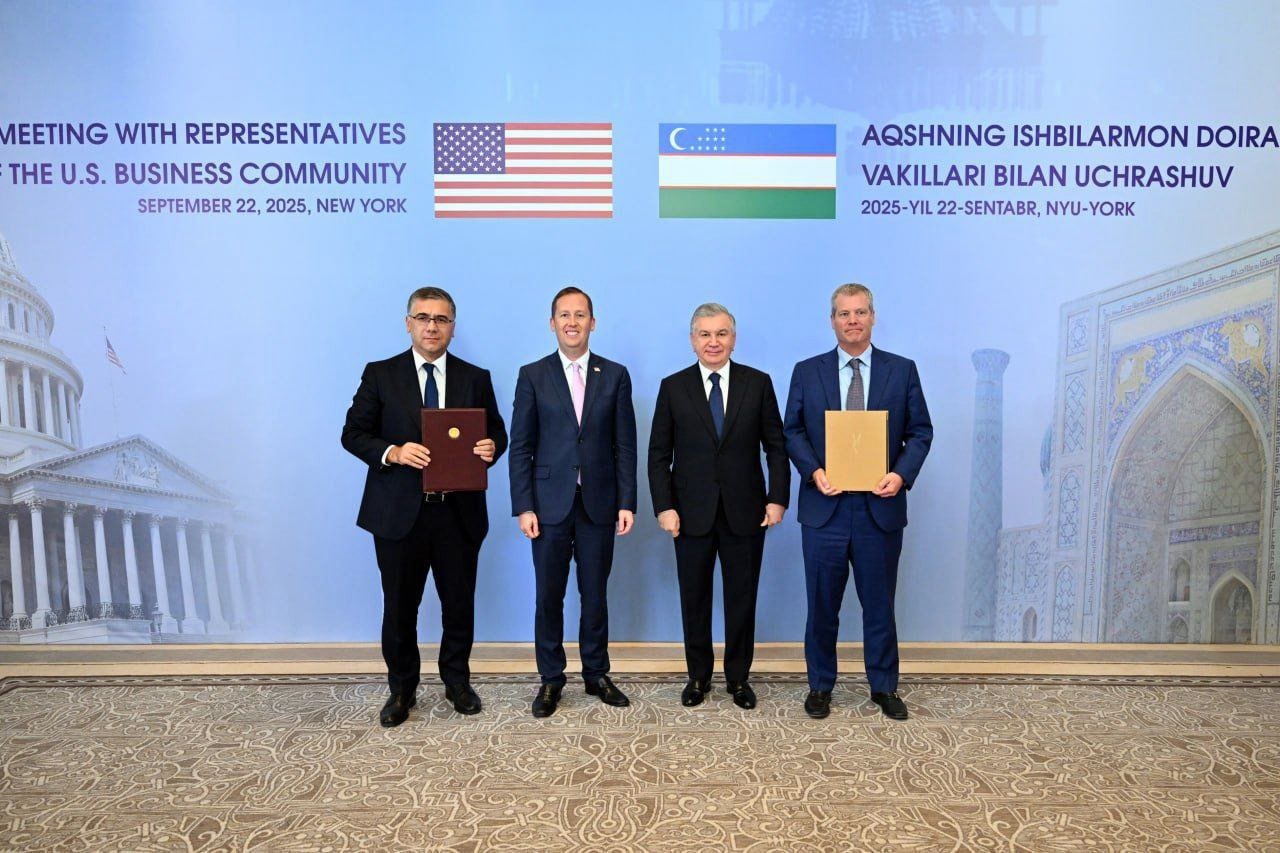
Speaking at the United Nations in New York on September 23, President Mirziyoyev of Uzbekistan made it clear that he no longer adheres to his predecessors’ post-Soviet policies of isolation and ‘go-it-alone’ economic development strategy – those days are over.
Uzbekistan today – or so the evidence suggests – is more open for business than at any time in its history, with the caveat that deals must be win-win, strategic, fair, and reciprocal. Though it’s unclear what that precisely entails, both Washington and Tashkent are clearly working to accelerate capital and trade flows.
“[Our] top-priority goal”, Mirziyoyev said at the United Nations, “is to fundamentally transform the lives of each and every family and citizen in our country, to enhance human dignity and wellbeing.” These are not mere words, but stand at the core of Uzbekistan’s efforts to build a new nation on the back of its – until recently – entirely archaic Soviet era socio-economic institutional structures and often ossified old ways of thinking.
With this in mind, the main event of Mirziyoyev’s recent New York visit – besides his meeting with President Trump – was the high-level US-Uzbekistan investment roundtable with senior executives of major U.S. corporations and financial institutions.
The roundtable was more than just symbolic. Its strong turnout underscored both the U.S. and Uzbek commitment to advancing joint initiatives in key sectors, including strategic minerals, transport infrastructure, energy, and smart agriculture. Top executives from Boeing, Citigroup, BNY Mellon, NASDAQ, Nvidia, Mastercard, Visa, General Motors, Jefferies, Oppenheimer, Cleveland Clinic, Cargill, and other U.S. corporations descended on the meetings in force, clearly eager to court the president and his team.
Image: president.uz
At their face-to-face meeting, President Trump personally congratulated Mirziyoyev on the landmark $8 billion Boeing-Uzbekistan Airways deal, projected to generate over 35,000 U.S. jobs – that in itself is not news. Rather, the NY business roundtable appears to have signaled that the American business community is more than just sniffing around for deals. Undoubtedly, a key force behind this growing interest is Washington’s expanding engagement with Uzbekistan.
Highlighting Washington’s strategic swing towards Uzbekistan, Mirziyoyev, Sergio Gor, U.S. Special Envoy for South and Central Asian Affairs, and William Kimmitt, Under Secretary of Commerce for International Trade, attended the signing ceremony of bilateral agreements, which ranged from transport, logistics and AI to mining, healthcare, and financial services. Their presence helped move discussions from initial interest to serious dealmaking.
To dispel investor uncertainty related to sovereign risk and other hidden booby traps often embedded in cross-border investment agreements, Mirziyoyev declared: “I assure you, I personally guarantee the success of U.S. companies operating in Uzbekistan. At the Ministry of Investments, a dedicated Deputy Minister for U.S. Affairs has been appointed. He will accompany you 24/7.”
While this makes plain Uzbekistan’s shift from aid recipient to active economic player, it’s also an attempt to shore up “investor butterflies” who are wary of corruption and shaky legal remedies in the event of contract disputes.
Moreover, recognizing that companies are often cautious about entering new markets, Washington has taken additional steps to encourage American companies to invest in Uzbekistan – at least so it would seem from the literature. For example, the U.S. Department of State’s newly released September 2025 Uzbekistan Investment Climate Statement strikes an overall positive note, avoiding the overly cautious or even negative framing often seen in such reports in the past.
With pragmatism in hand and a more engaged Washington, the long-awaited U.S. pivot to Central Asia appears to be taking shape. Strong, realism-based diplomatic efforts, if sustained and smart, should encourage deeper ties between the two countries and, over time, generate job opportunities in both the U.S. and Uzbekistan, a matter of concern for China and Russia.
Marimar Martinez’ lawyer says video shows agents provoked a clash before firing, fueling scrutiny of federal use of deadly force.
Uzbek companies have received official licenses from Afghanistan to explore and produce hydrocarbons, Uzbek Energy Minister Jurabek Mirzamakhmudov announced in a documentary titled The Path of a New Uzbekistan – A Truth Recognized by the World, broadcast on Uzbekistan 24.
According to Mirzamakhmudov, Afghan authorities have granted Uzbek firms the right to conduct geological exploration and develop hydrocarbon deposits on Afghan territory. Work began in mid-September at the Toti-Maidan gas field in Jowzjan province under a 25-year contract signed with the Uzbek company Eriell KAM.
“This will be the first stage,” Mirzamakhmudov said, as quoted by Uzbek media. “Depending on the results, we plan to expand cooperation to new sites. The project is being implemented as an initiative that will benefit both the Uzbek and Afghan economies.”
The Toti-Maidan field spans approximately 7,500 square kilometers and includes around 30 wells, according to Afghanistan’s Ministry of Mines and Petroleum. Uzbekistan is expected to invest about $100 million annually over the next decade, with plans to process the extracted gas domestically.
Mirzamakhmudov emphasized that the initiative reflects Uzbekistan’s growing role in regional energy cooperation and aligns with its policy of fostering mutually beneficial ties with neighboring countries. He noted that the project aims to support local industry development and job creation in both nations.
In August 2025, Uzbek and Afghan energy companies signed a series of agreements in Kabul to implement four major infrastructure projects. These include the construction of a 500-kilovolt Surkhan-Dasht-e Alwan transmission line, substation expansions in Arghandeh and Nangarhar, and upgrades to the Kabul-Nangarhar power corridor.
On Monday night, the 17-year-old siblings, whom the “Selena” actress shares with ex-husband Marc Anthony, posed for the cameras alongside Lopez.
The actress pressed Swift during Friday’s sitdown about whether she and fiancé Travis Kelce want to have kids, according to an audience member.
Holy guacamole!