
“I’m scared that they’re not keeping our kids safe. I don’t understand how this man got into my kid’s school.”
Day: October 1, 2025
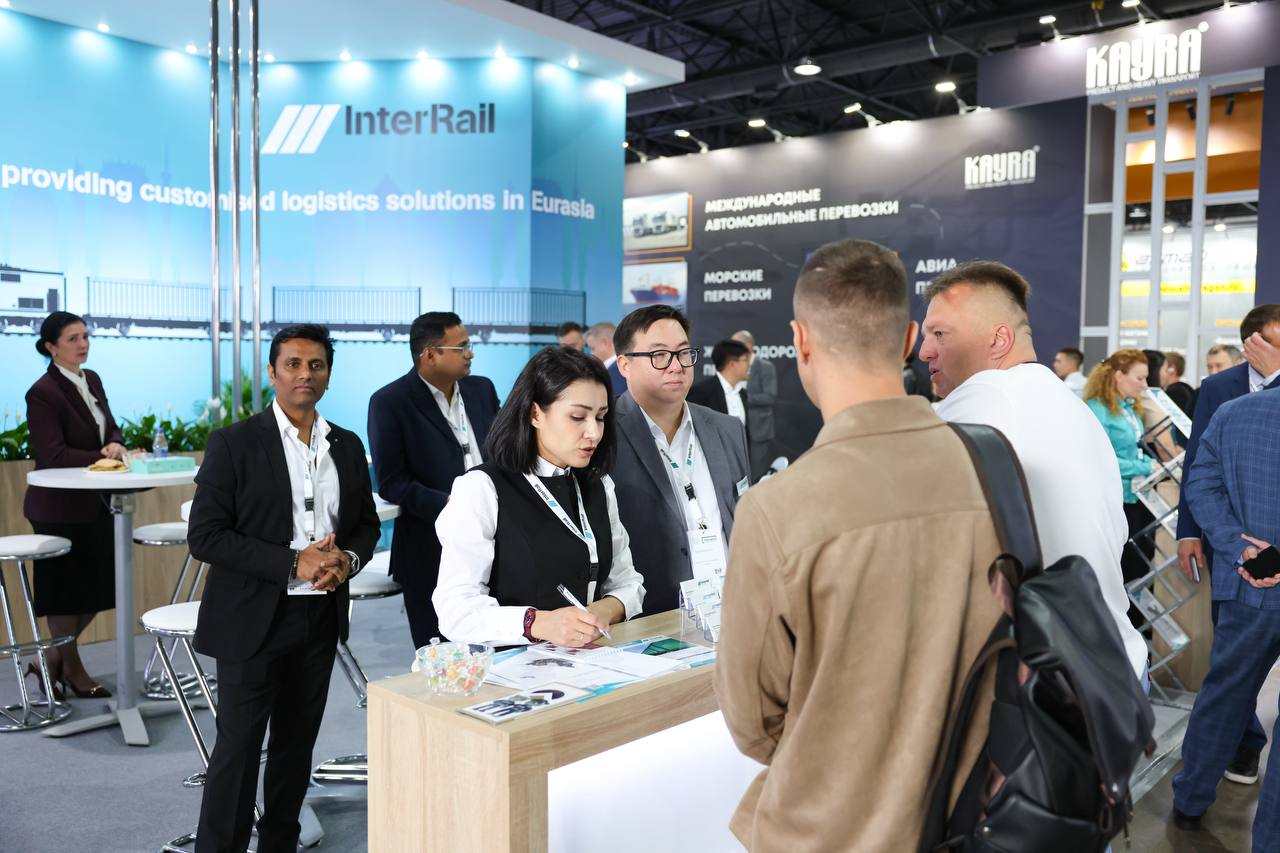
Almaty has reinforced its status as Central Asia’s logistics capital with the opening of the 28th Kazakhstan International Exhibition Transport and Logistics – TransLogistica Kazakhstan 2025. The event, being held at the Atakent Exhibition Center from September 30 to October 2, has gathered 303 exhibitors from 21 countries, underscoring the growing international interest in Kazakhstan’s transport sector.
Organizers reported a 21% increase in participation compared with 2024, with new entrants from India, Romania, and Pakistan joining companies from Kazakhstan, China, and Russia. National pavilions represented Belarus, Latvia, Lithuania, and Estonia. Diplomatic and business delegations from several countries, including Finland and Pakistan, also attended.
The event combined an exhibition floor with technical seminars led by logistics firms presenting developments in warehousing, machinery, and digital solutions. A central session was the VII International Business Forum “New Silk Way,” which featured a video address by President Kassym-Jomart Tokayev. In his remarks, Tokayev announced the launch of a second track on the Dostyk–Moyynty railway, a project intended to expand export and transit capacity on the Trans-Kazakhstan corridor linking China and Europe.
Image: TransLogistica Kazakhstan 2025
Another focus was the Trans-Caspian International Transport Route, known as the Middle Corridor. Kazakhstan and Azerbaijan signed a memorandum aimed at strengthening the route’s role as a multimodal link between Asia and Europe. The agreement follows a series of regional initiatives to adapt to new transport realities and diversify trade flows away from more traditional corridors. Beyond high-level sessions, participants examined practical issues facing the sector. Delegates also visited the Burunday Container Terminal to review operations in intermodal freight and storage.
TransLogistica 2025 was organized by Iteca and ICA Events Group with support from Kazakhstan’s Ministry of Transport and the national rail operator Kazakhstan Temir Zholy. While annual exhibitions often serve as promotional platforms, the scale of this year’s event and the agreements announced highlight Kazakhstan’s broader effort to position itself as a transit hub at the center of Eurasian trade routes.
Transport and public services in Greece have been disrupted by a 24-hour general strike against government plans to introduce a 13-hour workday.
Chris Otten
- Dan Steven Erickson built a $650,000 retirement fund from a career of mainly teaching.
- He also leveraged real estate investments and employer-matched retirement plans to grow his savings.
- Despite financial growth, he feels insecure about retirement and wishes he had invested earlier.
I got my first job at 17 and worked mainly dead-end jobs at restaurants, in construction, and at mini-marts. I was a late bloomer and started college in 1993 at 30.
I graduated with a bachelor’s and a master’s degree in communications and moved to Kansas to take a full-time position teaching at the community college level.
The job offered a state program called KPERs, a retirement program with some matching. I participated and contributed a small amount, which started my retirement journey.
I left the community college and Kansas a year later
My partner and I lost our firstborn child, and it was too hard to stay there. I then went to work for a college in Indiana. They also offered retirement benefits, such as matching, which I participated in. I worked there from 2002 to 2004.
I left Indiana and got a job at a college in Washington, where my daughter was born in 2005. I worked there for the next 20 years and just quit in June.
I bought my first property in Washington in about 2012, which got me into real estate
I then sold it in 2019 for around $70,000 profit — it paid off all my old student loans, credit card debt, and car payments.
I moved to Maine in 2022 and still taught remotely. I bought another property in Washington in 2021, sold it in 2023, and made a nice profit on it.
I bought a third property in Maine. We lived there for two years before deciding to move to Tennessee. I was unable to find full-time academic work in Maine, so I relocated for better job prospects.
I rent the condo in Maine to a family member, so the mortgage is covered while I pay rent in Tennessee.
I’ve never purposefully invested; it’s just been part of my benefits
About five years ago, I started contributing 7% of my income to retirement, which my employer matched. I was making enough money, so I invested an extra $200 a month. As I was consistent, my portfolio grew.
When I was 59 years old, my retirement accounts hit $500,000. I also received a small inheritance of $70,000 from my mom when she died in 2022. Along with my savings, that’s close to another $100,000 for my retirement. I’ve got about $100,000 in equity in my real estate. So, my retirement nest egg is about $650,000 thus far.
In my retirement journey, I’ve held many jobs. I worked for the Postal Service, but I quit because I was working too much for too little pay. Now, I’m working part-time at Cabela’s and part-time teaching.
I don’t feel secure enough, and it’s scary
I’m nervous. My ex-wife and I divorced in 2006. I’m single and building my retirement nest egg alone. Even though $650,000 sounds like a lot, it isn’t. If I’ve lived off $50,000 a year, my retirement savings will only last about 12 years.
I have some medical issues that may make my life a little shorter than the average person’s, but I don’t know about being 71 and still working, and I worry I could run out of money. In my 70s, I don’t want to rely on Social Security and public housing.
I’m working on securing another job in Tennessee. I’ll put in another four years to get to 65 and probably retire, unless I love my job. Then, I could start taking Social Security.
The one thing I would’ve done differently is I would’ve bought real estate earlier
I’ve made a lot of money off the real estate I’ve owned and sold. Real estate boosted me financially in my mid-to-late fifties.
I’m frustrated because I’m a creative person. I’d like to spend my life doing creative work, whether I make money or not, such as writing, music, songwriting, or photography.
Now, I’m stuck working 50 to 60 hours a week at various jobs, and it’s exhausting. I don’t like any of the jobs that I’ve had; they’re means to an end.
I wish I had started putting money away earlier, and that’s the advice I would give young people.
Of course, working dead-end jobs is hard, and you barely make it paycheck to paycheck. I probably would’ve started adding a little extra once I got a job with matching programs because that’s where it adds up.
Read the original article on Business Insider
Munich Oktoberfest fairgrounds closed after bomb threat and deadly explosion [deltaMinutes] mins ago Now
Ashley Landis/AP
- Athletes have become a key talent pipeline and recruiting pool for Goldman Sachs.
- The skills learned in sports translate well to the fast-paced, often demanding world of Wall Street.
- 4 employees told BI why sports can be a leg up when trying to break into the influential bank.
On the lacrosse field at Duke University, Madison Crutchfield’s coach encouraged her to “play fast, not hurried.”
Today, that advice has become a guiding light in her job working on Goldman’s fast-paced trading floor, where she says it applies to everything from executing an order to meeting a project deadline.
“That’s really transferable in the world of sales and trading, where there’s usually some ‘game clock’ ticking,” said Crutchfield, a vice president in equity derivative sales at the behemoth bank. “Having the ability to be efficient but not rushed is a critical edge.”
Her story is emblematic of why athletes — trained in grit, resilience, competition, and teamwork — have become a key talent pipeline and recruiting pool for Goldman. The bank has even recruited beyond the college ranks, hiring former NFL star Justin Tuck in 2018 and promoting him to managing director in 2022.
“It is a way to differentiate yourself,” Jacqueline Arthur, Goldman’s head of human capital management, told Business Insider. “These qualities are not just transferable but powerful and directly applicable to the dynamic environment of financial services.”
Simply put: Being an athlete is a way to get a leg up and stand out in an increasingly competitive landscape. Goldman, for example, received more than 300,000 applications for its 2024 summer internships, leading to an acceptance rate of less than 1%.
To understand why athletes tend to do well both getting into and ultimately working at Goldman, Business Insider spoke with Ryan Held, an Olympic swimmer who now works in Goldman’s cyber risk group; Sara Naison-Tarajano, a partner in private wealth management and former Yale tennis captain, and Arthur and Crutchfield.
They described how sports helped them land jobs at Goldman, what skills they developed in matches, games, and meets that have helped them in their demanding Wall Street careers, and why the firm views athletes as a competitive advantage.
Why Goldman wants athletes
Crutchfield said being a student athlete gave her an edge when she was applying for sales and trading internships in college.
“Lacrosse conditioned in me a mindset and temperament that I leaned on throughout the networking, the application, and when it came to it, the interviewing stages,” she said, “I draw on these intangibles — such as the need to think quickly on my feet, to stay resourceful, and to be a self-starter — every day.”
Goldman Sachs
Wall Street hiring managers have long advised going into interviews with a hook — something memorable that makes you stand out. The people who spoke to Business Insider for this story agreed that sports can play that role and demonstrate qualities you might need for the job.
“Grit, resilience, collaboration, leadership — as we think about the different demonstrable ways that candidates could express these things, certainly we’ve seen success in this venue,” Arthur said.
Crutchfield took it a step further, explaining that the word “athlete” can also represent a cultural ideal at Goldman.
“We often talk about being an ‘athlete’ at the firm, not to point out employees who were former sports athletes per se, but really to describe teammates who are versatile leaders,” she said, adding that it can also be used to describe someone who “process of continual improvement make them a total weapon on the trading floor,” Crutchfield said.
“In terms of mindset and work ethic, I would argue I’ve met so many more athletes at Goldman than I ever did playing sports,” she said.
Turning game skills into job skills
Sara Naison-Tarajano’s Goldman story began on the tennis courts at Yale. She planned to become a lawyer until conversations with friends and coaches — including a bond trader she practiced with one summer — pointed her toward Wall Street.
“People around me started to say, ‘Look, you have some attributes that would be really interesting in this world,'” she said. “You are very focused. You work as hard as anyone. You’re disciplined, you like to win, you’re competitive.”
Now, as a hiring manager and global head of private wealth management capital markets, Naison-Tarajano has also learned that athletes take direction like a champ.
“To be a good athlete, you have to be able to take very specific, very nuanced direction,” she said. “I think that translates well to most professional environments, but particularly something like Wall Street, where it’s a bit of learning on the job.”
It can also help with time management, said Held, a Division-1 swimmer at North Carolina State University who went on to win Olympic gold at the Rio Games in 2016 and competed again in 2024.
Kristy Sparow/Getty Images
“When you’re in college, you have to balance athletics, you have to balance academics, and then your own personal life,” said Held.
And it helps you deal with losing.
“A bad swim, bad season — how do you bounce back?,” said Held, adding, “I think those are all great skills to have.”
“I think sports teach you how to win and lose,” Crutchfield added. “Seasons are marathons, not sprints, and you quickly learn not to get too high or too low — staying even-keeled and patient is a must in order to stay focused.”
Advantage point
Arthur said Goldman’s interest in athletes is less of an explicit recruiting mandate and more of a pattern that has emerged as a byproduct of the qualities Goldman is looking for in young hires.
“We’re not tracking if somebody’s an athlete or not. We’re tracking — do we think that they have these qualities?” she said.
“There are a lot of other ways to demonstrate strategic thinking, leadership, communication, collaboration, and teamwork,” she said, adding, “but this is one that’s very attractive and clearly has gone on to serve these people incredibly well.”
Goldman Sachs
As Goldman hires more athletes, it can give other athletes an advantage in networking, which is how Held landed at Goldman Sachs.
After the 2024 Olympics, he began to explore life beyond competitive swimming. Held reached out to a former high-level swimmer who works at Goldman for advice on transitioning from athletics to the corporate world. That person introduced him to two more Goldman employees, who shared more connections still.
Eventually, the string of networking helped him understand more about different areas of the bank and land a job as an analyst in cyber risk.
“There is so much more to the bank. And it opened my eyes to, oh, maybe the financial sector is a place that I could work and pursue, so maybe I should do a little bit of research,” he said.
Read the original article on Business Insider
Nearly a third of Americans – 30% – say people may have to resort to violence in order to get the country back on track, according to the latest PBS News/NPR/Marist poll.
German police closed the Oktoberfest fairgrounds on Wednesday morning due to a bomb threat linked to a deadly fire at a house in northern Munich.
The affected products—linked to Indonesian processing facilities—have prompted enhanced FDA scrutiny across the seafood industry.
What to know about the international flotilla seeking to break Israel’s blockade of Gaza