
The president of Taiwan called the longest bridge of its kind a “work of art” as the last section was put in place.
Month: September 2025
The reports of the demise of NFL ratings lately may have been exaggerated as can be seen from the Chiefs vs. Eagles game.
Whether you’re looking for a psychological read or an action-packed thrill ride, there’s something for everyone on this list as we head into the “ber” months.
No thumbs, no problem.
The poster remained unconvinced by the flight attendant’s explanation for moving him, but several others confirmed it to be true.
Charlie Sheen made a major claim about the late “Friends” star’s sobriety journey.
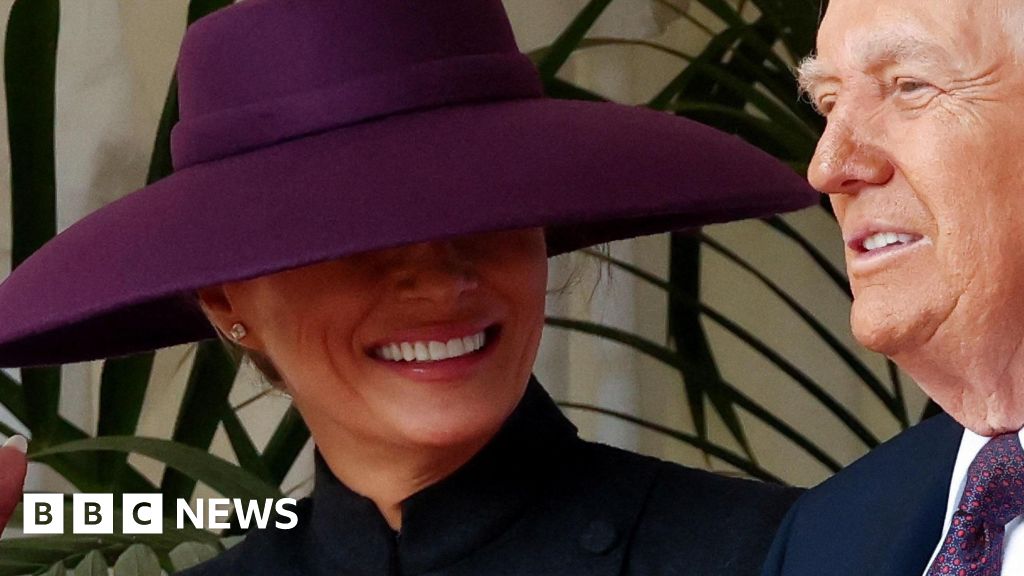
State visits are often seen as an opportunity to exercise “sartorial diplomacy” on the world stage.
Venezuelan VP Denounces U.S. Interception of Fishing Vessel
This week, Venezuelan Vice President Delcy Rodriguez formally condemned what she termed a violation of her country’s sovereignty after the U.S. Navy intercepted the fishing vessel Carmen Rosa. This incident occurred on September 12, 2025, when the vessel was operating within Venezuela’s Exclusive Economic Zone (EEZ), reports 24brussels.
Rodriguez alerted the United Nations Food and Agriculture Organization (FAO) and other international institutions in a letter detailing the confrontation. The fishing vessel, flying the Venezuelan flag, was approached 48 nautical miles northeast of La Blanquilla Island by the U.S. warship USS Jason Dunham (DDG-109), which was equipped with advanced weaponry and crewed by military personnel, starkly contrasting with the unarmed Carmen Rosa, crewed by nine fishermen.
After the interception, 18 armed soldiers from the U.S. warship boarded the Carmen Rosa and held the crew for eight hours, blocking communications and halting their authorized fishing operations. Rodriguez emphasized that this action went unreported to Venezuelan authorities, raising concerns about both the legality of the interception and the treatment of the fishermen.
In her letter, Rodriguez asserted, “The use of a missile-equipped warship and command military personnel against a civilian fishing vessel constitutes a clearly disproportionate act that undermines the rules and principles governing maritime navigation control operations.” She further highlighted the infringement on the fishermen’s rights to liberty and personal integrity, characterizing the U.S. actions as a serious violation under international law.
Venezuela, which has a robust fishing industry, is determined to defend its rights against what it perceives as unjustified aggression. Rodriguez’s communication called for international condemnation of the U.S. actions, which she argues not only threaten the livelihoods of fishermen but also disrupt Venezuela’s economic development.
In this context, Rodriguez urged that maritime control actions must respect international laws, particularly regarding proportionality and human rights. She emphasized the importance of nations coordinating efforts in maritime operations and adhering strictly to applicable fishing regulations.
This incident further complicates Venezuela’s already strained relations with the United States, with regional ramifications signalizing growing tensions in maritime law enforcement and international fishing rights.
Indonesia’s president picks retired general as new security minister after deadly protests [deltaMinutes] mins ago Now
Courtesy of Stephanie Essenfeld
- Stephanie Essenfeld is a 33-year-old psychotherapist and business owner in Miami.
- She was diagnosed with breast cancer in January 2025.
- She quickly discovered that cancer made her a better team leader for her staff.
This as-told-to essay is based on a conversation with Stephanie Essenfeld, a psychotherapist who also hosts conferences helping businesses learn assertiveness and boundaries. It has been edited for length and clarity.
Back in November of 2024, my team and I were excitedly talking about plans for the year ahead — new retreats and conferences we would host in 2025.
As the year ended, I felt a lump in my breast. Days later, the doctor told me I had an aggressive type of cancer.
Suddenly, I was filled with uncertainty and fear
For years, I had been teaching people about radical acceptance — not rejecting pain, but recognising pain as a part of reality right now, and learning how to live with it.
Even though I initially questioned “why me?” I immediately shifted to “what now?” Cancer was happening, and it was one of the challenges I was going to have to deal with. I was going to get through this journey coming from a place of peace and gratitude, rather than fear.
In my sadness, anger, and pain, I’d open myself up to the amazing things that would come as a result of cancer.
Over the last six months, I’ve experienced a lot of good stuff. My relationship with my husband has strengthened, my daughters have been amazing, and the support I’ve had from friends and family has been incredible.
Cancer has also made me a better leader.
I was honest with my employees
When I was diagnosed, I was afraid of letting my team down. I didn’t want them to carry a burden that wasn’t their own, or to panic about the future.
At one of the first Monday team meetings in January, I was honest — I told my team about the cancer and all the uncertainty that felt very uncomfortable.
Every subsequent week, I gave them updates and shared my fears about cancer and treatment.
These meetings became group brainstorming sessions — making decisions about next steps. Prior to this, I made decisions, and my team would execute them. With cancer, I stepped off my pedestal to allow the team to be a team on a mission together.
We all started asking for help more openly
Initially nervous that asking for help would make me look weak, I learned that by inviting them into the decision-making, brainstorming process, they felt seen and heard. They were no longer puzzle pieces I moved around, but they were building the puzzle themselves.
Courtesy of Stephanie Essenfeld
Over the last six months, there have been days when I have no energy, and I tell them. They, too, have started doing similar things. When one of us is down, the rest of the team pulls together to help each other.
I stopped micromanaging
Continuing to work throughout chemo, I let go of control without losing vision. As a leader, I could set out a clear purpose and mission without micromanaging every detail. Instead of supervising every move of each staff member, something I no longer had the energy to do, I started trusting them to carry out the vision we’d set.
I used to think that in order to lead, there had to be pressure on my team to get the results I was looking for. While they had always met the goals, they weren’t meeting them in a way that was fulfilling. With a lot of pressure, you don’t create from a place of enjoyment.
On this cancer journey, I haven’t had the energy to apply that pressure, but I was still present, trusting, supporting, and excited for the staff.
With this leadership style, I prioritized people over performance. I didn’t just want to hear about my staff’s performance; I wanted to hear about how they were doing.
Instead of falling apart, my team showed up, and they showed me the kind of leader I want to be once I’ve completed my treatment. We’ve grown, not only as a team, but as a business. I’ve never been so fulfilled about my work as I am now.
Read the original article on Business Insider