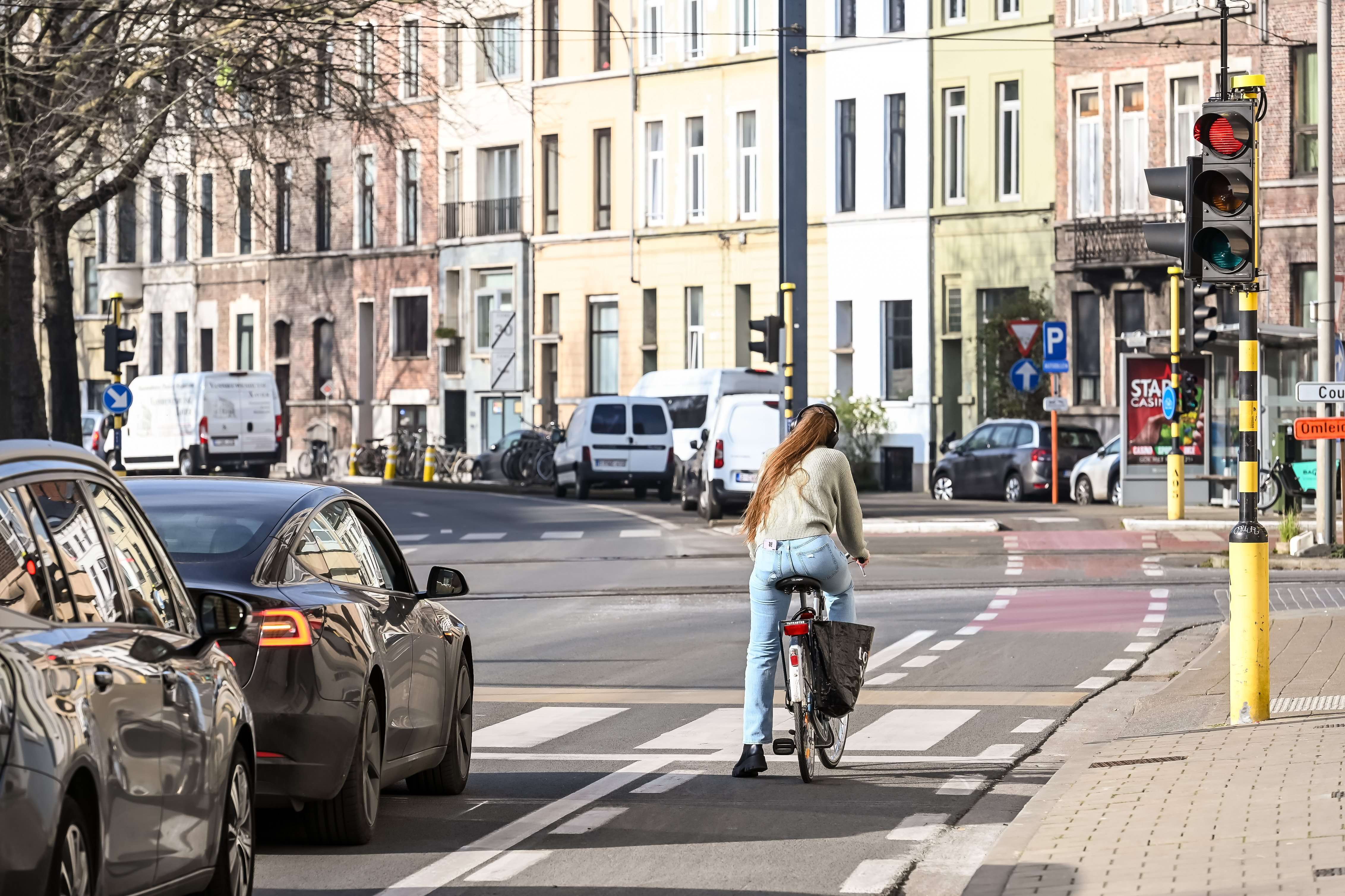
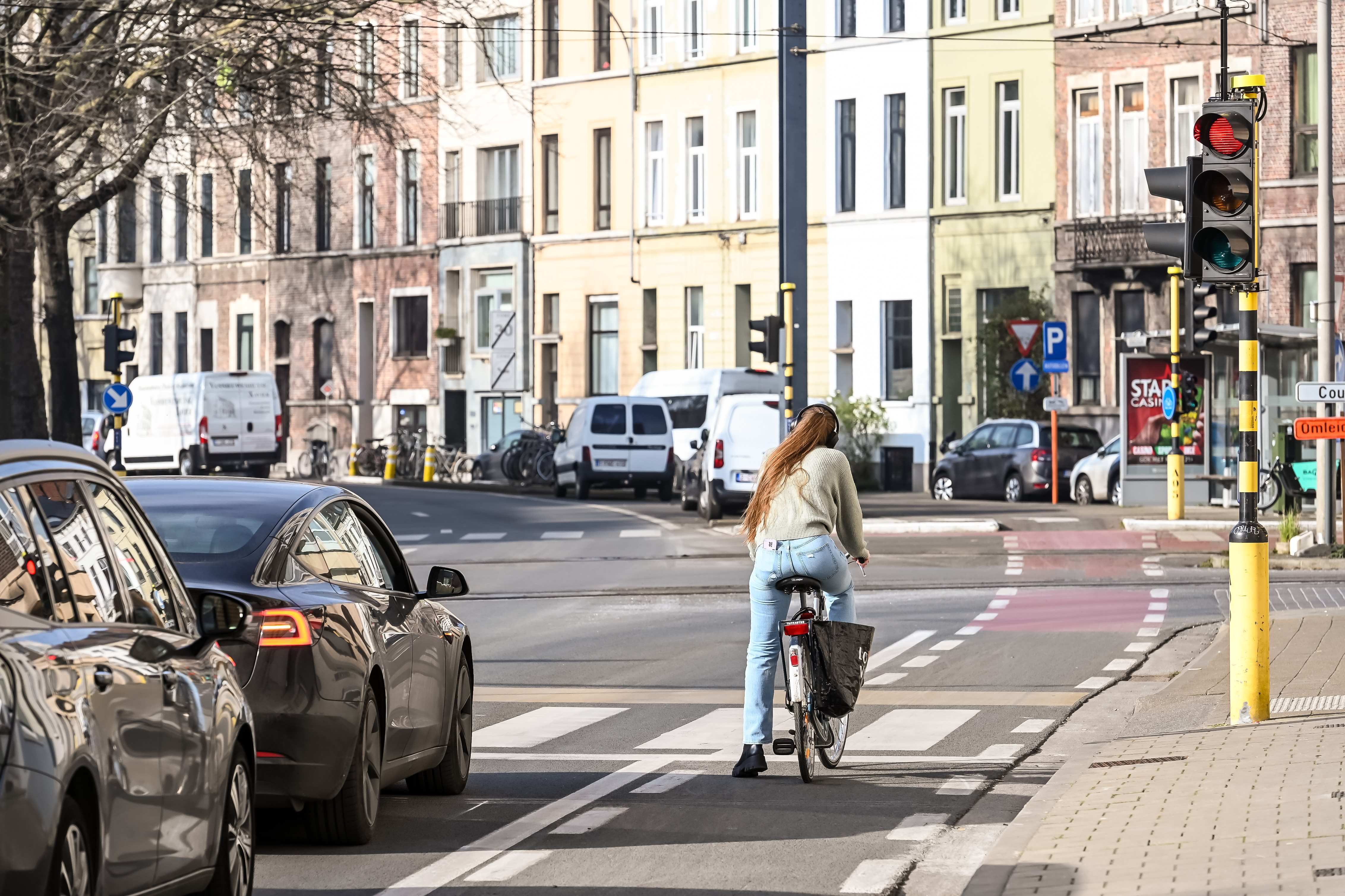
Noise pollution is increasingly recognized as an issue intertwining environmental concerns and social inequality; a recent citizen study titled “De Oorzaak” conducted by the University of Antwerp, UZA hospital, and newspaper De Morgen highlights that lower-income households experience significantly more disturbance from noise., reports 24brussels.
The research indicates that road traffic is the primary source of noise pollution, with cities like Antwerp, Ghent, and Leuven recording average noise levels that exceed recommended thresholds—60 decibels for average daytime noise and 50 decibels during the night. Professor Cedric Vuye from the University of Antwerp elaborates on these findings, underscoring the extent of the issue.
Furthermore, individuals exposed to elevated noise levels are at a greater risk of health complications, including sleep disorders and stress-related illnesses. Salivary analysis from a segment of the Antwerp participants illustrates that those with hyperacusis—a condition marked by sound sensitivity—exhibit higher cortisol levels, a key indicator of stress.
Conversely, the study noted a positive correlation between the perception of nature sounds and resident satisfaction with their living environments. Participants who reported noticing natural sounds expressed greater contentment, pointing to a crucial aspect of urban living.
“This confirms that investing in more green and quiet areas is not only ecologically or aesthetically valuable, but also contributes directly to health and well-being,” remarked researcher Jonas Lembrechts from the University of Antwerp.
The citizen study commenced in late 2023, with findings published nearly two years later. A total of 4,665 participants took part in a “Sound Walk,” while over 10,000 individuals completed the “Great Sound Survey.” Sound sensors collected data across 1,452 locations in Antwerp, Ghent, and Leuven over a six-week period. Additionally, close to 100 residents engaged in sleep and hearing research, and 128 individuals shared data from their smartwatches.
Gaston Browne Urges International Cooperation Against Global Crises
The Prime Minister of Antigua and Barbuda, Gaston Browne, called for enhanced international cooperation to tackle pressing issues such as drug trafficking, climate change, and armed conflict during his speech at the 80th session of the United Nations General Assembly. Browne emphasized the need for action grounded in international law, reports 24brussels.
In his address, Browne condemned the use of lethal force in combating drug trafficking, advocating instead for interventions based on “clear legal authority and rules of intervention that minimize the risk to life.” His remarks coincided with increasing concerns regarding the military buildup in the Caribbean, particularly the presence of a nuclear submarine, leading him to assert that the region must remain a “zone of peace, not a scene of military conflict.”
Additionally, Browne rejected the long-standing trade embargo against Cuba, characterizing the island’s inclusion on the list of countries sponsoring terrorism as a “hoax.” His comments highlight the regional tensions and the need for diplomatic engagement to foster stability.
Turning to the humanitarian crisis in Gaza, Browne denounced what he described as the “forced displacement of the population and the genocide” taking place, calling for urgent humanitarian aid and civilian protections. He expressed support for a two-state solution, envisioning peaceful coexistence for Israelis and Palestinians.
On climate change, Browne spotlighted its severe repercussions for island nations like Antigua and Barbuda. He advocated for a just energy transition and proposed a carbon tax targeting the largest emitters of greenhouse gases, underscoring the urgency to address illegal fishing and ocean pollution.
The Prime Minister also unveiled a proposal for a multidimensional vulnerability index aimed at facilitating financial assistance to developing countries, clarifying that small states seek equitable financing rather than charity. He warned against the “retreat of multilateralism, international law, and human rights,” noting that the world stands at a crucial juncture.
As the UN commemorates the 80th anniversary of its Charter, Browne underscored the ongoing pursuit of global unity, asserting, “Without international cooperation, universal peace will not be achieved.” He championed a law-based peace and restorative justice for nations grappling with the legacies of colonialism and slavery, framing justice as a principle of restitution for historical injustices rather than charity.
The U.S. national anthem declares the United States of America “the land of the free and the home of the brave”.
The Chinese national anthem claims no such thing. It starts by calling upon the people of China to rise up if they don’t wish to be slaves, but then describes them as a collective: “We are millions with one heart.”
Rugged individualists, really?
Indeed, Americans are supposed to be rugged individualists valuing their personal freedom and independence above all else.
Even Americans’ love of firearms, enshrined in the broadest possible interpretation of the words of the Second Amendment to the U.S. Constitution, is always justified as a way to safeguard its rights and freedoms.
Just who is the obedient bunch?
While Americans are generally viewed as diverse and messy, the Chinese are deemed to be highly organized by the powers that be. Plus, supposedly they are all looking the same and march in step on command from their leader.
Given those assumptions widely held in the West, imposing any major policy on Americans therefore should be about as easy as herding cats.
Trump works his mind-numbing magic
But in just nine months since Donald Trump returned to the White House, Project 2025 has been imposed on the United States with a speed and efficiency that you would expect from China, not the U.S.
The U.S. Constitution and its presumably strong safeguards are being resolutely pushed aside, despite all the global bragging by just about by every American politician for the past 249 years.
“Gleichschaltung”, American style
At Germany’s disastrous turn to the Third Reich, big efforts were made to eradicate any sense of independence of the various branches of government and ensure that all other institutions, including cultural actors, were unmistakably aligned with the new totalitarian ideology.
Analysts of modern history must be shocked when they arrive at the utterly distasteful realization that there is evidence that Josef Goebbels operated at a slower pace and with more circumspection to implement his strategies to eradicate any resistance. It can be argued that he had to contend with more institutional resistance.
How the process of succumbing to Trumpism marched forward in the U.S.
Due process and habeas corpus have disappeared virtually overnight and the two co-equal branches of government, the legislative and judicial branch, became willingly subservient to the Executive.
Meanwhile, the freedom of the press has been severely curtailed by frivolous lawsuits and self-censorship and utter corporate spinelessness. Academic freedom, supposedly a financially very well-resourced bedrock of liberty and research in the United States, collapsed as universities caved in to grotesquely unrefined Trump administration pressure.
Finally, the courts and even the military have been weaponized against domestic political opponents.
Is this America’s much-touted exceptionalism?
Never mind that, to use a direct quote from the movie Cabaret, Trump got two extremely popular late-night TV comedians cancelled for the capital offense of ridiculing him. If they are guilty of anything, then it is for having picked on too easy a target.
All in all, America’s much-touted exceptionalism went down the drain at a stunning speed.
True, there have been protests and a bunch of lawsuits have been filed, but they have not given the men and women implementing Project 2025 as much as a hiccup.
Faster than Xi’s takeover
In a more contemporary context than early 1930s Germany, the collapse of American democracy happened faster than what it took Xi Jinping to install himself as a ruler for life in China.
Is there hope? Of course, Americans haven’t always been as obedient and ready to succumb to autocratic power as many of them are now.
Older people still remember the 1968 student takeover of the Columbia University campus, the same university that pusillanimously caved in to Trump’s pressure. There were also nationwide civil rights rallies, protests against the war in Vietnam, open dissent by individuals and politicians, and a free press that acted as a check on the powerful.
What a difference broader-based prosperity makes
But in the 1960s America was prosperous, jobs were plentiful and paid extremely well, while middle-class families could afford to send their kids even to the best colleges and not just college graduates had a realistic shot at acquiring a home.
The older generations were the valiant winners of World War II and the Baby Boomers were confident of their own future and wanted to make their society better.
It didn’t happen overnight
Of course, America’s transformation into a Western version of China didn’t happen overnight. The road to 2025 began in 1980, when the election of Ronald Reagan inaugurated the Decade of Greed.
Then came the concentration of corporate power in the 1990s, the emergence of an American police state in response to the 9/11 terrorist attacks and, finally, the massive widening of the income gap between the rich and everyone else.
What is the same and what is different in China
True, under Xi, China fell once more under a one-man rule. But the Chinese people are on average wealthier than they have ever been and their global influence is rising.
Russia, once a communist “big brother”, is now a Chinese vassal state. Xi may be an authoritarian, but he is respected around the world.
Conclusion
The United States, in sharp contrast, succumbed to Project 2025 on its way down. The country — unlike its oligarchs — is becoming poorer, its allies are turning away and its president is a global buffoon.
Small wonder Americans pine away for the period of their greatness in the early post-World War II decades. The problem is that aside from donning Made in China(!) MAGA hats, they are mostly just fearful and brow-beaten to do anything about it.
Trump cancelled a planned Thursday meeting with Democratic leaders in Congress to try to avert a shutdown.
Saul Loeb / AFP via Getty Images
Unless Congress passes a funding bill, the US government will shut down on Wednesday.
That could lead to shuttered national parks, delayed flights, and mass firings of federal workers.
Here’s how we got here.
As of now, the US government is on track to shut down next week.
Republicans and Democrats haven’t agreed on a plan to fund the federal government past Tuesday, September 30, when current funding expires.
That means federal employees may be forced to work without pay (or fired), national parks and museums could close, and other important government functions could be suspended.
Here’s how we got here — and what could happen next.
Government funding requires agreement between the two parties
Republicans control the House, the Senate, and the presidency — but they can’t fund the government through GOP votes alone.
That’s because in the Senate, most major bills require at least 60 votes to pass due to the “filibuster.” There are only 53 Republican senators, so they need Democratic votes to pass a government funding bill.
Both parties want to pass a short-term funding bill to give Congress more time to pass full government funding bills for next year.
Yet they remain at an impasse.
Democrats, under pressure from their base, are eager to use the process to extract concessions from Republicans — or at least demonstrate a willingness to fight.
Meanwhile, Republicans have refused to negotiate with Democrats, despite the need to earn their votes.
That refusal includes President Donald Trump, who cancelled a meeting with Senate Minority Leader Chuck Schumer and House Minority Leader Hakeem Jeffries that had been slated for Thursday.
“If it has to shut down, it’ll have to shut down,” Trump told reporters on Friday, saying that Democrats are “the ones that are shutting down the government.”
Democrats and Republicans have competing funding proposals
As of now, there are two competing proposals to fund the government and avert a shutdown.
The Republican bill would continue government funding at current levels through November 21, along with an increase in security funding for lawmakers in the wake of the killing of Charlie Kirk.
The Democratic bill would fund the government through October 31, and includes several provisions that Republicans are unlikely to accept, including a reversal of Medicaid cuts enacted in the “Big Beautiful Bill” and a permanent extension of government subsidies that support the Affordable Care Act.
If the Medicaid cuts proceed and the subsidies are not extended, millions of Americans are projected to lose their health coverage in the coming years.
Earlier this month, the GOP funding bill passed the House largely along party lines but stalled in the Senate, failing to reach the necessary 60 votes to pass.
The Democratic bill only received a vote in the Senate, where it also failed.
What happens when the government shuts down
It’s still somewhat unclear what will happen if the government shuts down next week.
While funding runs out for much of the government, programs funded through so-called “mandatory spending,” including Social Security, Medicare, and Medicaid, will continue to be funded.
Federal employees are not paid for the duration of the shutdown, though they’re guaranteed to receive backpay once it’s over. Some workers could be “furloughed” — essentially placed on a leave of absence — while others will be forced to continue to work.
The Trump administration has signaled that there could be more mass firings if the government shuts down. Some top Democrats have been dismissive, calling it an “attempt at intimidation” while noting that Trump has already fired hundreds of thousands of people.
The administration has broad discretion in how the federal government operates under a shutdown, but aside from the potential firings, it has not yet laid out what will happen.
During previous shutdowns, national parks and museums have been forced to shutter. With air traffic controls and TSA employees working without pay, flight delays are possible.
There’s also an economic impact: The Congressional Budget Office estimated that during a five-week shutdown that ended in early 2019, real gross domestic product was reduced by $3 billion.
Kim Schewitz visited the same rustic cookery school as “tradwife” influencer Hannah Neelman.
Getty Images; Kim Schewitz/BI, Tyler Le/BI
I was tired, scrolling Instagram at my desk in London, when I noticed Hannah Neeleman wasn’t in her usual spot.
In the video posted in February, the “tradwife,” known online as Ballerina Farm, was kneading sourdough focaccia in a cottage I didn’t recognize. In the next reel, she frolicked down a rainy country path.
I’m among the hundreds of millions of people who have watched the 35-year-old making everythingfrom mozzarella to lemon meringue pie from scratch in her rustic Utah farmhouse kitchen while tending to her eight young children. This was the first time I’d seen her in a different setting.
A caption told me she was at Ireland’s prestigious Ballymaloe Cookery School, where she and her husband, the son of JetBlue’s founder, were reported to be taking a famed three-month intensive culinary course. It costs $19,000 per person, excluding accommodation. (Neeleman didn’t reply to Business Insider’s request for comment).
On the farm, students learn knife skills, including working with fish and meat, fermentation, baking, and how to prepare a menu.
The front of Ballymaloe Cookery School.
Kim Schewitz
The content Neeleman shot there hearkened back to a romanticized time before ultra-processed food made up a large chunk of our diets, when meals were home-cooked, and people had hobbies instead of phones. It was the antithesis of my daily life in a global city.
The more of her slow-paced content I watched, the less I thought about the debate over whether Neeleman’s brand of romanticized homemaking is an aspirational celebration of married life and motherhood or sanitized, performative, and regressive.
Neeleman’s life looked like a pretty appealing antidote to the burnout I was feeling from the modern corporate grind.
There was nothing else for it. I booked a flight to Ireland and signed up for a 2 ½-day course that cost 850 euros, or $958, to live out my own free-range fantasy.
Day 1
Founded in 1983, Ballymaloe is housed in a converted apple barn, surrounded by a maze of cottages, gardens, and fields. It’s renowned on the culinary circuit, with almost every ingredient used at the school being grown on the farm or locally sourced.
This farm-to-table approach hits a sweet spot between luxury and rustic, and the school has attracted celebrities such as Kate Winslet and Stanley Tucci.
When I arrived after a short plane ride from London to Cork, I was hypnotized by the harmony of trees, plants, birdsong, and farmhouse architecture. It was almost farcically idyllic.
Fresh herbs grown on Ballymaloe farm are used in the kitchen.
Kim Schewitz
A staff member led me to my private room in a cottage, which I shared with nine fellow students. I made fast friends with my new neighbor, Alice, a 32-year-old Australian foodie who had been living in Cork for nine months. Like many others I spoke with at Ballymaloe, she had been gifted the course by her family. More than one student told me visiting the school was on their bucket list.
Alice and I spent the afternoon exploring the grounds, traversing muddy paths, and sniffing wild garlic in the kitchen garden. We browsed the little library in the attic — where students can check out recipe books, new and old — and drooled over the Garden Shop’s extensive range of artisan snacks, condiments, oils, and vinegars.
The kitchen garden.
Kim Schewitz
That evening, as the sun set outside the farmhouse kitchen whose white shelves were lined with Le Creuset cookware and local pottery, we chatted with our fellow cottage mates, mostly jovial Irish women in their 40s or older.
I felt very present since no one was on their phones or holed up in their rooms.
Day 2
Each day started with a refined but colossal buffet breakfast at 8:30 a.m. in the school’s dining room. Everything was made from scratch.
The TikTok girlie in me screamed as we sat at brightly colored wooden tables to devour our choice of freshly made bread (baguette, focaccia, soda bread, or sourdough), poached fruits, homemade yogurt and the Middle Eastern strained yogurt labneh, local honey, orange and hibiscus water kefir (agut-friendlyfermented beverage made of water and water kefir grains), porridge with Jersey cream and brown sugar, apple muesli (an unbaked mix of oats, nuts, seeds, and dried fruit), granola, homemade butter, and jams. We could choose from raw, organic pasteurized (served hot and cold), or oat milk.
Breakfast was served at 8:30 each morning.
Kim Schewitz
It was a stark contrast from my typical commuter’s breakfast of a coffee and a snack bar.
Ballymaloe is very much an authentic cookery school, not a wellness or longevity hot spot. Still, the morning spread, brimming with protein, fiber, and healthy fats, hit every current health and food trend. There wasn’t an emulsifier or caking agent in sight.
I could seewhy a business-savvy homemaking influencer looking to expand their empire might come here for content and inspiration.
Everything at the breakfast buffet was made from scratch.
Kim Schewitz
Classes — a mix of demonstrations and practical cooking sessions — started at 9:30 a.m.
Rory O’Connell, a charismatic chef who cofounded Ballymaloe with his sister and fellow chef Darina Allen, stood beneath a large, tilted mirror in a demo kitchen like you’d see on “Good Morning America,” so his 66 students could watch and learn.
He made 10 recipes in three hours that morning, including brown seedy bread, wild garlic pesto, chicken stock, and rhubarb cobbler. We were given a booklet containing all the recipes.
Rory O’Connell (left) giving a cooking demonstration with help from some colleagues.
Kim Schewitz
Halfway through class, we took a break to eat some scones with homemade jam and cream and decide which recipes we wanted to tackle ourselves.
At about 1 p.m., it was time for more food. We returned to the dining room for a three-course lunch of tomato and basil soup, black-eyed-bean stew, and frozen meringue cake. The tables had signs that read: “Pleaseno phones. Talk to your new friends!”.
Stuffed to the brim with local produce, I took my seat at 2 p.m. for the next demonstration. Rachel Allen, a famous chef who’s Darina Allen’s daughter-in-law, showed us how to prepare seven more recipes, including strawberry tartlets, pan-grilled fish, and rhubarb jam. After her three-hour demo, we tasted what she had made. The flaky, creamy fish was my favorite.
Rachel Allen (left) giving a cooking demonstration.
Kim Schewitz
By this stage, I was exhausted from all the listening and consuming, but we still had a garden and farm tour on our agenda. Toby Allen, Darina Allen’s son, guided us for 30 minutes through the grounds, including the herb garden, fruit field, and Celtic maze, explaining what grew where and how the farm worked.
My battery was running too low to socialize any longer. I hurried back to my room at about 6 p.m., had a shower, and read my book under a cozy quilt in bed.
Day 3
At 7:30 a.m., a group of us joined Billy Wall, Ballymaloe’s milkman of five years, in a barn to watch the farm’s seven Jersey cows be milked by machine.
Raw milk fresh from the udder.
Kim Schewitz
He handed me a glass freshly squeezed from the udder, which I hesitantly accepted. They’re advocates of raw milk at Ballymaloe, and Billy assured me it was safe to drink because they test it monthly. In general, raw milk can carry pathogens that make humans sick.
I took one sip and decided that was enough. It was warm and super sweet, but the fact that I could make eye contact with the cow whose milk I was drinking was somewhat off-putting.
The Jersey cows are milked every morning.
Kim Schewitz
Later at breakfast, I had porridge with cream and sugar, followed by a small bowl of saffron-and-pistachio-infused labneh and puffed rice cereal. Then, we hit the school’s student kitchens for the first time, armed with a set of professional kitchen knives and the gifted recipe booklet.
I chose to make strawberry tartlets, tomato sauce, and pan-grilled fish with beurre blanc, a creamy sauce made of butter, cream, white wine, and shallots.
The author’s strawberry tartlets.
Kim Schewitz
I think of myself as a good cook, but preparing food under the watchful eye of trained chefs made me nervous, like I was learning an entirely new craft. I was struck by how stringently they followed each step in a recipe, actually waiting for the onions to sweat, for instance. They stressed the importance of timing when demonstrating or instructing from the sidelines. At Ballymaloe, we had the luxury of time.
I had a few mishaps, including forgetting to add sugar to the pastry cream, but my teacher took it as an opportunity to show me that pouring it through a fine sieve would enable me to sweeten it without ruining the smooth texture.
Kim Schewitz in one of the Ballymaloe student kitchens.
Kim Schewitz
After a lively three hours in the kitchen, we had another extravagant lunch of spiced eggplant, pan-grilled fish, and garlic mashed potatoes, followed by a cooking demonstration by O’Connell.
He made poulet au vinaigre (chicken in vinegar), herbed orzo, and iced coffee cake with chocolate swirls, and we tasted each.
That evening in the cottage lounge, I watched an episode of a food travel TV series by O’Connell with my cottage mates, whom I felt like I’d known for many months.
Final day
With a heavy heart, I filled my breakfast bowl for the last time. That day, I made fettuccine Alfredo with asparagus from scratch and chicken paprikash, a Hungarian dish rich in paprika. I’d never made fresh pasta before, and didn’t realize my arms would ache the next day from the 30 minutes of kneading.
Making chicken paprikash.
Kim Schewitz
My teacher guided me as I butchered a chicken for the first time, dividing it into separate cuts of breast, wing, and leg. By 12:30 p.m., we made our way to a dining room for the final time to feast on chicken, pasta, pickles, salad, and deeply moist and rich chocolate, which went perfectly with a cup of coffee.
The final meal of the course consisted of the chicken paprikash and pasta that the students made, and a green salad.
Kim Schewitz
A few hours later, I left three days of farm tranquility and headed for my budget airline flight, a touch emotional that the experience was over. I took my crumb-covered seat, feeling so full it hurt, and thought of how I could use what I learned at Ballymaloe in London.
I enjoyed the Ballerina Farm lifestyle. Spending time in nature, using my hands, and eating whole foods felt restorative on a cellular level. At a time when we can feel disconnected from one another and exhausted by modern life, being hit by that feeling when watching tradwife content is what makes it so engaging.
I soon realized, however, that I simply didn’t have the energy, money, or time to follow a Ballymaloe lifestyle back in London. Predictably, my strong conviction to eat locally sourced food back home — by looking up farmers’ markets and delivery services promising locally grown produce — quickly faded as I reentered the real world.
Freshly-made yogurt, kefir, and other fermented foods in the Ballymaloe fermentation shed.
Kim Schewitz
Though they present a traditional homemaker lifestyle on their carefully curated TikTok accounts, it’s not lost on me that women like Neeleman are full-time content creators, running businesses, and probably earning good money.
I was drawn in by the domestic fantasy. But now I know it was just that: a fantasy.
A greenhouse in the Netherlands that grows tomatoes.
Adityaman Singh / Business Insider
The Netherlands has some of the most efficient greenhouses in the world.
Dutch company Looye Kwekers has tomato plants that grow a foot a week with limited water.
The Netherlands yields 12 times more tomatoes than the average tomato farm globally.
The Netherlands is about the size of the state of Maryland, yet it’s the second-largest agricultural exporter in the world by value, behind the US.
It produces everything from eggs and beef to tomatoes and peppers, and in 2024, it farmed goods worth over $140 billion. By comparison, the US’s agricultural exports amounted to about $176 billion that year.
Still, it’s the Netherlands that leads in intensive greenhouse production and innovative technology that helps crops grow faster and produce higher yields than the global average. That’s one of the country’s secrets for how it can produce so much with so little space.
In fact, the US and other countries worldwide are developing larger-scale Dutch-style greenhouses in hopes of catching up. Here’s an inside look at some of the Netherlands’ cutting-edge greenhouses and how they work.
Watch how the Netherlands became the world’s second-largest agricultural exporter in the video below. Keep reading for an inside look into its beautiful greenhouses.
The Netherlands has plenty of outdoor farms.
Colorful farm fields in the Netherlands.
Getty Images
The Netherlands dedicates more than half of its land to farming. While its climate is relatively mild, it can’t grow certain crops like tomatoes year-round in outdoor fields. So, it relies on massive greenhouses to grow billions of pounds of the red fruit and other crops year-round.
The country’s greenhouses aren’t just farms — they’re the cutting edge of agriculture.
Fields of greenhouses in the Westland region of the Netherlands.
Getty Images
The Westland region in the Netherlands has one of the largest concentrations of greenhouses worldwide that are also some of the world’s most efficient, using climate control, water recycling, and energy-efficient LED lighting to grow more crops faster than most places on Earth.
At night, LEDs light up the horizon.
LED lights in greenhouses in the Netherlands.
Getty Images
Overhead, efficient LED lights mimic the sun and help create optimal growing conditions year-round, speeding up plant growth.
These LEDs run on almost half the electricity as a high-pressure sodium lamp.
After dark, the powerful lamps light up the horizon in orange, purple, and green hues.
Farmers have to take scissor lifts to the top of this greenhouse.
A worker lowers the strings for tomato plants.
Adityaman Singh / Business Insider
This greenhouse, belonging to the family-owned Dutch company Looye Kwekers, houses thousands of tomato plants.
The plants grow close to a foot a weekby climbing up strings that hang from the ceilings.
Farmers take scissor lifts to the top each week, lower the strings by a foot, and wrap the tips of the tomato plants around the new string, so they’ll keep growing.
The tomatoes are picked by hand.
Stefan Lazar examines tomatoes in a Looye Kwekers greenhouse.
Adityaman Singh / Business Insider
Computers manage everything from lighting and temperature to watering schedules, but pruning and harvesting are still done by hand.
That’s because machines have a hard time seeing the fruit through the plants’ thick foliage.
There’s growing interest in replacing more manual labor jobs, like harvesting, with robots in order to reduce labor costs.
“You cannot do it without them. So they are probably one of the most important tools that we have in our glasshouse,” Stefan Lazar, a cultivation specialist with Looye Kwekers, told Business Insider’s Abby Narishkin during a visit to the Netherlands in September 2023.
When they’re not pollinating, they live in boxes that Lazar calls “bee hotels.” Each bee hotel contains about 800 bumblebees.
After harvest, tomatoes reach a processing plant next to the greenhouse.
Tomatoes are sorted in the processing plant.
Adityaman Singh / Business Insider
Machines sort the reddest and sweetest tomatoes. Then, workers package them by hand.
There’s a tight window to either ship them out to stores or get them into cold storage before they go bad.
Because they’re picked when they’re already ripe, workers have to get them processed, packaged, and into cold store within 24 hours.
Over the last 20 years, greenhouses across the Netherlands have reduced their water usage by as much as 90%.
Looye Kwekers sells tomatoes both large and small.
Adityaman Singh / Business Insider
It takes 4 liters of water to grow a kilogram of Dutch tomatoes, compared to the global average of more than 200 liters.
Looye Kwekers farmers do this by reusing the water. There’s a drain pipe on each aisle that collects the condensed water sweated off plants, it flows to the end of the aisle where it’s then collected, sanitized, and reused.
At first glance, this greenhouse resembles the tomato farm, but these plants aren’t growing tomatoes; these are red bell pepper plants.
A VD Holland greenhouse in the Netherlands.
Federico Campanale / Business Insider
Like Looye Kwekers, VD Holland grows its pepper plants hydroponically, producing about 85 million peppers annually, said A
Yellow sticky cards hang throughout the red pepper greenhouse.
Arnaud van Dijk inspects sticky traps in his greenhouse.
Federico Campanale / Business Insider
Despite being indoors, pests are still a problem in some of these greenhouses. These sticky yellow cards snag some of the intruders. Van Dijk said the pests are attracted to the yellow color.
Van Dijk is working on training computers to read the cards and identify which pests are on them so that growers can take quick action.
“The sooner we detect a pest, the better and easier we can control it biologically,” Van Dijk said. That may include releasing friendly mites that eat the pests.
Automated carts transport freshly-harvested red peppers.
Automated carts in VD Holland greenhouse.
Federico Campanale / Business Insider
VD Holland has been using these automated carts since 2007. Like Looye Kwekers, humans harvest the red bell peppers by hand, and then these carts transport them to the processing plant guided by wires in the floor.
Processing plants use AI to help sort the red peppers by shape, size, and weight.
Machines on the right sort the red peppers and then package them on the left.
Federico Campanale / Business Insider
On the packaging floor, AI-powered cameras photograph each pepper and compare it to a database of ideal fruit.
That information is then used to sort the peppers by size, weight, shape, and color. The peppers that pass the camera stage go on to packaging.
The Netherlands’ greenhouses use a lot of energy to produce and package all that food.
The Netherlands is looking to other forms of energy for its greenhouses.
Getty Images
Some studies estimate that a greenhouse-grown tomato could have six times the carbon footprint of a field-grown one.
That’s because until recently, some of the energy came from Russian gas, but the war in Ukraine forced the Netherlands to cut off imports. So many greenhouses had to look for alternatives.
VD Holland, for example, turned to geothermal energy, investing $46 million, along with a few other growers, to drill. Van Dijk said it has cut the company’s gas consumption in half.