India and US Relationship Strained by Tariffs, Modi Responds to Trump
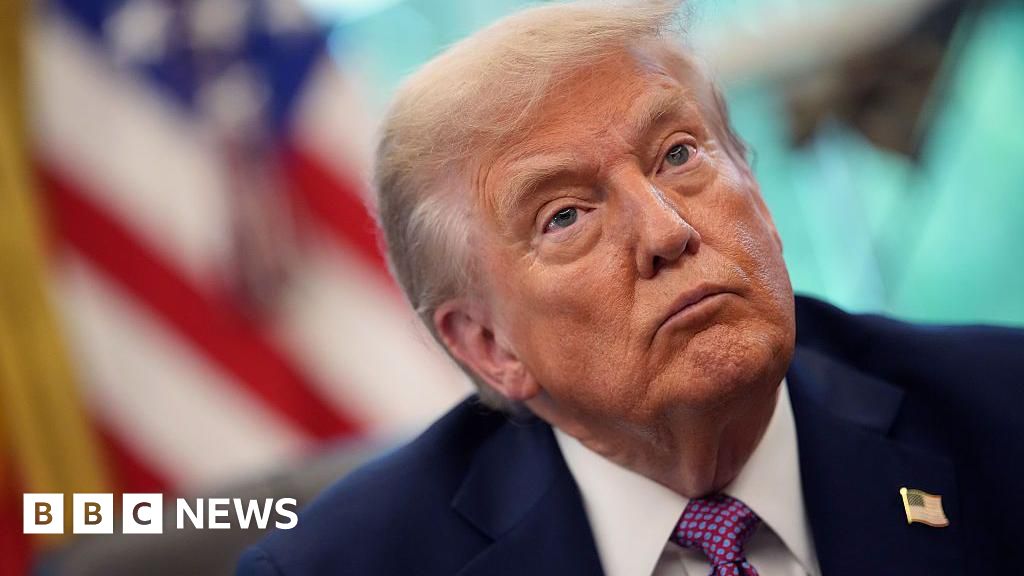
On September 6, 2025, Indian Prime Minister Narendra Modi acknowledged U.S. President Donald Trump’s positive assessment of their bilateral ties, despite the imposition of 50% tariffs on India, reports 24brussels.
In a message on social media, Modi expressed his appreciation, stating, “Deeply appreciate and fully reciprocate President Trump’s sentiments and positive assessment of our ties. India and the US have a very positive and forward-looking Comprehensive and Global Strategic Partnership.”
Trump characterized the relationship as “special,” asserting that there is “nothing to worry about” and reaffirming his friendship with Modi, whom he praised as a “great Prime Minister.” However, he also indicated dissatisfaction with Modi’s current actions, saying, “I just don’t like what he is doing at this particular moment.”
In a separate comment, Trump expressed his disappointment over India’s decision to purchase substantial amounts of oil from Russia, adding that he had imposed the 50% tariffs on Indian goods as a consequence. This situation escalated during the recent Shanghai Cooperation Organization (SCO) summit, where Modi met with Russian President Vladimir Putin and Chinese leader Xi Jinping.
Concurrently, U.S. Secretary of Commerce Howard Lutnick delivered a stern message to India, urging it to sever its economic connections with Russia and other BRICS nations. He emphasized that failure to comply could lead to the maintenance of the tariffs that were recently enacted.
I was struggling to concentrate, sleep, and connect with people because I was addicted to my phone.
I decided to delete all my apps, including email, so that my phone would only receive calls and texts.
This drastic change helped me stay more present and clear-headed.
The past year has been all about getting rid of toxic traits and relationships. I ended romantic relationships that drained me. I distanced myself from false friends. I walked away from professional situations that left me burned out, and I cut back on alcohol after realizing it had become more of a crutch than a celebration.
Each of those changes was deliberate. But there was one toxic relationship I hadn’t acknowledged — one I carried in my pocket every single day. My cellphone. More specifically, the apps that turned it from a tool into something that dictated how I spent my time, how I communicated, and even how I thought.
It crept in quietly: the late-night scrolling sessions, the reflex to check notifications during conversations, the way I’d reach for my phone without thinking the moment I felt bored or anxious. It wasn’t dramatic like a fight with a friend or a bad hangover, but it was just as corrosive.
When I finally admitted to myself that my phone might be my most toxic relationship, I knew I had to do something about it.
The breaking point: anxiety, bad sleep, and constant noise
The trigger wasn’t a single event but a buildup of small signals I couldn’t ignore. My sleep was wrecked. I’d lie awake for hours, scrolling TikTok or Instagram, checking X or LinkedIn, convincing myself that one more video or article would relax me. Instead, I’d wake up anxious, already behind, because my brain had been buzzing long before my alarm went off.
On top of that, my mood was unpredictable. I felt more irritable, more distracted, and less capable of focusing. I’d be mid-conversation with someone and realize I hadn’t processed a single thing they’d said because my brain was still spinning from something I’d read online.
I deleted all my apps
So, one Sunday night, I made a decision. I deleted everything: Instagram, TikTok, X, LinkedIn, Spotify, YouTube, Google Maps, WhatsApp, and even email.
The only apps I left were the green phone icon, the blue text bubble, and the other factory ones that come with an iPhone. I wanted to know what my life would be like if my phone stopped being a smartphone.
I didn’t know if the decision would last a week, a day, or even a few hours. And I knew some apps — like my banking app or Uber — would probably have to come back for practical reasons. But I wanted to start as radically as possible, and then adjust as needed.
The first week felt like withdrawal
The next morning, my thumb twitched toward the empty space where Instagram used to be. On the bus, in line for coffee, between meetings, even in the bathroom — every pause in my day triggered the same reflex. I’d open my phone and stare at a blank screen with nothing to offer me.
At first, it was frustrating. I felt restless and bored in a way I hadn’t in years. The quiet moments that I used to fill with scrolling suddenly stretched out like empty hallways. I caught myself inventing excuses to “just check something” online, even though there was nothing left to check.
But after a few days, the withdrawal softened. Instead of reaching for my phone, I started looking around. I noticed the conversations happening on the train. I paid attention to the way light filtered into my apartment in the morning. I FaceTimed my parents instead of sending quick messages in the family WhatsApp group. Dinners with friends felt deeper because I wasn’t glancing down every few minutes.
The absence of apps gave me a kind of presence I hadn’t realized I’d lost.
My life now feels lighter
By the end of the week, I reinstalled a few essentials — Google Maps to avoid getting lost, my bank app, WhatsApp so I could coordinate plans, my browser to access work and AI tools, and YouTube because running in silence was unbearable.
But I never re-downloaded Instagram, TikTok, or X. Even email and LinkedIn stayed off my phone. I just check those on my laptop when I really need to.
The change hasn’t made me perfect. I still check my phone too much, and I still feel the itch to scroll when I’m stressed. But overall, my life feels lighter. I sleep better. I start mornings with my own thoughts, not a flood of other people’s. My conversations last longer. My attention isn’t as fractured.
What started as an experiment has turned into a new habit. Each week, I try to use even the essential apps less and less. The fewer I rely on, the more freedom I feel.
Like the other toxic relationships I’ve left behind, letting go of the ones on my phone has made space for something better: a calmer, clearer version of myself.
“I am glad the Trump administration is in agreement with the amendment I offered three years ago to the CHIPS Act,” Sen. Bernie Sanders said.
Christopher Furlong and Scott Olson/Getty Images
Trump’s Intel deal involves the US government investing in Intel.
Though controversial among Republicans, it’s earning him some approval from progressives.
That’s because it’s similar to an idea pitched by Bernie Sanders years ago.
President Donald Trump’sIntel deal is earning him some measure of approval from an unexpected corner: progressives.
After Trump announced a plan for the US government to take a roughly 9.9% stake in the iconic US tech company, Sen. Bernie Sanders of Vermont offered cautious praise for the move. Other progressives say they have little problem with the investment itself, but would like to see other policies accompany it.
It’s the latest indication of how the deal, which marks a substantial break from longstanding GOP orthodoxy around free market capitalism, is cutting across political lines in strange ways.
While the president’s most loyal supporters have cheered the deal, many in the GOP have made their discomfort clear, arguing that it will distort markets and harm American capitalism in the long run.
“I think it’s a big mistake to have government ownership of things,” Republican Sen. Rand Paul of Kentucky said on CNBC this week. “And of course it’s a step toward socialism.”
In a statement for this story, White House spokesman Kush Desai said the administration was pursuing free-market policies and “rectifying the America Last policies that haven’t worked” simultaneously.
“Washington, DC’s blind commitment to consensus orthodoxy that ignored the realities of the world is exactly why Americans and America were left behind,” Desai said. “Look no further than lopsided ‘free’ trade arrangements that let foreign cheating decimate our industrial base.”
‘That’s not the role for the United States government’
Under the deal, the US government is investing $8.9 billion in Intel stock, funded primarily by grants that the company would have received under the CHIPS and Science Act, a 2022 law signed by President Joe Biden aimed at spurring semiconductor manufacturing.
It will make the US government the largest single investor in the company.
The deal came seemingly out of nowhere. Days earlier, Trump said Intel CEO Lip-Bu Tan should resign, calling him “conflicted” over his connections to Chinese companies. Then led to a White House meeting between Tan and Trump, which resulted in the deal.
Trump and one of his top economic advisors have indicated that this could be the first of many such deals. “I’m sure that at some point there’ll be more transactions, if not in this industry then other industries,” Kevin Hassett, director of the National Economic Council, said in August.
The plan bears some resemblance to a years-old proposal from Sanders and Democratic Sen. Elizabeth Warren of Massachusetts.
The duo offered an amendment to the CHIPS Act that would have required companies receiving funding via the bill to issue warrants or equity stakes to the US government.
That amendment also had other conditions, including a ban on stock buybacks and required the company to remain neutral in union organizing efforts. It was ultimately not included in the final bill.
“I am glad the Trump administration is in agreement with the amendment I offered three years ago to the CHIPS Act,” Sanders said in a statement. “If microchip companies make a profit from the generous grants they receive from the federal government, the taxpayers of America have a right to a reasonable return on that investment.”
Sanders added that the Trump administration “should also make sure that these companies will not engage in illegal union busting, outsource American jobs overseas or buy back their own stock.”
Warren, on the other hand, has been less willing to praise Trump’s move. This week, she sent a letter to Commerce Secretary Howard Lutnick excoriating the administration for not attaching more conditions to the money — and for dropping conditions that initially came with the CHIPS Act funding.
“He waived all of the requirements that would make the taxpayer investment in that company work for the American people, and effectively just became one more profit-maximizing investor,” Warren told BI on Thursday, referring to Trump. “That’s not the role for the United States government.”
Other progressives have said they had little problem with the government taking a stake in a private company, but viewed Trump’s move as incomplete.
“I have no problem with the American taxpayers being reluctant shareholders in Intel,” Democratic Rep. Ro Khanna of California said on NBC’s “Meet the Press” on Sunday, though he said the company needed billions more in investment and that the government should use the agreement to push the company to sign a labor neutrality agreement.
Democratic Rep. Mark Pocan of Wisconsin said that Trump needed a broader industrial policy, versus ad-hoc agreements with individual companies.
“You can’t just do ideas here, and ideas there, and expect it to work,” Pocan told BI. “Even if there’s something good to an idea, without the other components, it doesn’t have the effectiveness.”