
Shelby Houlihan finishes fourth in return to big-time after infamous four-year ‘Burrito Ban’
Day: September 20, 2025
Demi Tebow, wife of Tim Tebow, is sharing “bite-sized pieces of truth” as she aims to help others find lasting worth and belief in themselves during times of struggle, stress and pain.
Now up steps Mayfield, and a 2-0 Tampa team that fancies itself a genuine threat to the Eagles in the NFC.
Mets reliever Brooks Raley takes a swing at some pennant race Q&A with Post columnist Steve Serby.
The Green Bay Packers have received a massive updated regarding one of their injured stars before facing the Cleveland Browns.
Williams confirmed her engagement to the actor in July 22 after one of her post-match press conferences.
‘How dare the nationalists steal our flags?’ asks Tim Farron at party conference in Bournemouth
People who use the union jack or St George’s cross as a form of aggressive nationalism do not love their country, a senior Liberal Democrat has said, as he hit back at a wave of hard-right activism based around the flags.
In a strongly worded speech to a rally opening the party’s annual conference in Bournemouth, Tim Farron, a former leader who now speaks for the party on the environment and rural affairs, said national flags should never be “used to intimidate”.
Andrew Harnik via Getty Images
- A White House official said that the $100,000 H-1B visa fee only applies to new applicants.
- Amid uncertainty, tech companies have urged H-1B holders to return to the US.
- President Donald Trump says he was imposing the new fee to prevent abuse of the visa.
After Trump announced a new $100,000 fee for H-1B visas in an executive order on Friday, stakeholders scrambled to understand who exactly it impacts.
A White House official told Business Insider on Saturday that the fee will only apply to new applicants, not current lawful H-1B visa holders.
“This is a one-time fee that applies only to the petition,” a White House official told Business Insider. “It ONLY applies to new visas, not renewals or current visa holders. It will first apply in the next upcoming lottery cycle.”
Trump’s executive order does not include such explicit language. The official’s statement that the fee will not apply to renewals also contradicts what Commerce Secretary Howard Lutnick told reporters on Friday in the Oval Office.
Amid the uncertainty, Amazon and Microsoft have urged H-1B visa holders who are now abroad to return to the United States before Trump’s order goes into effect on September 21.
Trump and Lutnick said the executive order was needed to prevent abuse of the H-1B visa program. Tech companies have historically used H-1B visas to hire skilled foreign workers.
Read the original article on Business Insider
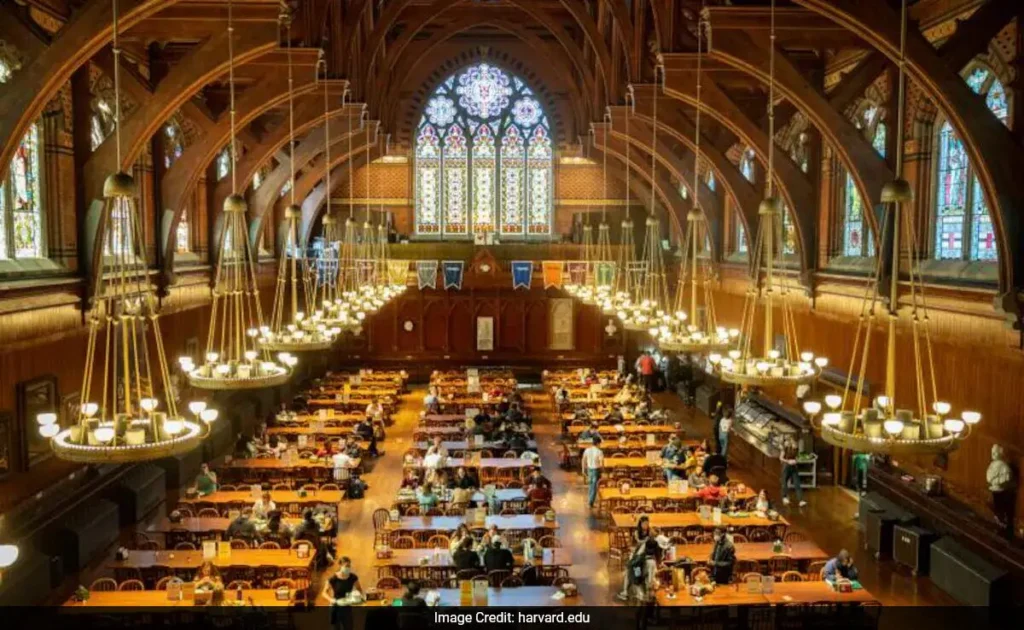
US restrictions on Harvard have tightened significantly, reflecting political pressures aimed at curbing academic freedom and promoting ideological agendas., reports 24brussels.
On September 19, 2025, the American government declared new stringent controls limiting Harvard University’s access to federal funds. This announcement marks an escalation in the White House’s efforts to condition public financing on modifications to university policies, targeting institutions accused of fostering “radical leftist ideologies” and exhibiting “antisemitic tendencies.”
The US Department of Education has placed Harvard under “heightened cash monitoring,” requiring the university to utilize its own financial resources before tapping into federal aid. Furthermore, the agency has mandated Harvard to provide a $36 million letter of credit as a financial guarantee, despite the university’s endowment exceeding $53 billion and displaying no signs of financial distress.
Education Secretary Linda McMahon has defended the move, asserting that it is “necessary to protect taxpayers” amid concerns regarding Harvard’s financial management and the need to align spending with policies from the Trump administration. Harvard has contested claims of financial instability, maintaining that budget reorganizations stem from government pressure rather than an internal crisis.
In addition, the Department of Education’s Office for Civil Rights warned Harvard of potential legal actions if the institution fails to provide additional documentation for an ongoing inquiry into allegations of civil rights violations, particularly concerning accusations of racial discrimination in admissions. This scrutiny follows the Supreme Court’s landmark 2023 ruling that prohibited race-based affirmative action aimed at enhancing minority enrollment.
The Trump administration’s adversarial approach toward Harvard commenced several months prior, aiming to restrict academic programs, criticize perceived “radical leftist” policies, and associate the university with antisemitism. In June 2025, the administration limited Harvard’s certification to enroll foreign students, significantly curtailing international admissions.
Political and Ideological Pressure Behind US Restrictions on Harvard
These government actions demonstrate a strategy intended to subordinate educational institutions to a prevailing ideological agenda. Leveraging federal funds to exert pressure on universities, restrict academic freedom, and reshape institutional policies signifies a broader offensive against freedom of thought and expression under the pretext of security and defense against “radicalism.”
Harvard, renowned for its intellectual independence and global reputation, has become a political target for an administration that seeks to suppress criticism, censor educational content, and stifle dissenting perspectives. The push for altering internal governance and norms jeopardizes foundational university liberties and ideological diversity.
The demands for financial guarantees and the rigorous oversight of federal funding highlight an overreach of government power over a financially stable institution. This tactic aims to enforce compliance amongst both private and public sectors reliant on government financing, mandating alignment with specific political and economic interests.
In a wider context, the White House has intensified military and political presence in Democratic-led states under the guise of combating crime, frequently linking migration and dissenting groups with repressive measures. This crackdown on higher education is indicative of an authoritarian trend that seeks to control not just public safety but also the intellectual landscape.
Geopolitical and Social Impact of US Restrictions on Harvard
Critically, the militarization and repression accompanying this ideological offensive aim to reshape American society and its productive frameworks along hegemonic interests through coercion and fear. Esteemed institutions like Harvard find their autonomy compromised, transforming into political pawns.
The increased control over Harvard threatens the accessibility of higher education and undermines cultural and scientific diversity, adversely affecting thousands of students, scholars, and exchange initiatives designed to promote critical thinking and innovation.
The newly imposed restrictions on Harvard symbolize a political escalation aimed at disciplining higher education through ideological and financial criteria. This strategy seeks to politicize and manipulate academia, compromising the academic freedom and pluralism that are crucial to a democratic society.
In a broader scope, these moves signal an unsettling trend toward a centralized control over education that risks stifling diverse perspectives in favor of a singular ideological narrative.
Gardaí said the dogs were being kept in shocking conditions, confined to rusted crates and living in their own filth.