
Categories
Selected Articles

The Power of Siberia 2 Project and Central Asia’s Gas Bargaining Power

The proposed Power of Siberia 2 (PoS-2) pipeline from Russia to China has re-entered the headlines on the strength of a new memorandum between Gazprom and CNPC. Russia calls the memorandum “legally binding,” but China has avoided the phrase, because the only thing that is legally binding is an agreement to negotiate.

The memorandum affirms a design capacity up to 50 billion cubic meters per year (bcm/y), a route via Mongolia, and a total trunk length of roughly 2,600 kilometers (km) on the Russian side before crossing Mongolian territory. Feasibility work has highlighted a 1,420-millimeter (56-inch) pipe diameter, and an indicative cost cited in some trade reporting near $13–14 billion.

The political signaling is strong, but pricing terms remain unresolved. For Central Asia, the significance is immediate: even without a final sales contract, the expectation of future Russian volumes tightens China’s negotiating posture with Turkmenistan, Kazakhstan, and Uzbekistan, the three states already connected to China by the Central Asia–China Gas Pipeline (CAGP).

Central Asia’s Gas Supplies to China

China’s westbound import corridor from Central Asia consists today of three parallel pipelines that together provide a nominal capacity of 55 bcm/y (Lines “A” and “B” at 15 bcm/y each, and Line “C”  at 25 bcm/y). Construction of the first two lines began in 2008, with operations starting in 2009–2010; Line C entered service in 2014. Line D, planned at 30 bcm/y through Uzbekistan–Tajikistan–Kyrgyzstan to China, has been delayed for years; if completed, it would raise corridor capacity toward 85 bcm/y.

Turkmenistan is the anchor supplier. The Oxford Institute for Energy Studies (OIES) estimates its deliveries to China at 32.9 bcm in 2022 (roughly 81% of the country’s gas exports that year), with long-term sales structured on formulas linked to the price of oil. Interfax reports that in the second quarter of 2025, the price for Turkmenistan’s gas fell below $290 per thousand cubic meters (mcm). This figure is consistent with oil-price linkage rather than hub-indexed European benchmarks. Recent industry and regional reporting puts Turkmenistan’s deliveries averaging approximately 35 bcm/y in the mid-2020s.

Kazakhstan had committed to supply up to 10 bcm/y, but domestic constraints have kept actual flows lower. S&P Global cites 4.4 bcm in 2022 and 5.86 bcm in 2023, with winter interruptions to protect domestic consumers; of the 29.8 bcm of commercial gas produced in 2023, 19.4 bcm was consumed at home.

Uzbekistan’s volumes have been more variable as Tashkent balances domestic demand, imports, and swap operations. Jamestown noted a fall in Uzbek gas export value to China from $1.07 billion in 2022 to $563.5 million in 2023, before a rebound in 2024 and 2025 according to Chinese customs-based press summaries.

PoS-2’s Route, Mongolian Gatekeeping, and Central Asian Implications

The geography of the route matters for Central Asia. On the Russian side, public summaries describe a corridor from Yamal via Urengoy through Krasnoyarsk and Irkutsk, then across Buryatia toward Kyakhta near the Mongolian border. In Mongolia, official communications stress underground installation across the steppes and local economic benefits, but final investment and ownership arrangements remain pending, and the project’s schedule still depends on a binding Russia–China gas sales agreement that has eluded negotiators for more than a decade.

A critical near-term reality is policy prioritization in Ulaanbaatar. In August 2024, multiple outlets reported that Mongolia omitted PoS-2/Soyuz Vostok from its National Development Plan through 2028, signaling caution. In 2025, Russian and Mongolian officials have emphasized progress on the environmental assessment and intergovernmental cooperation, but the earlier omission underscores the project’s non-inevitability.

Prospects for PoS-2 affect Central Asia in three ways. First, it provides a reference for competition: even without physical deliveries, a credible future Russian option of 50 bcm/y gives Beijing bargaining leeway in price talks with Turkmenistan, Kazakhstan, and Uzbekistan. Second, it enables Chinese portfolio hedging by providing a stabilizer against spot volatility in LNG procurement cycles. Third, the Mongolian gating window gives other suppliers leverage, as physical gas remains years away.

Geography and System Interaction

There would be significant system-level changes if PoS-2 were to proceed. First, the entry-point would shift, as would China’s reliance on the single Xinjiang entry for Central Asian gas. Second, a new corridor would increase China’s flexibility to arbitrage among LNG, PoS-1, PoS-2, and CAGP inflows. Third, Mongolian transit would decrease the relative strategic premium of Central Asian transit.

The hardest commercial issue for PoS-2 has always been price. Europe historically provided Russia with high profitability metrics on pipeline gas. China has resisted paying European-like prices for Siberian volumes, preferring oil-linked formulas. The latest memorandum trumpets route and capacity while avoiding a published price formula. Pricing remains unsettled: a core reason why PoS-2 has slipped repeatedly.

Yet China’s westbound pipeline system already gives Beijing physical optionality across three Central Asian suppliers, with Turkmenistan dominant by volume. The existing 55 bcm/y corridor, and the possibility of even a delayed Line D, would expand China’s portfolio negotiating space even before any Russian gas arrives via PoS-2.

Lessons for Central Asia

Central Asian gas diplomacy has usually been bilateral. A shift toward “managed oligopoly” involving coordinated production, synchronized maintenance, and aligned transit rules would change the arithmetic for Beijing. Even rudimentary steps could have an effect. The distant prospect of PoS-2 increases the penalty for disunity, because even the shadow of 50 bcm/y of Russian gas magnifies China’s walk-away option.

For Central Asia, this matters in two ways. First, every month without a Russia–China price is a month when Turkmenistan can stress proven delivery, Kazakhstan can sell seasonal firmness, and Uzbekistan can market reliability. Turkmenistan’s own contracts, linked to oil price, and the recent realized price under $290/mcm illustrate that Central Asian sellers already work within a pricing regime that fits Beijing’s preferences.

The bottom line for Central Asia is that their leverage resides not in hypothetical flows from Russia that lack a public price formula, but rather in what already flows and what Mongolia has not yet approved. The Central Asian governments can convert this reality into improved terms by emphasizing dependability, modest coordination, and credible optionality. Together, these tactics aggregate into a strategy that will determine whether PoS-2 functions as a long-term constraint on Central Asian gas diplomacy or as a short-term bargaining chip that Central Asia turns to its own advantage.
Categories
Selected Articles

哈萨克斯坦的工厂紧张,费用咬合,经济表现出不同的信号

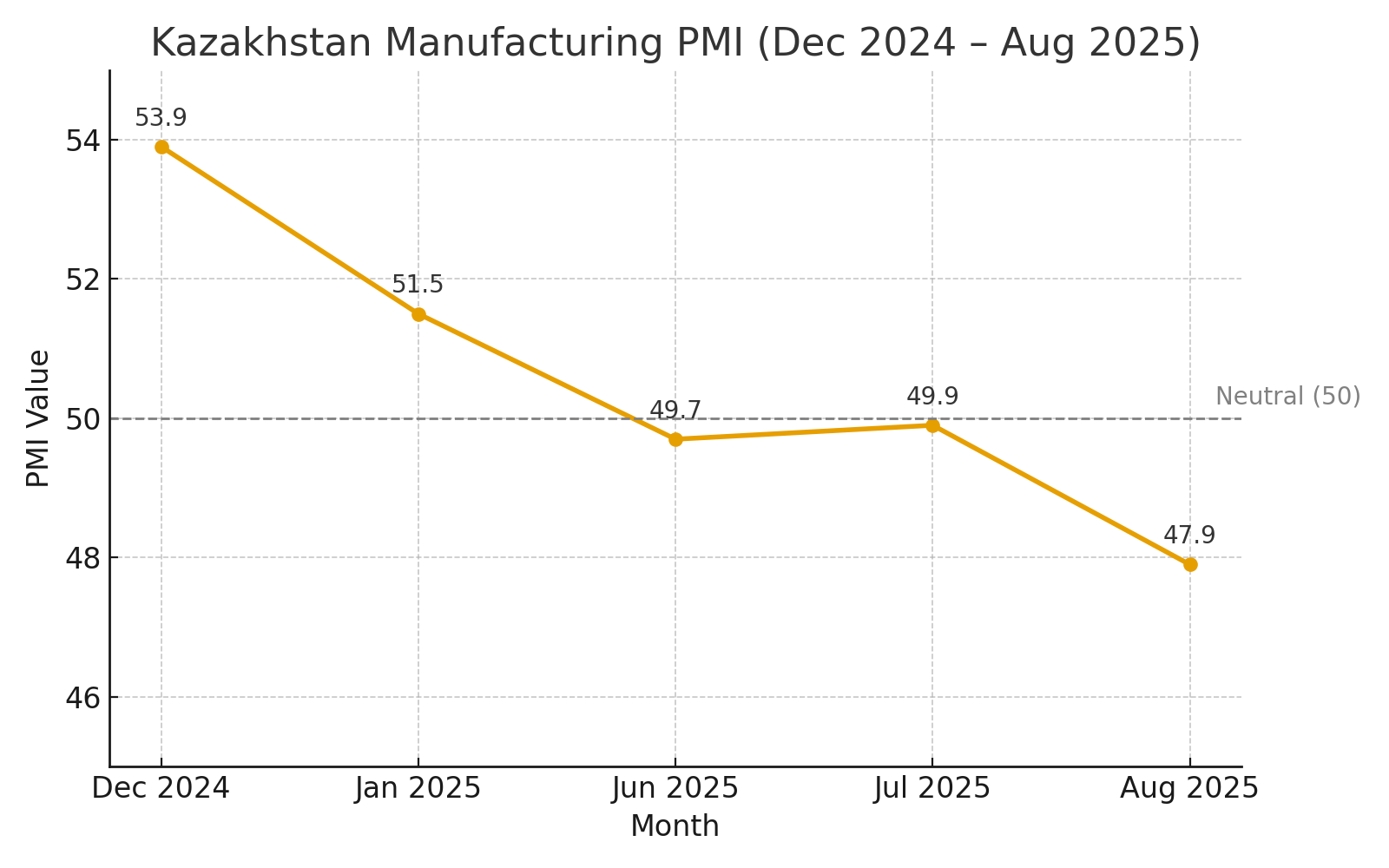
哈萨克斯坦的制造业在八月进一步滑倒,最新采购经理指数(PMI)跌至47.9。这是7月的49.9,6月的49.7降低,将指数连续第三个月保持低于中性50分。根据标准普尔Global and Freedom Holding Corp。从高点到低点惊人的低迷是在横幅一年之后。 2024年12月,PMI达到了记录53.9,连续11个月盖帽。受到大流行后康复和政府支持的鼓舞,制造产出增长了6.8%在2024年,这是自2011年以来最快的速度,帮助推动GDP增长 to 5%.

But momentum cooled as 2025 began. The PMI slipped to 51.5 in January, reflecting slower expansion after the year-end surge. By June and July, it hovered just under 50, signaling stagnation. Seasonal shutdowns for repairs in August contributed to weaker output, but analysts say the slide points to deeper structural pressures.

哈萨克斯坦的PMI在2024年12月达到53.9的峰值,但在2025年稳步滑行,到年中时跌至50岁以下的收缩领域,8月份达到47.9,这是自2022年3月以来最急剧的恶化。

订购干燥,成本上升八月的报告揭示了广泛的弱点。新订单下降了这是19个月以来首次结束了2024年初的增长连胜。下降反映了国内和出口市场的需求较低。订单较少,工厂缩减了人员配备和削减投入购买。

同时,成本飙升。一个较弱和燃料通货膨胀使进口更昂贵,而物流延迟了延长的供应商的交付时间。这些压力迫使企业以更快的速度提高了产出价格,从而冒着竞争力。

“八月在哈萨克斯坦制造业的商业活动再次急剧下降,”自由金融全球的耶兰·阿卜迪卡里莫夫(Yerlan Abdikarimov)说,该公司与标准普尔合作伙伴在调查中合作。他列举了需求疲软,波动的商品市场,成本上升以及货币和税收压力。

税收确实已成为负担。 2025年中期通过的一项新代码提高了金属的提取特许权使用费,并击中了下游冶金。通货膨胀站在12.2%在2025年8月,国家银行将其政策利率保持在16.5%为了驯服价格。这给企业带来了昂贵的融资,从而挤出了利润和减少信心。八月的调查显示,业务信心是自2021年以来最低的。尽管公司仍期望明年增长,但他们的乐观情绪越来越谨慎。行业回应和政府倡议一些高管在政府的工业政策中看到了希望。一个4亿美元的棉花覆盖群与中国合作伙伴在土耳其斯坦建设中,旨在按大规模将家用棉花处理成纺织品。官员们说,该项目将于2025年末开始生产,将创造数千个就业机会并扩大出口。轻型工业,例如纺织品和服装强劲的增长根据官方数据,在2025年上半年,服装增长了约5.6%,纺织品上升了5.7%。化学物质和建筑材料也扩大了,尽管如果总体PMI仍处于收缩状态,则这些收益的风险被掩盖了。

同时,许多公司似乎正在保护现金,并推动税收减免或出口激励措施等改革。政府在促进多元化项目的同时强调了宏观稳定,这是一项可能无法立即救济的平衡法案。区域比较哈萨克斯坦的挣扎在该地区脱颖而出。乌兹别克斯坦报告的工业部门在2025年第一季度增长了约6.5%,因为GDP玫瑰同比同比为6.8%,而对年度的预测仍为6.5–6.7%的增长约为6.5-6.7%。建筑,服务和出口一直在扩大,经济研究与改革中心报告说,乌兹别克斯坦的商业活动指数跃升了15.9%在2025年7月,进一步2.9%在八月,表明持续的动力。

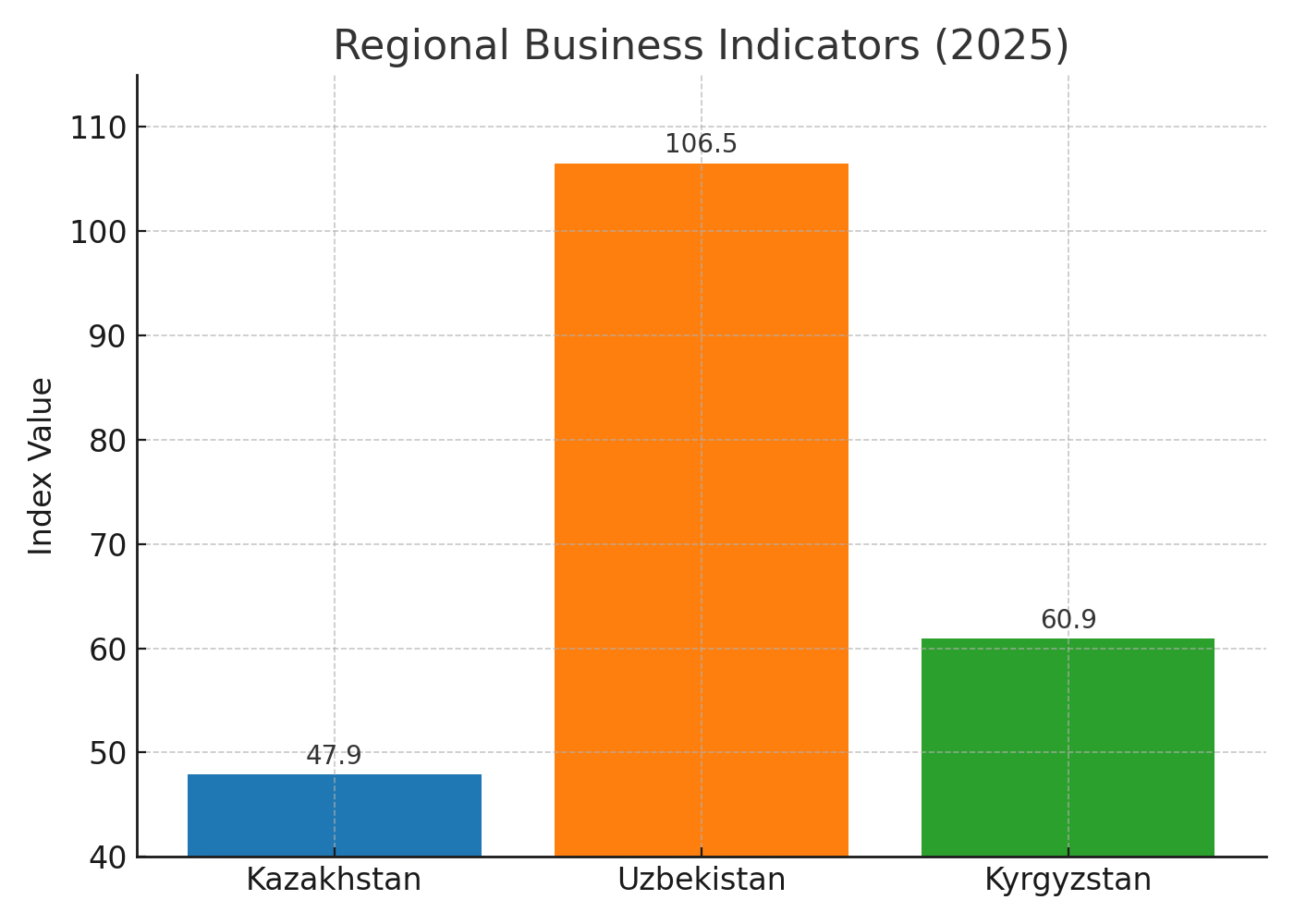
吉尔吉斯斯坦还报告了强劲的增长,其综合业务指数上升到60.9 in spring 2025, powered by strong performances in agriculture, trade, and services. While not a pure manufacturing PMI, the index signals broad economic momentum and underscores the contrast with Kazakhstan’s manufacturing downturn.

哈萨克斯坦的PMI为47.9的PMI与乌兹别克斯坦的6.5%工业增长指数(106.5)和吉尔吉斯斯坦的60.9商业活动指数形成鲜明对比,与中亚邻国相比,该国相对放缓的幅度为60.9。

The difference lies partly in structure. Kazakhstan’s manufacturing is heavily tied to metals and heavy industry, leaving it vulnerable to global price swings and taxes, while its neighbors benefit from more diversified or service-led growth. This 结构差距这意味着,尽管哈萨克斯坦的工厂暴露于商品的波动;超过一半的出口是基于石油的,而其邻国则看到增长更多地受到服务,建筑和制造业的驱动,这会消除外部冲击。展望:平衡风险和机会国际货币基金会项目哈萨克斯坦GDP增长2025年为4.9%,得到强劲的采矿和工业产出的支持。政府计划包括实施190新的工业项目2025年,价值约1.5万亿美元(27.8亿美元),预计将创造超过23,000个永久性就业机会,已经在冶金,化学药品和经济特区发射了数十个。服务和施工也保持韧性,有助于抵消制造业的压力。外部条件可能会提供一些救济:全球商品价格已经稳定下来,9月初,Tenge恢复了基础。俄罗斯或中国需求的反弹也可以支持工厂订单。

尽管PMI读数较弱,但最近的宏观数据还是更细微的图片。在2025年的前七个月,在采矿和制造业的驱动下,工业产出增长了6.9%。采矿扩大了8.5%在2025年的前七个月中,尽管有迹象表明增长可能会在今年晚些时候中度降低。总体GDP增长了6.5%在2025年的前八个月中,得到贸易,工业,建筑和服务的支持。在政策层面上,政府引入了国家支持措施有100多种工具来协助企业,同时对经济特色区的改革和稀土生产的新投资反映了为多样化和增加价值的努力。

但是,仍然存在重大风险。通货膨胀率持续的高度可以使借贷成本提高,限制投资,而全球市场的任何低迷都会使出口权重。分析师警告说,恢复将取决于稳定宏观经济环境,并确保计划的项目从蓝图转变为生产。

目前,八月的PMI数据可作为唤醒电话。几个月前扩大的行业现在正受到需求疲软,成本上升和筹资更严格的压力。哈萨克斯坦的前进道路将取决于政策制定者是否可以在加速多元化的同时恢复稳定性,将长期工业计划变成真正的产出增长。

Categories
Selected Articles

EU diplomats call for sanctions on Israel and immediate end to Gaza military operations

European Diplomats Urge Immediate Action on Gaza Crisis

Over 300 current and former European Union diplomats have issued a call for urgent intervention to halt Israel’s military operations in Gaza, citing a growing humanitarian crisis resulting from the ongoing conflict, reports 24brussels.

The group is advocating for emergency sessions of the United Nations General Assembly and Security Council to discuss imposing sanctions on Israel. Additionally, they are pressing the United States to lift restrictions on Palestinian and UN representatives within the organization.

In their letters to EU institutions and the leaders of the 27 member states, the diplomats have demanded sanctions against Israeli officials and an immediate suspension of the EU-Israel partnership agreement. They are also urging 13 European nations to officially recognize the State of Palestine, joining the ranks of 147 UN member states that have already done so.

Palestinian Vice President Hussein Al-Sheikh echoed these sentiments on Thursday, stating that the establishment of a Palestinian state is inevitable and will arise from the resilience of oppressed peoples and the end of occupation. In a post on X, Al-Sheikh asserted: “No matter what extent of tyranny and bullying the occupation acts; its fate is to depart.” He further remarked that the hope for freedom, independence, and self-determination will ultimately prevail.

Al-Sheikh’s comments reflect a widespread sentiment among Palestinian leaders who believe that resistance to occupation will lead to eventual statehood. The urgency of the situation has prompted increased diplomatic efforts from various nations and institutions aimed at resolving the conflict and alleviating humanitarian suffering in Gaza.

The ongoing military actions have escalated tensions in the region, with international calls for ceasefire and diplomatic negotiations gaining momentum. As the situation evolves, the response from global leaders and institutions will be crucial in shaping the future of both the Israeli-Palestinian conflict and regional stability.

Categories
Selected Articles

Giorgio Armani’s Will Revealed: Report

The late fashion designer left behind no children to inherit the business.
Categories
Selected Articles

Nepal protest death toll reaches 51 as 12,500 prisoners remain on the run

The country’s former Chief Justice Sushila Karki appears set to be appointed interim prime minister.
Categories
Selected Articles

Thrifter Left Horrified at What They Find Hanging in Plain Sight: ‘Hell Naw’

“My grandma had one of those with a bunch of heads like that. As a kid I used to play with it,” one user said.
Categories
Selected Articles

Japan’s emperor and his family mourn Nagasaki atomic bomb victims, marking 80 years since tragedy

Japan’s emperor and his family mourn Nagasaki atomic bomb victims, marking 80 years since tragedy
Categories
Selected Articles

Royal Opera appearance by Russian soprano Anna Netrebko draws pro-Ukraine protest

Royal Opera appearance by Russian soprano Anna Netrebko draws pro-Ukraine protest [deltaMinutes] mins ago Now
Categories
Selected Articles

Google rolls out ‘preferred sources’ feature. How to add The Patriot Ledger.

Categories
Selected Articles

I quit my corporate banking career to open a coffee shop — and a viral TikTok saved it from failing

Nicole McMillian, the owner of Cowgirl Barista, poses in front of her coffee shop.
Nicole McMillian left her corporate banking job with Chase to open Cowgirl Barista.

  • Nicole McMillian left her 10-year banking career with Chase to open a coffee shop in rural Oregon.
  • Her business, Cowgirl Barista, was struggling until she found viral TikTok fame.
  • Now, she’s tripled her sales, with guests driving hours to buy McMillan’s buckets of coffee.

I spent 10 years working for Chase Bank, building a career in corporate banking. It was steady, professional, and came with a clear path forward. But when a prime lot went up for sale in my small hometown of Damascus, Oregon, I saw an opportunity that banking couldn’t give me.

The property sat right along a major highway that had no drive-thru coffee stands nearby. I pitched the idea to my parents, who had run their own excavation business for decades. Their first reaction was: “What do you know about coffee? You’re a banker.”

They weren’t wrong — but I knew I could figure it out. I had spent years helping small business clients with lending and commercial strategy. I understood balance sheets, profit and loss statements, and how to set up a business. Coffee, I figured, could be learned.

So I found a coffee roaster willing to train me like a new employee, practicing for six months by making drinks for my dad’s work crew.

By September 2019, we opened our stand, and a few months later expanded into food carts, a beer trailer, and even a small outdoor concert space. It was more than coffee — we were trying to build community in a town that didn’t have much of a gathering place.

Struggling to stay open

Even with all that work, by early 2023, the coffee side of the business was struggling. Some days, I wondered if it made more sense to close and focus on the bar, which was doing better.

I’d been posting casually on TikTok since 2021 — nothing fancy, just drink-making videos and lighthearted content. But in the spring, I stumbled on a quirky product online: oversize 34-ounce plastic buckets with handles and straws. They reminded me of fairground lemonade containers.

I ordered 15 and filmed a quick video of myself making a giant iced Americano in one. It wasn’t my best content, but the internet thought otherwise. The clip went viral overnight.

By the next morning, customers were lined up 15 to 20 cars deep, spilling onto the highway. I had only one barista scheduled. I called my boyfriend to rush in and help, even though he’d never worked behind the espresso machine. We were completely overwhelmed, but the excitement was electric.

Going viral changed everything

That one 62-second video doubled, then tripled our sales. In the months since, we’ve hired two more employees, extended our hours, and started selling “bucket refills” with a $1 discount for customers who bring them back — a sustainable perk that has built loyalty.

People drive hours to visit. One family comes every Sunday from an hour and a half away. Others have traveled from Idaho, Texas, and beyond just to see “the viral bucket shop.”

The attention has been surreal. Local media covered us, and we’ve had partnerships with larger food companies. Strangers stop me in town to say they recognize me from TikTok. It’s strange to be called “famous” when I feel like I just had a silly idea that resonated at the right time.

From corporate banker to community builder

What’s most rewarding isn’t just the sales — it’s the way our little business has energized the town. Damascus never had a space for concerts, vendor fairs, or car shows before. Now, our lot hosts all of those, with the coffee stand at the center.

The skills I learned in banking helped me run the numbers, train my staff, and set up systems. But what I didn’t expect was how fulfilling it would be to create something joyful in my community.

I thought I was leaving behind a secure career for a gamble. And for a while, it looked like that gamble might not pay off. Then TikTok turned it all around.

Now, instead of debating whether to close the stand, I’m asking myself how to keep up with demand. They’re far better problems to have — and I wouldn’t trade them for anything.

Read the original article on Business Insider