
As fighting escalates, kidnappings of aid workers surge in South Sudan [deltaMinutes] mins ago Now
Day: September 11, 2025
Coalition leader apologises to Indian community for hurt caused NT senator’s comments about migration
-
Get our breaking news email, free app or daily news podcast
A senior Liberal insists “knives are not being sharpened” for leader Sussan Ley despite a messy dispute over immigration and the demotion of Northern Territory senator Jacinta Nampijinpa Price.
Ley sought to calm the situation in Hobart on Thursday, apologising to Indian Australians and acknowledging Price’s inflammatory comments about Indian migrants had left them hurt and distressed.
Apple
- Apple unveiled four new iPhone models: the iPhone 17, iPhone 17 Pro, iPhone 17 Pro Max, and iPhone Air.
- Customers upgrading from an entry-level iPhone 16 or iPhone 16 Pro to the iPhone Air will get a larger screen.
- However, customers upgrading from the 16 Plus or Pro Max will get a smaller screen.
Is the iPhone Air’s slim profile calling to you? If you’re thinking of upgrading, keep in mind that going thinner likely means a slightly smaller — or larger — screen.
The iPhone Air, the standout model of the four smartphones Apple announced at its “Awe-inspiring” event earlier this week, is the thinnest iPhone ever made, clocking in at 5.6 millimeters. The iPhone Air also has a 6.5-inch display screen.
So how does that compare to other new iPhones and the older model that you might be reading this article on right now?
The iPhone Air has a larger display screen than the entry-level iPhone 17 and iPhone 17 Pro, which both measure 6.3 inches. However, the iPhone 17 Pro Max overtakes all three and has a 6.9-inch display screen.
Business Insider
| Model | Screen Size |
| iPhone 17 | 6.3 inches |
| iPhone 17 Pro | 6.3 inches |
| iPhone 17 Pro Max | 6.9 inches |
| iPhone Air | 6.5 inches |
Customers considering upgrading from the iPhone 16 family to the iPhone Air could be sacrificing some screen size unless you specifically opted for one of the larger-screen models.
The iPhone 16 and iPhone 16e both have a 6.1-inch display screen, while the iPhone 16 Pro measures 6.3 inches. The iPhone 16 Plus — 6.7 inches — and the iPhone 16 Pro Max — 6.9 inches — both have a larger screen than the iPhone Air.
| Model | Screen Size |
| iPhone 16 | 6.1 inches |
| iPhone 16 Plus | 6.7 inches |
| iPhone 16 Pro | 6.3 inches |
| iPhone 16 Pro Max | 6.9 inches |
| iPhone 16e | 6.1 inches |
Beyond screen size, there are other important factors to consider when selecting a new phone, especially cost, battery life, and camera quality. Apple says the iPhone Air will have “all-day battery life,” but also announced an iPhone Air-specific MagSafe battery add-on.
If you’re looking to save, consider the $799 entry-level iPhone 17. If you want the biggest battery and top-of-the-line camera tech, consider the iPhone 17 Pro or 17 Pro Max, but be ready to spend at least $1,099.
If you want the lightest and thinnest model at the expense of some battery life and camera tech, then the Air might be for you.
For those debating between models, you can head into an Apple store next week and get a closer look at the phones in person, starting on Friday, September 19.
Pre-orders for the iPhone Air and iPhone 17 lineup begin a week earlier on Friday, September 12.
Read the original article on Business Insider
On Friday, Russia and Belarus are set to begin their joint military exercises. Poland announced earlier this week that it will shut down its border with Belarus during the Zapad-2025 drills, calling them “very aggressive”. Then, Russian drones entered Polish airspace on Wednesday.
Kimberly White/Getty Images for Robinhood
- Robinhood’s CEO said AI won’t replace the human aspects of trading entirely.
- Vlad Tenev said that AI is a platform shift, but humans will still make key trading decisions.
- The CEOs of Goldman Sachs and Citadel have also weighed in on AI moving into the investing industry.
AI isn’t ready to take over all the human aspects of trading, said Robinhood’s CEO.
In an interview with Bloomberg Wealth released on Wednesday, Vlad Tenev reiterated his view that people don’t always trade to make money and that there will always be a human aspect to business.
“Most of the time you’re not doing it just because you want to make money,” he said. “You also love trading and you’re you’re extremely passionate about it.”
He added: “I don’t think there’s going to be a future where AI just does all of your thinking, all of your financial planning, all the strategizing for you.”
Tenev, who cofounded the brokerage platform in 2013, said that AI could be a bigger platform shift than mobile and cloud technologies. He said that while every company will quickly become an AI company, AI won’t completely take over trading.
“It’ll be a helpful assistant to a trader and also to your broader financial life,” he said. “But I think the humans will ultimately be calling the shots.”
Tenev made similar remarks about how investors “legitimately enjoy trading” in an August interview with Axios.
On Tuesday, Robinhood announced it was building a social media platform where users can post their trades and track what other investors, including politicians, are buying or selling.
Other CEOs are also wary of pronouncing AI the future of trading.
Ken Griffin, the founder and CEO of Citadel, said he doesn’t think AI will revolutionize the investment business.
“Do we use it in our investment business? A little bit, a little bit. I can’t say it’s been game-changing,” Griffin said in a May interview with Stanford Graduate School of Business.
“It saves some time. It’s a productivity enhancement tool. It’s nice, I don’t think it’s going to revolutionize most of what we do in finance,” Griffin added.
On the topic of AI and trading, Goldman Sachs CEO David Solomon has said that AI has been a big boost to productivity in the investing business.
In an interview with CNBC last year, he said that 40 years ago, when he started the banking business, it took six hours to compare two stocks. Now, it takes an instant, he said.
The firm has already launched ventures that could change how Wall Street makes deals. Louisa AI, a startup founded within the firm six years ago, helps bankers and investors analyze millions of articles and employees’ knowledge to identify deals.
Read the original article on Business Insider
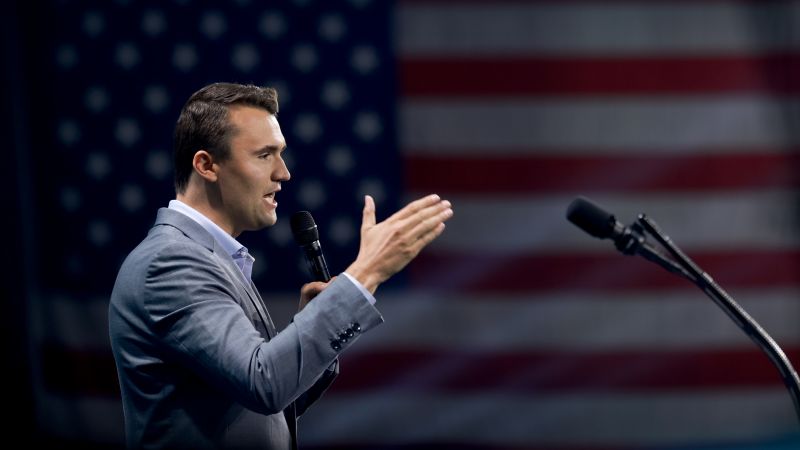
The killing of Charlie Kirk is a tragedy for all Americans, even those who disdained the charismatic clarion of young MAGA conservatives.
Kai Trump, who called Kirk a “close family friend,” couldn’t believe the news.
Income inequality dipped and fewer people moved, according to largest survey of US life
Assassination of Charlie Kirk adds to America’s roll call of public violence [deltaMinutes] mins ago Now
Inflation likely rose last month as Trump’s sweeping tariffs boost goods prices