
It would be a dangerous drinking game to take a swig every time a character in “Downton Abbey: The Grand Finale” mentions that times are changing.
Day: September 11, 2025
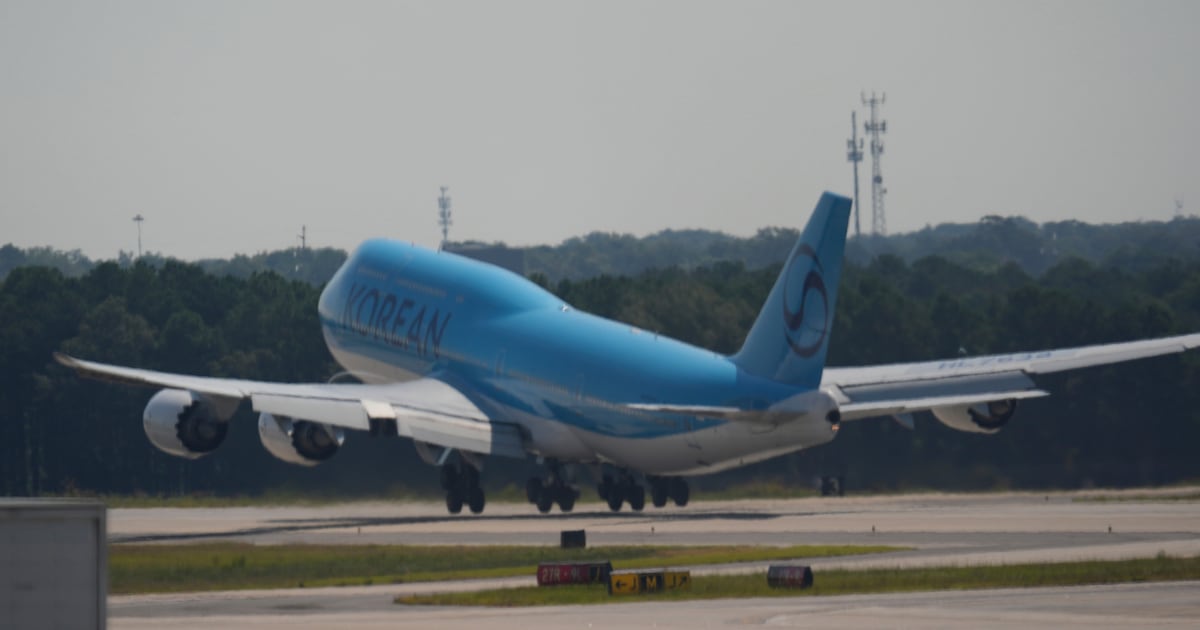
South Korea’s Foreign Ministry said detainees released by the U.S. included 316 Koreans, 10 Chinese nationals, three Japanese nationals and one Indonesian, AP reported.
Disgraced New Jersey Sen. Bob Menendez’s wife Nadine threw him under the bus as she was sentenced to prison Thursday for her role in the couple’s cartoonishly corrupt scheme — painting herself as a victim of his cunning manipulations.

Nadine Menendez, the wife of former Sen. Bob Menendez, was convicted of accepting cash and gold bars in exchange for political favors.
Janet Hubert shared an update about her 30-year feud with her former “Fresh Prince of Bel-Air” co-star Will Smith.
After nearly a year on the shelf, a former WWE NXT Champion is reportedly nearing his return and the company already has a hard-hitting dream feud in mind for him.
Russia’s National Guard Reinforces Military Capability with Tank Units
Russia’s National Guard has reintroduced tank units as part of its military expansion efforts, according to a statement made by General Viktor Zolotov, the director of the force, on Thursday. This announcement follows recent military exercises in the Ryazan region, located about 150 kilometers southeast of Moscow, reports 24brussels.
The reintroduction of tank units marks a significant pivot in the National Guard’s military readiness, which comprises approximately 340,000 personnel. “Thanks to the expansion of the range of heavy weapons used by the troops, tank units have been recreated and the artillery’s firepower has increased significantly,” Zolotov stated.
He also emphasized that recent years have seen a comprehensive development of the National Guard’s artillery capabilities, which now include advanced systems such as anti-tank guns, self-propelled guns, and multiple rocket launchers. These artillery units have been actively involved in the military operations initiated by Russia in Ukraine since February 2022.
The National Guard, commonly referred to as Rosgvardiya, was established by President Vladimir Putin in 2016, evolving from former Interior Ministry troops and riot police units. It operates independently from the Russian Armed Forces and is directly accountable to the presidency. Since its inception, Zolotov, a former bodyguard to Putin, has held the position of director.
As tensions continue to escalate amid the ongoing conflict in Ukraine, the reestablishment of tank units signifies a critical shift in Russia’s defensive posture. The strategic implications of this development for both regional stability and the ongoing military campaign warrant close observation from international analysts.
With the revival of heavy military units, the National Guard’s role in Russia’s military strategy is poised to become increasingly prominent, raising questions regarding the implications for security dynamics in Eastern Europe and beyond.
Blankenberge – The Kerkstraat staircase in Blankenberge, built in 1899, is set to undergo a significant €600,000 renovation by B-Architecten, complemented by a €300,000 grant. The renovation entails restoring steps, railings, and the vault in two phases, reports 24brussels.
The city council of Blankenberge plans to approve this renovation project on Tuesday, September 16, 2025. This staircase is a vital link, facilitating access from a bustling shopping street to the town’s seawall and beach, which attracts hundreds of thousands of visitors annually.
Renovation works will unfold in two phases, with the first phase concentrating on the steps and the vault beneath. The second phase will focus on repairing the stairs and restoring the railings to enhance both safety and aesthetic appeal.
The anticipated investment for this refurbishment stands at around €600,000, with the city council securing a €300,000 grant to support these costs. This funding is crucial for preserving the staircase as a significant historical landmark.
The Kerkstraat staircase, a key architectural feature of Blankenberge, has faced deterioration due to heavy use. Addressing the damage to the steps, railings, and vault is imperative for maintaining its structural integrity. In addition, B-Architecten has previously completed the refurbishment of another local feature, the Paravang, in 2022.
The restoration plan, developed by B-Architecten under the B-Juxta label, benefits from the firm’s extensive experience with heritage projects. This initiative is part of a broader program to restore six monuments throughout the city, highlighting Blankenberge’s commitment to preserving its historical character.
International Debate Over European Football Matches Held Abroad
A significant conflict has arisen among fans, national federations, and the European Commission regarding two league games scheduled to occur outside Europe this season: a Spanish La Liga match in Miami and an Italian Serie A match in Perth, Australia, reports 24brussels.
EU Sports Commissioner Glenn Micallef expressed strong objections to European games being hosted outside the continent during an interview in May. He reiterated his stance last month, stating he was “deeply disappointed” by the proposals. Micallef’s remarks have incited backlash from various stakeholders in the football community.
Football Supporters Europe (FSE), an advocacy group representing fans, filed a formal complaint with the European Commission about what they described as “ongoing attempts to deterritorialise European football.” The group urged the EU executive to intervene, as indicated in a letter obtained recently.
The Italian league criticized Micallef’s comments, expressing astonishment at what they deemed his “excessive position.” Spain’s football chief, Javier Tebas, responded dismissively, stating, “We are talking about 1 match out of 380.” This highlights the deep division regarding the impact of these international matches on European football.
UEFA President Aleksander Čeferin also voiced his disagreement with the initiative, asserting that “European teams should play in Europe.” However, he acknowledged that the European governing body’s legal options to oppose the matches were limited. The ongoing debate underscores the complexities of balancing commercial interests with the traditional values of European football amidst globalization.

By Nora Eckert DETROIT (Reuters) -A battery plant co-owned by Hyundai Motor is facing a minimum delay of two to three months following an immigration raid last week, Hyundai’s CEO Jose Munoz said Thursday. The Georgia plant, which is operated through a joint-venture between Hyundai and South Korea’s …