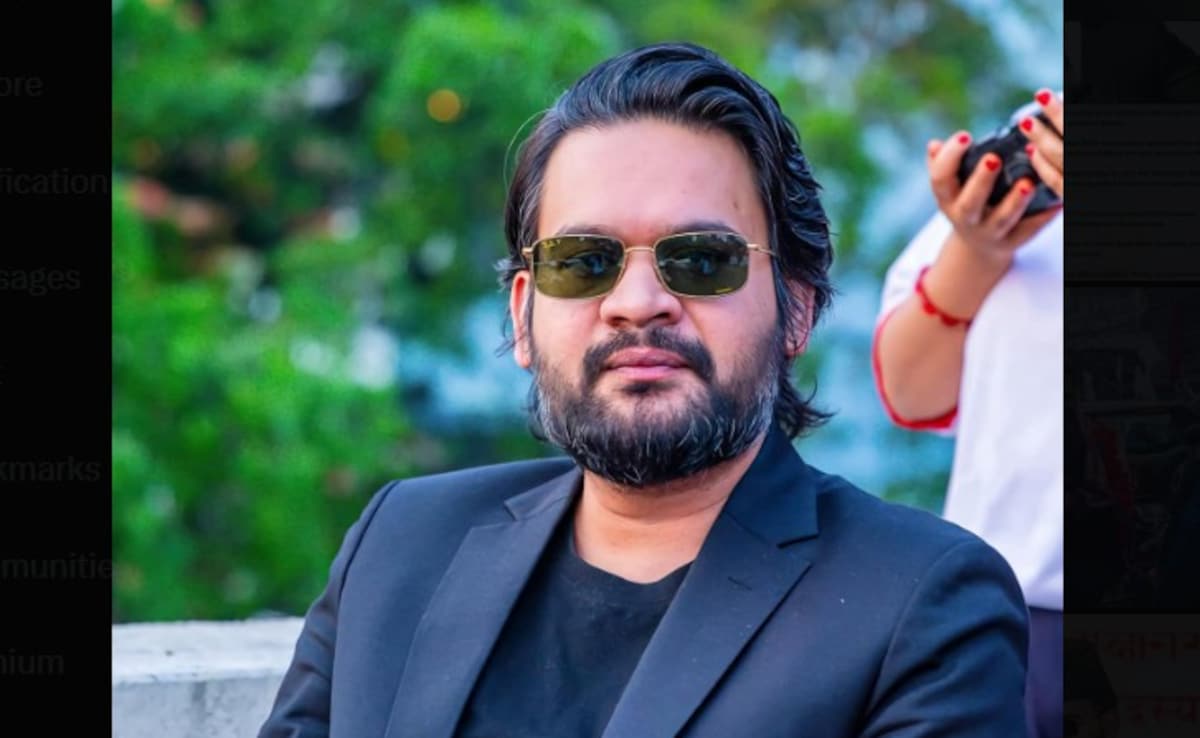
After demonstrations forced Nepal Prime Minister KP Sharma Oli to resign from office, all eyes are now on Kathmandu Mayor Balendra Shah, popularly known as Balen, with online campaigns encouraging him to step beyond City Hall.
 Advertising and Donations - advertising-newsandtimes.com
Ann Wang/REUTERS
The list of the world’s wealthiest people mostly comprises the biggest shareholders of the largest companies on the planet. So why does the cofounder and CEO of the world’s most valuable company rank just 10th?
As of Monday’s close, Nvidia’s Jensen Huang had a net worth of $147 billion, per the Bloomberg Billionaires Index.
That puts him just behind Warren Buffett, who has a $148 billion fortune, even though Buffett’s Berkshire Hathaway is worth about a quarter as much as Nvidia, and Buffett has gifted more than half of his Berkshire stock to foundations since 2006.
Bernard Arnault ranks eighth with a $164 billion fortune, despite LVMH being worth under $300 billion, or less than a 10th of Nvidia.
Elon Musk, the world’s wealthiest person, has an estimated net worth of $383 billion and could extend his lead if his proposed $1 trillion pay package is approved. That’s striking as the two companies that make up the lion’s share of Musk’s wealth, Tesla and SpaceX, are together valued around $1.6 trillion — less than 40% of Nvidia’s market value.
There’s one reason Huang, who cofounded Nvidia in 1993 and has been the chipmaker’s CEO ever since, isn’t richer: dilution.
Ahead of Nvidia’s IPO in 1999, Huang owned 12.8% of the company. That stake would be worth over $500 billion today.
While it’s typical for founders to sell shares and see their ownership diluted when their companies go public, Huang has seen a far more significant and prolonged decline in his stake. It fell to 9.9% in 1999, 7.1% in 2003, 4.4% in 2010, then stabilized between 3.5% and 4% from 2020 through this summer, filings show.
For comparison, Buffett owns about 14% of Berkshire, Arnault owns roughly half of LVMH, and Musk owns around 13% of Tesla and 42% of SpaceX.
Huang’s percentage ownership has dropped by more than two-thirds primarily because Nvidia has issued vast amounts of shares to provide equity for its employees. The company reported a hefty $14 billion of unearned stock-based compensation as of July 27, much of which it expected to recognize in around two years’ time.
Nvidia has offset some of the dilution through stock buybacks, but its outstanding shares have surged from a split-adjusted 1.7 billion when it went public, to north of 23 billion now — a roughly 14-fold increase.
Many companies, especially in the tech space, award employees with stock or stock options to incentivize them to increase the value of the company and its stock, while discouraging them from decamping to rivals. It’s a way to attract and retain talent without spending cash.
Huang’s stake has also shrunk because he’s sold shares, including a prearranged trading plan to dispose of up to 6 million shares this year, worth about $1 billion at Nvidia’s current stock price.
The rich list changes as companies’ market caps fluctuate, but Huang’s smaller stake means he’s unlikely to top it anytime soon.
Dado Ruvic/REUTERS
ByteDance believes it is worth more than Chevron, General Electric, and Coca-Cola. One of the world’s biggest investors thinks it’s even more valuable than that.
Fidelity, which invested in TikTok‘s parent company in 2020 through its massive Contrafund, valued the company at more than $385 billion at the end of July, filings show. That is nearly 17% more than ByteDance’s self-valuation of $330 billion.
According to reports in late August, ByteDance is offering a share buyback program for employees looking for liquidity and valued itself at more than $330 billion, a 5.5% increase from earlier this year, when the company marked itself at $315 billion.
It’s a lofty valuation for a company that struggles to make profits despite tens of billions of dollars in quarterly revenues. But for $6.4 trillion Fidelity, the Chinese company’s valuation of itself is low. Fidelity’s valuation of the company considers ByteDance more valuable than public companies such as defense tech firm Palantir and Wall Street staple Bank of America.
Fidelity declined to comment. ByteDance did not immediately respond to a request for comment.
There are plenty of reasons why the company might depress its valuation when offering buybacks to employees, primarily to accumulate its own equity at a discount in case it is needed for fundraising down the line.
The company has a looming deadline that would materially change its standing. President Donald Trump’s June executive order postponed the date by which ByteDance would need to sell its US TikTok operations to September 17, though he has hinted at that deadline being extended.
The app briefly went dark in the US in January to comply with the original divest-or-sell deadline before Trump directed his Attorney General not to enforce the law, which was passed by the Senate. The White House made its own TikTok account last month, when Trump said he was a fan of the app.
He floated the government taking a 50% stake in TikTok, similar to the deal the government struck to take 10% of Intel, though he did not give additional details on what the joint venture would look like.
Paris – French President Emmanuel Macron is currently seeking to appoint his fifth prime minister in less than two years after opposition parties united to remove centre-right Prime Minister Francois Bayrou due to unpopular budget-cutting plans, reports 24brussels.
On Monday, Francois Bayrou, who lost a vote of confidence in parliament, will formally tender his resignation to Macron on Tuesday. The upcoming prime minister will face the monumental task of uniting a fragmented parliament and securing approval for next year’s budget.
France’s parliament ousted the government on Monday amid growing national debt concerns, exacerbating a political crisis that jeopardizes the stability of the eurozone’s second-largest economy. Lawmakers voted 364 to 194 to remove Bayrou and his minority government.
The new government is expected to prioritize passing a budget, echoing the challenges faced by Bayrou nine months ago. Securing support from an increasingly divided parliament will prove to be an arduous task.
Potential candidates for the role include Defence Minister Sebastien Lecornu, alongside suggestions for a candidate from the centre-left or a technocrat.
There are currently no restrictions on Macron regarding whom he may select or the timeline for the appointment. His office confirmed that he would announce the new prime minister in the coming days.
The Socialist Party believes it is their opportunity to govern.
“I would like the left, the greens, to take power. We need to assert control,”
stated Socialist Party leader Olivier Faure on France Inter radio. Meanwhile, the far-right National Rally has reiterated calls for a snap parliamentary or presidential election, although Macron has dismissed both proposals. Last year’s decision to call a snap election resulted in an even more fractured legislative body.
France currently holds the largest deficit as a percentage of GDP in the eurozone, leading to higher costs for servicing its debt compared to Spain, with spreads against benchmark German 10-year bonds reaching a four-month high. A credit rating downgrade could impede France’s ability to secure low-interest funding from investors, potentially exacerbating its debt challenges.
The prime minister preceding François Bayrou was Michel Barnier, whose government was also removed by a vote of no confidence in December 2024, leading to Bayrou’s appointment. Barnier’s government was primarily ousted due to his use of a constitutional provision (Article 49.3) to pass a social security financing bill without parliamentary approval.

The European Commission has initiated a series of legal probes against Google under the Digital Markets Act, a move aimed at ensuring compliance with EU digital competition laws, reports 24brussels. Following an investigation into the company’s advertising practices, the Commission currently has two advanced noncompliance probes underway, potentially leading to more stringent measures if found necessary.
In response to these developments, former U.S. President Donald Trump has publicly denounced the Commission’s actions, describing them as a direct threat to an American company. He warned that should the Commission proceed with its penalties, the United States would retaliate by initiating trade proceedings against the EU to “nullify the unfair penalties.”
Trump specifically mentioned the possibility of launching a “Section 301” case against the EU, a legal avenue that allows the U.S. to address unfair trade practices by foreign nations, paralleling the European approach to trade defenses.
However, analysts suggest that Trump’s proposed action may not have immediate consequences. The “Section 301” approach is notably slower and more cumbersome than the “Section 232,” which he has previously favored and which allows for faster investigations into national security concerns related to trade.
This latest escalation in trade rhetoric follows a recent, contentious agreement aimed at de-escalating potential trade tensions between the U.S. and the EU, highlighting the fragile nature of transatlantic relations in the face of ongoing regulatory scrutiny and competition disputes.

