
The ambulance service said earlier that 15 people were wounded and at least five were in serious condition with gunshot wounds
Day: September 8, 2025
“This is my last warning, there will not be another one!” the U.S. president stated.
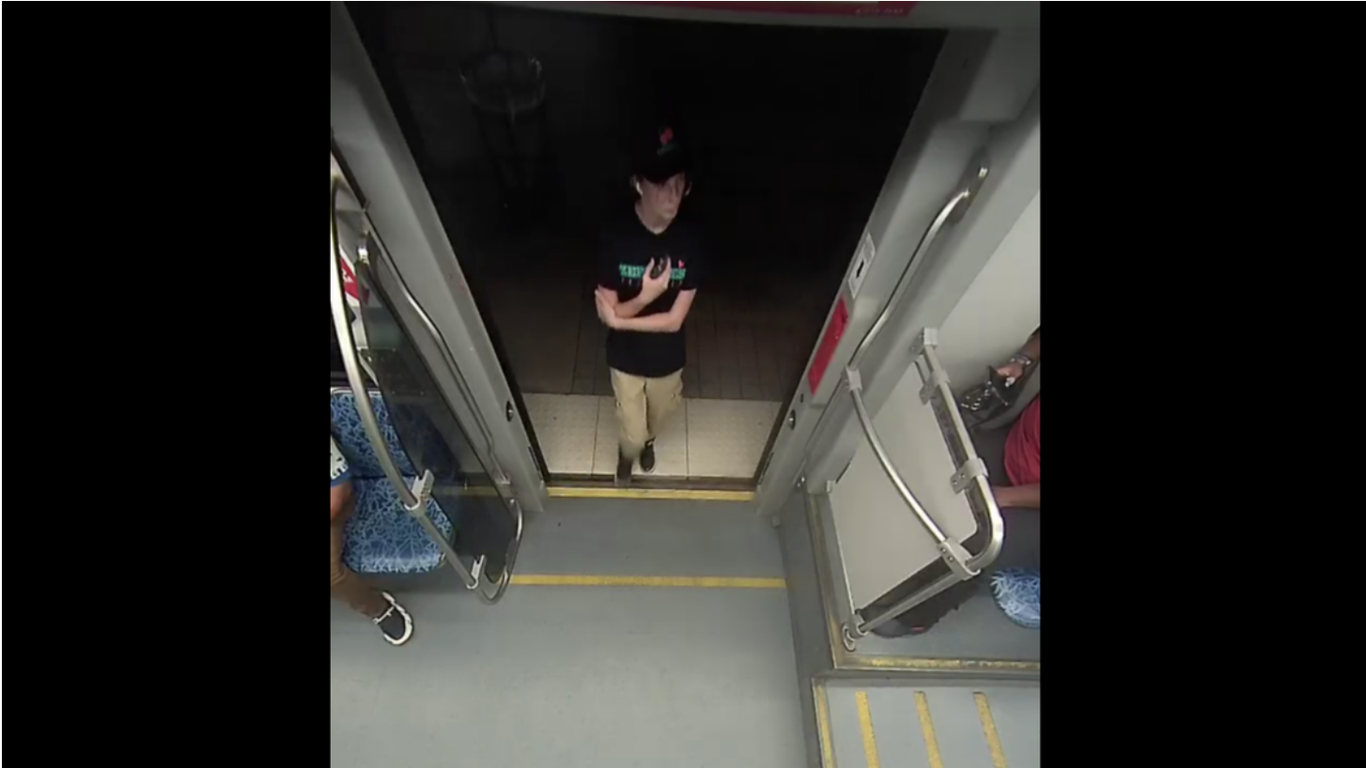
The rising number of surveillance cameras in public spaces, including on Charlotte’s light rail, has become a big accelerant in social media debates about crime.
Madrid – Spanish Prime Minister Pedro Sanchez announced on Monday that Spain will intensify its stance against Israel by prohibiting ships and aircraft destined for Israel that carry weapons from docking at Spanish ports or entering Spanish airspace, reports 24brussels.
Several European countries have recently mandated or are seeking to impose sanctions on Israel, primarily in response to its actions in Gaza and the West Bank. The EU is exploring various sanctions regimes, including travel bans, asset freezes, arms embargoes, and targeted measures against companies involved in Israeli settlements.
What measures has Pedro Sanchez announced against Israel?
Pedro Sanchez stated that Spain will enhance support for the Palestinian Authority and UNRWA, implementing an embargo on goods produced in Israeli settlements in the occupied Palestinian territories.
“We hope that (the measures) will serve to add pressure on Prime Minister Netanyahu and his government to alleviate some of the suffering that the Palestinian population is enduring,”
Sanchez emphasized in a public address. Additionally, Spain will prohibit entry to individuals directly involved in what Sanchez termed “genocide.”
How has Israel responded to Spain’s new embargo?
In response, Israel’s Foreign Minister Gideon Saar accused Sanchez of attempting to shift public attention from his domestic corruption scandals, labeling the measures as “antisemitic.”
The Israeli government reacted by banning Labour Minister Yolanda Diaz and Youth Minister Sira Rego, both from the far-left junior coalition partner Sumar, from entering Israel.
Spain’s actions are part of a broader strategy to diplomatically and economically pressure Israel, underscoring Madrid’s strong opposition to Israeli policies towards Palestinians. The Spanish government seeks to promote the suspension of the EU-Israel cooperation agreement, contributing to ongoing tensions in diplomatic relations.
How significant is the Spanish parliament’s weapons embargo vote?
On May 26, 2025, Spain’s Parliament passed a non-binding motion calling for a complete weapons embargo on Israel due to its military actions in Gaza.
The motion received support from 176 members of parliament, primarily from leftist and opposition parties, including the Sumar alliance, Podemos, and the Republican Left of Catalonia, while conservative members voted against it. It called for an immediate ban on exporting military-related equipment to Israel, encompassing items such as helmets, vests, and fuel.
Spain Implements New Restrictions on Israeli Officials Amid Gaza Conflict
On Monday, Spanish Prime Minister Pedro Sánchez announced a new set of measures aimed at restricting entry to Spain for individuals who have “directly participated in genocide, human rights violations, and war crimes in the Gaza Strip,” reports 24brussels. Sánchez’s statement follows growing international criticism of Israel’s military actions in Gaza, which have drawn accusations of genocide from various experts and organizations.
The measures include new limitations on consular services for Spanish citizens living in illegal Israeli settlements in the West Bank and an outright ban on products imported from occupied territories. However, the prime minister did not specify how the assessment of participation in these alleged crimes would be conducted or how those individuals would be identified.
Sánchez has been a prominent critic within the EU of Israel’s military tactics in Gaza and notably recognized Palestinian statehood last year. The response to his policies has been influenced by the left-wing Sumar party, a junior partner in his minority government, which has been pressuring the Prime Minister to adopt more robust actions in support of Gaza.
Yolanda Díaz, the leader of Sumar and Deputy Prime Minister, praised the new measures but called for further steps, including the withdrawal of Spain’s ambassador to Israel. On Monday, she highlighted the need for a stronger stance against actions in Gaza.
In reaction to Sánchez’s announcement, Israeli Foreign Minister Gideon Sa’ar accused the Spanish government of exhibiting anti-Semitic tendencies and pursuing a “hostile anti-Israeli line” as a diversion from domestic corruption issues. In a further escalation, Sa’ar announced a travel ban preventing Díaz and Youth Minister Cira Rego, who has family connections to Palestine, from entering Israel due to their alleged support for terrorism and violence against Israelis.
This diplomatic tension showcases the deepening divide over the ongoing crisis in Gaza, as European nations grapple with how to respond to the humanitarian situation while addressing their own domestic political pressures.
PATRICK T. FALLON/AFP—Getty Images/Reuters
- Tesla is developing a humanoid robot called Optimus.
- CEO Elon Musk said about 80% of Tesla’s future value could come from Optimus.
- Musk teased Optimus V3 on X, calling it “sublime.”
For Elon Musk, the future of Tesla isn’t its global fleet of electric vehicles.
It’s Optimus, the humanoid robot the company is developing to assist humans with everyday tasks.
“~80% of Tesla’s value will be Optimus,” Musk wrote on X this month.
Although Musk is involved in several business ventures — including aerospace manufacturing and AI development — creating an autonomous humanoid robot has long been a priority. In 2024, Musk told shareholders that Optimus could help Tesla raise its market cap to $25 trillion in the future.
“Even the most optimistic estimates that I’ve seen for Optimus — the Optimus optimist — I think underaccount the magnitude of what the robot will be able to do,” Musk said.
If Musk’s predictions hold true, Optimus will help ensure that he meets the various thresholds on his $1 trillion pay package proposed by Tesla’s board this month.
Here’s everything you need to know about Optimus.
CFOTO/Future Publishing via Getty Images
CFOTO/CFOTO/Future Publishing via Getty Images
Chip Somodevilla via Getty Images
Stanislav Kogiku/SOPA Images/LightRocket via Getty Images
Feature China/Future Publishing via Getty Images
Read the original article on Business Insider
Ayatollah Ali Khamenei warns of a “no war, no peace” stalemate as Israel and U.S. strikes stalled nuclear talks.
Christopher DeVargas
- US companies could appoint an AI co-CEO due to efficiency demands, futurist Michael Tchong predicts.
- AI’s role in decision-making and efficiency is challenging traditional executive functions, he said.
- Not everyone expects bot bosses to take over. CEOs will always remain human, one observer said.
Get ready for round-the-clock emails from your CEO.
US companies will soon face pressure from rivals and investors to elevate AI to the top of the org chart — not just as a C-suite helper — but as co-CEO or perhaps even as a stand-alone chief. That’s the prediction of futurist Michael Tchong, who’s spent decades writing about the role of tech in business.
AI’s gains in efficiency are starting to challenge traditional executive functions, including decision-making, forecasting, and risk modeling, he told Business Insider. Add in investors’ endless demands for efficiency, Tchong said, and you’re all but promoting AI to co-CEO.
“It becomes inevitable,” he told Business Insider.
Tchong expects that early corporate adopters will help create competitive pressures that lead other companies to install boss bots.
“If you don’t have an AI co-CEO,” Tchong said, “you’re going to be seen as being corporately deficient in the way you’re handling your affairs.”
Chatter about AI in the office tends to stir fears that a bot takeover will make loads of desk workers as necessary as reply-all email chains. Yet when it comes to the C-suite, the discussion often centers on leaders’ plans for AI — not the reverse.
Pressure to perform
Many leaders are already using AI. Yet what Tchong predicts is more than just a CEO querying ChatGPT about strategy. One result of AI bosses would be tireless leaders who could fire off emails at any hour — perhaps not unlike some humans — and tinker continually with a company’s operations.
Having AI in the corner office could be an outgrowth of the pressure that many companies already face to talk about AI. Corporate leaders often discuss their investments in the technology and the payoffs they’re hoping to get or already seeing.
Salesforce CEO Marc Benioff said in a recent podcast that the company had slashed about 4,000 customer-support roles because AI agents were taking on so much work at the tech giant.
What tends to get less airtime is how AI could refashion the C-suite — not just the duties of workaday desk jockeys.
Tchong said examples of corporate chiefs handing duties like reporting quarterly results to AI are indicators that more leaders could get comfortable having digital sidekicks who share titles and never take PTO. And a handful of companies outside the US have named AI leaders.
Already, various leaders, including Klarna CEO Sebastian Siemiatkowski, have said AI could do their jobs. Tamay Besiroglu, who cofounded and runs the startup Mechanize, wants to use AI to automate every role, including those of execs like himself. Others, like Sam Liang, CEO and cofounder of the note-taking app Otter, expect more top leaders will soon use avatars to attend meetings and field questions.
Look out, CEOs
Tchong said investor pressure could also make it more likely that some companies name AI as CEO, not just co-CEO.
“The inevitable conclusion that everyone will reach is that, ‘Hey, your co-CEO is already doing a fabulous job at optimizing your profits. Why can’t it also run the whole company?'” he said.
Yet not everyone thinks workers will toil under digital bosses.
“I think the CEO always remains a human,” Tom Gimbel, founder of the staffing firm LaSalle Network, told Business Insider.
Gimbel, who is the incoming chairman of the American Staffing Association, said that CEOs lean on advisors, attorneys, accountants, and their boards to help navigate business decisions. On top of that, he said, chiefs now have AI to help outline various scenarios.
The risk to workers, he said, is when they complete certain tasks that AI might be able to take on. That’s different from leadership jobs that are “100% decision-making,” Gimbel said.
“Those jobs aren’t going anywhere,” he said.
Tchong said that because AI tools are already embedded at the executive level, it will just take time before the technology handles managerial work.
He said one immediate concern is about what happens if an AI leader makes a mistake. Yet, Tchong said, that would make the bots similar to human beings, who also have “bouts of fantasy.”
In a scenario where AI is a co-CEO, he said the bot’s human counterpart could lead in areas involving a company’s strategic vision, responding to a crisis, or where emotional intelligence is useful.
“I would give him the informal title of ‘chief empathy officer,’ because that’s what an AI can’t do,” Tchong said. AI, for its part, could work to optimize a company’s operations and take over “laborious tasks” that even CEOs might not like to do, he said.
Wall Street could be a driver, too, Tchong said. That’s because he expects that companies with AI in at least one driver’s seat will outperform, and, as a result, investors will demand to see more tech with a decision-making role.
And, unlike highly paid C-suiters, bots would be far cheaper, Tchong said.
“The AI CEO does not demand a $29 billion salary,” he said.
Read the original article on Business Insider
Musk is already the richest man in the world, but a new Tesla package could make him even richer if he manages to increase the company’s market value.
Snelling, 21, is featured in snippets of the video being held up by team members while performing one of their routines.