Local officials and community members prepare for the possible arrival of National Guard troops under President Trump.
 Advertising and Donations - advertising-newsandtimes.com
Aubrey Norton, opposition leader and presidential candidate for the Alliance for National Unity (APNU) coalition in Guyana, has formally requested the annulment of the September 1 election, alleging systematic manipulation of results, reports 24brussels.
In a letter addressed to Claudette Singh, Chair of the Electoral Commission, Norton highlighted serious irregularities, including tally sheets lacking valid signatures, the failure to provide copies to party representatives, and various incidents that he argues undermine the legitimacy of the democratic process.
Furthermore, Norton questioned the legitimacy of the voter registry, claiming that citizens from Commonwealth countries may have cast ballots without meeting the legal requirement of a one-year residency. This, he contended, distorted the demographic composition of the electorate.
Simultaneously, the European Union Election Observation Mission reported irregularities that favored the ruling party in its preliminary findings, pointing to the use of state-controlled media for campaigning and non-transparent funding practices. These findings align with APNU’s push for election annulment.
Norton’s challenge comes after the official announcement confirming Irfaan Ali’s re-election as president, with the People’s Progressive Party (PPP) sustaining its parliamentary majority.
Anker has unveiled its latest product, the Soundcore Work, an AI-powered voice recorder capable of transcribing, summarizing, and highlighting key moments from conversations. This innovative device, resembling offerings from competing brands, aims to provide users with a practical and efficient tool for capturing important discussions, reports 24brussels.
Scheduled for launch in September, the Soundcore Work is designed to be compact, measuring just 0.91 inches, making it smaller than a quarter. Despite its size, it offers a thickness that accommodates an impressive range of features. It retails for $99.99, which includes basic services, while a subscription model at $15.99 per month will provide users with additional, yet-to-be-disclosed features.
The device is intended to be easily wearable, either attached to a lanyard or clipped onto clothing with a magnetic holder. Weighing only 10 grams, it boasts an eight-hour battery life, and its unique proprietary charger extends usage to 32 hours on a single charge.
Importantly, the Soundcore Work does not continuously record throughout the day. Instead, recording is initiated through a single tap on the device, with a double tap available to mark significant portions of conversations for later reference in transcripts.
Utilizing advanced AI technology, specifically GPT-4.1 and anticipated GPT-5.0, the device can transcribe recordings in over 100 languages. Users will find their transcripts and audio recordings accessible in the Soundcore mobile app, where they can be searched or exported to various formats. However, during the transcription process, the encrypted audio files are temporarily sent to the AI provider’s cloud for processing and are deleted after use, a point Anker previously misstated. They clarified that audio is also sent during the transcription process, not just when sharing files.
Correction, September 4th: Anker originally stated the Soundcore Work only sends audio recordings to the cloud when sharing them, but later clarified that they’re also temporarily sent to the cloud when being transcribed.
Austin Bader
Juggling packed lunches, bus drop-off, and logging on in time for work, Len Teceno, 37, and his wife jump through hoops every morning with their two kids.
The life of working parents is a battle against time and money.
Teceno’s wife worked part time on weekends as a nurse for years while their kids were toddlers. Paying for day care wasn’t really an option for the couple. On one full time pay stub, Teceno said, “Our budget was pretty tight for a while, but it was worth it in our opinion” to have their mom at home.
Teceno works remotely as a product director while his wife is now a full-time operating room nurse. He loves spending time with his children before and after school, which can sometimes mean logging on a couple of minutes late and making up that time later.
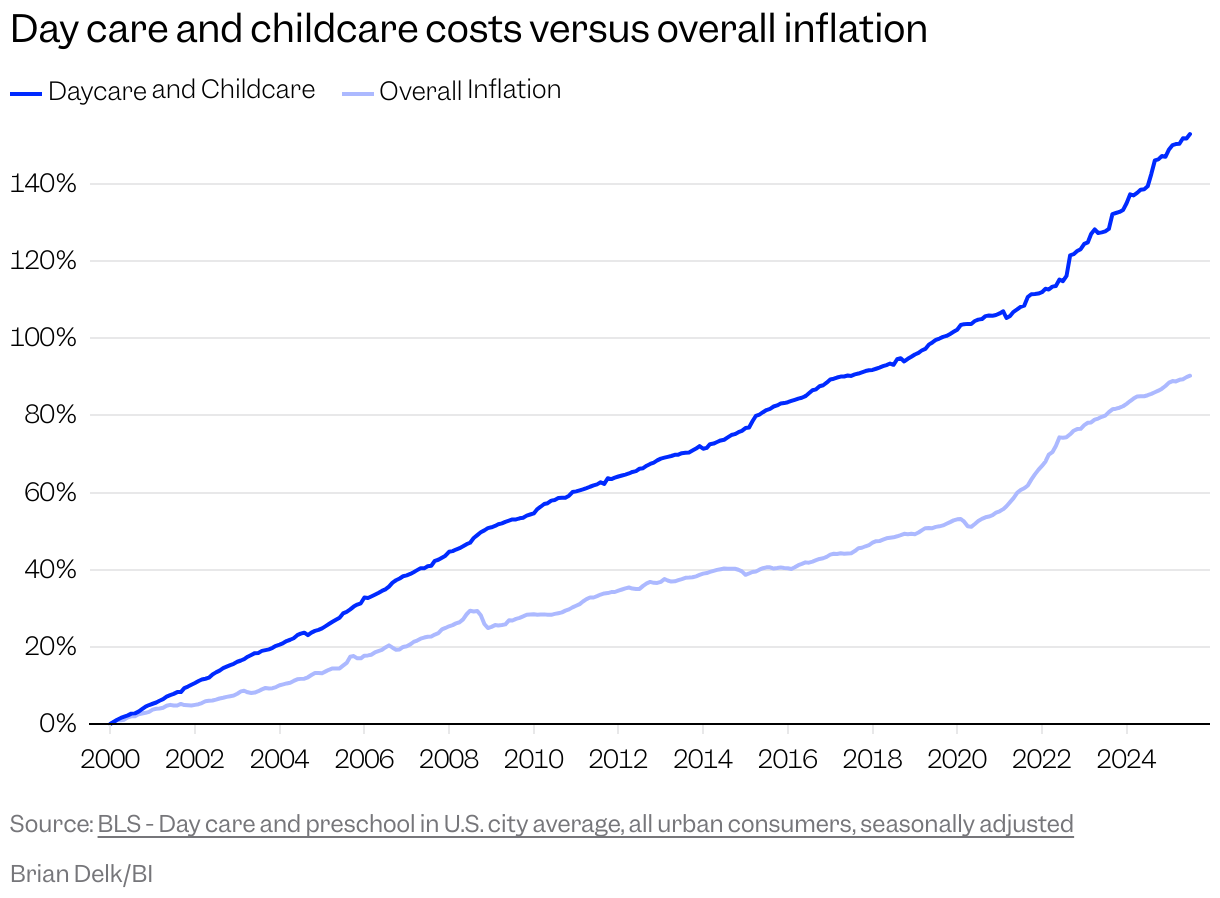
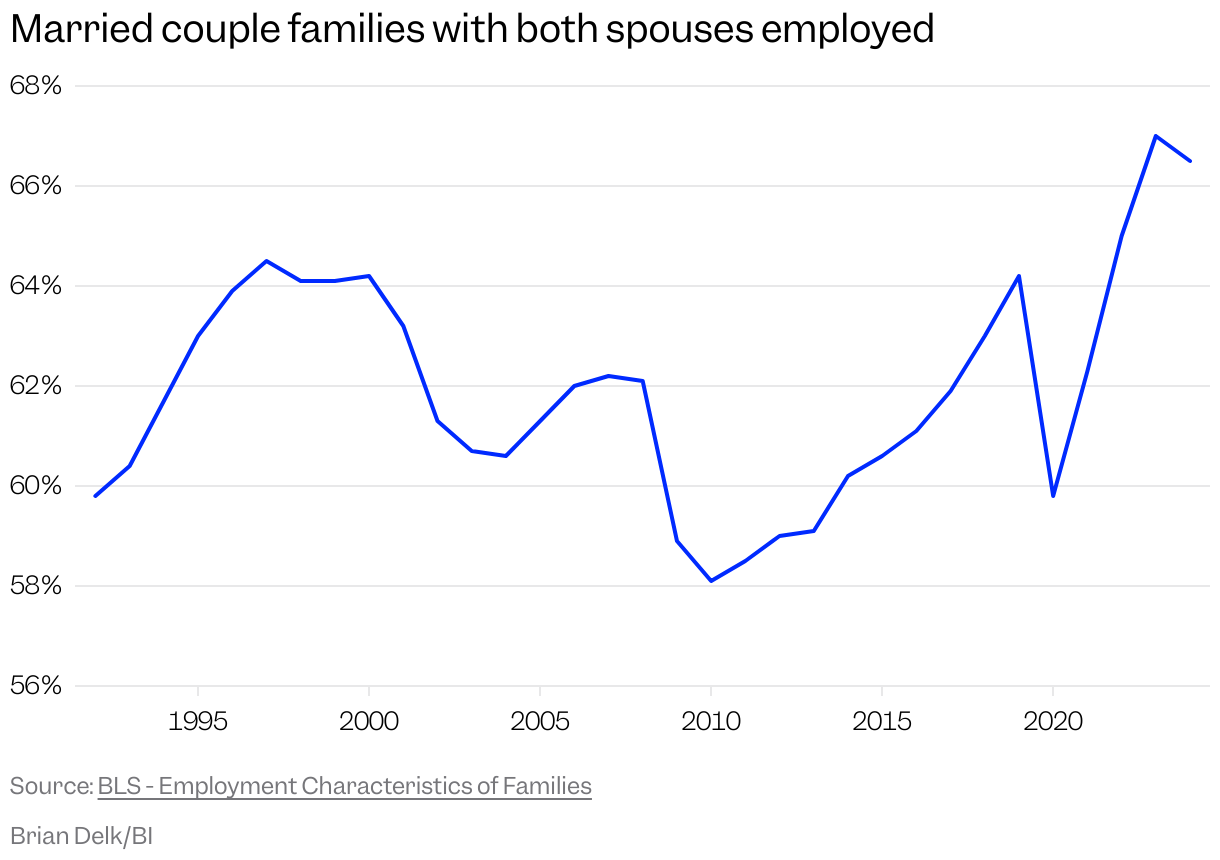
The New Hampshire couple is among the 67% of US families with both parents working full time. Business Insider spoke with nearly a dozen working millennial couples who are also trying to minimize hired help at a time when daycare costs are outpacing overall inflation. This can prove challenging as return-to-office mandates are on the rise and companies are going hardcore.
For now, parents are clinging to any flexibility they have.
“If I didn’t have the opportunity to work from home and have the flexibility to get the kids on and off the bus or from camp, I frankly don’t know what life would look like,” he said.
For many families, professional childcare simply isn’t in the budget, so they rely on a patchwork of relatives, afterschool programs, and flexible schedules.
In Jacksonville, Florida, Austin Bader, 41, an aircraft examiner, and his fiancée, Shawna Townsend, used to lean on Townsend’s mother and niece to care for their young son. They also paid her mom $650 for one summer. They used the city’s free summer camp and after-school program — a huge relief in a state where childcare for a four-year-old can cost nearly $10,000 a year.
Now that their son is in school, they don’t rely on family anymore. Townsend works from home for a hospital and drops their son off at school in the morning, while Bader is out the door and driving to work before 5:30 a.m., and then picks up his son after work. Job flexibility allows them to tag-team the mornings and afternoons.
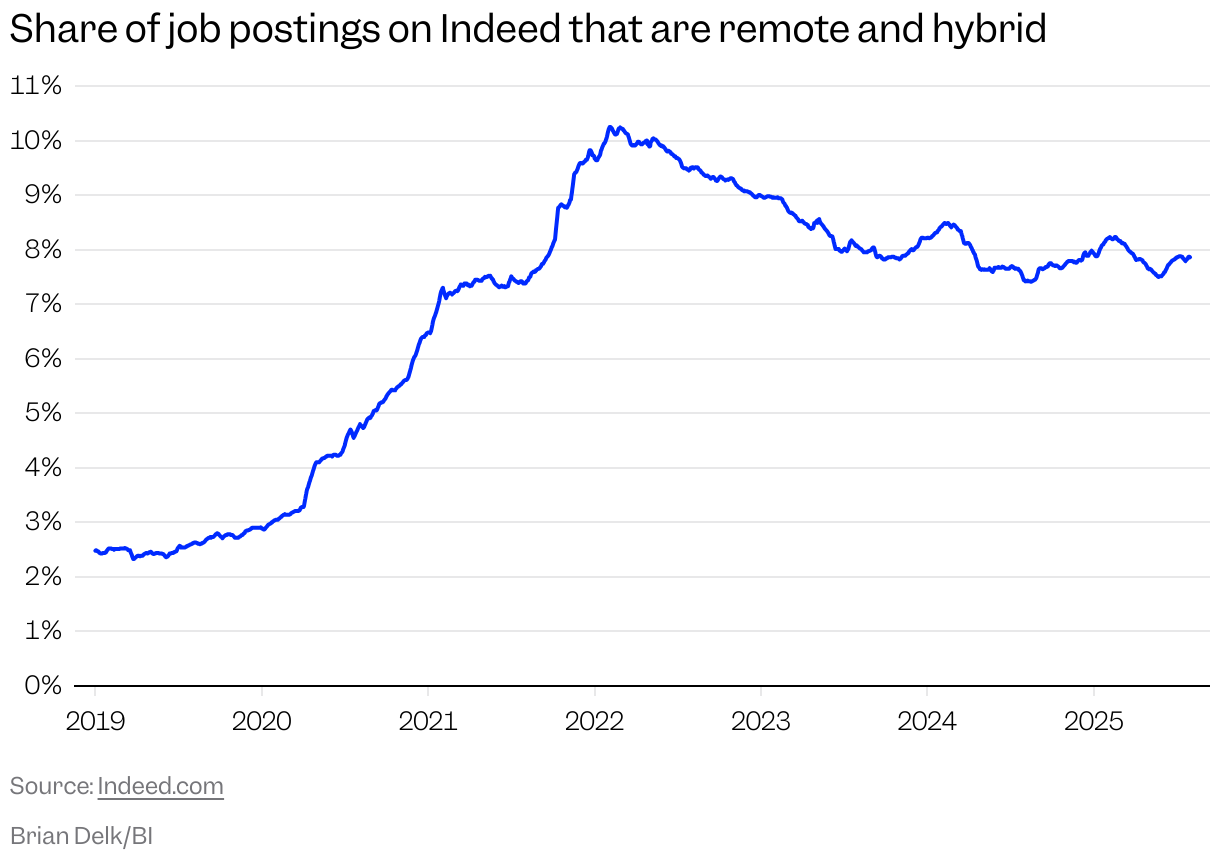
Remote jobs have become rarer in recent years. Since the pandemic boom, companies are asking more employees to work in-person or hybrid schedules, sometimes to the dismay of parents who want to be more present with their children.
Alex Kovalenko, 44, is able to work remotely one day a week, which he said has made a huge difference. Plus, his employer is flexible when it comes to family responsibilities and understands the struggle of balancing a successful career and a happy household. That support “lets me see my kids off to school and be there when they get home,” the father of three kids in Toronto said.
He and his wife, Virginia, manage childcare without any help by swapping duties throughout the week to get their kids to hockey practice and school and make dinner each night.
“We did have a babysitter before, but it just ends up costing a lot of money,” he said. “Three, four hours, that’s like a hundred bucks. Sometimes it’s just easier to take one hour off work.”
Alex Kovalenko
In Orange, New Jersey, Jeff Benvenuto, 41, an adjunct professor, and his wife, an intelligence analyst, feel fortunate to have family nearby. Jeff’s wife’s aunt comes over almost daily to watch their toddler. “That was probably the most important source of help,” Jeff said.
Even with support, parents often feel the hidden work of childcare — the constant scheduling, anticipating, and planning — falls unequally. Jeff admitted he worries his wife carries more of the mental weight.
“There’s no way to measure it,” he said, “but emotionally, I can’t really let go of that. I want to make sure I’m doing enough.”
Experts say that tension is widespread. “We’ve got two parents generally needing to work in order to provide for their family, but then we have the complexity of gender roles,” said Rachel Tomlinson, a registered psychologist focused on child development. “Mothers often still shoulder the invisible load, even as fathers take on more day-to-day care.”
Katelyn Denning, a life coach for working mothers, added that time — not money — is the hardest hurdle. “The financial piece is part of it, but the bigger question is: How do I fit everything on my plate?”
Dads who spoke to Business Insider said they are trying harder to reach parity in terms of care, and working from home has aided that effort. Millennial dads are really trying to “have it all” in the office and the house. A 2016 Pew Research study found that fathers are spending three times as much time on childcare as dads did in 1965.
Other parents agree that it’s worth investing more time in their kids than spending that time working a grueling job. In addition to increased return-to-office, some jobs are indeed getting more demanding as companies look to keep costs low and weed out underperformers. Big Tech, in particular, has been leading the way on increasing emphasis on performance metrics and flattening management layers.
To make it all work, many parents are rethinking what their careers look like. Matt Anderson, 35, a software engineer who’s fully remote, and his wife, Daphnie Tuvi-Lang, a teacher, both work full-time in the greater Toronto area and tag-team childcare duties for their 3-year-old in the morning and evening after work. Matt said he wouldn’t trade his role because of his flexibility.
“I don’t live to work,” he said. “I obviously shut myself out of some probably way higher-paying positions that are just going to be a bit more grindy, but I’m kind of OK with that. I think it’s healthier for me overall.”
The couple said they pay for day care, which totals $1,500 a month for their daughter.
Teceno, similarly, wants to work from home so he can support his family best.
“If I ever had an inclination to look elsewhere, it almost stopped me from doing so because the flexibility overrides whatever benefit I might get from the different position elsewhere,” he said. He just got a new role and has a third more work to do since he has direct reports. “I might get paid more elsewhere, but I obviously wouldn’t be home as much. So for me, I wouldn’t trade it.”
Denning said several clients have left jobs that refused flexibility, unable to manage commuting plus childcare.
For some, a workable solution is one parent stepping out of the workforce entirely.
Marcus, 30, and Hannah Ward, a Montclair, California, couple with three young kids, made that call when their first child was born. Hannah freelanced in media production for several years before becoming a full-time stay-at-home mom. “It was hard at first, but it was a no-brainer,” Marcus said.
Marcus Ward
They’re among over 5.8 million families in the US in which only the father works, a little over a quarter of families. The share of families with both spouses working has increased by 4% since 1992.
In Chicago, Ben McChesney, 41, and his wife juggled multiple jobs and side hustles during their early parenting years. Now with three school-age kids, Ben says the costs haven’t gone away. “We’re getting to the point where we’re going to have to figure out how to pay for college.”
In Kalamazoo, Michigan, Thomas, 39, and Meg Whitener, a couple raising two, said even though Meg’s job provides subsidized on-site day care for their 2-year-old son, costs still pile up. Their 6-year-old daughter also uses an after-school program — the two total to $340 a week.
Thomas is an elected county treasurer and said he speaks to taxpayers daily.
“Everybody that has kids that I see is struggling with childcare because unless you can afford to have one parent stay home, there’s just not enough hours in the day.”
In New Hampshire, Teceno said he’s been lucky to still be remote after the pandemic. While his wife is out the door before the kids get up, he is getting them dressed, fed, and packing lunch boxes before the bus rolls in.
“I didn’t have the opportunity to be that traditional checked out dad,” he said. “I’m not leaving for work, I’m working from the house, and my wife is leaving. So I have to be, and I enjoy it.”
Are you a parent struggling to find your way through the economy? Contact this reporter at bdelk@insider.com.
Fast-fashion retailer rejects accusations as Fair Tax Foundation questions its tax arrangements
Shein’s UK arm has been accused of transferring the “vast bulk of income” to its Singaporean parent in order to cut its British tax bill.
The company, which had been considering a £50bn float on the London Stock Exchange but is expected to list in Hong Kong, paid just £9.6m in corporation tax despite taking £2bn in sales last year.