
AEW star Chris Jericho addressed interest in potential WWE return.
Day: September 6, 2025
Dmitry Medvedev, an ally of Russian President Vladimir Putin, announced fortifications to be built near the Russia-Finland border.
Oscar Wong/Getty Images
- This post originally appeared in the BI Today newsletter.
- You can sign up for Business Insider’s daily newsletter here.
Welcome back! Were you one of the thousands who flocked to the US Open? We were there too and spotted some of the best style status symbols. Find out which ones.
On the agenda:
- How golf can help you live longer, according to a 77-year-old who’s been playing for decades.
- He knew Greenland’s melting ice better than anyone. Then he disappeared into it.
- Forget self-help. To succeed in business, you should be reading fiction.
- This underrated European city is winning some Americans over. They shared with BI why.
But first: It’s back-to-school time.
If this was forwarded to you, sign up here. Download Business Insider’s app here.
This week’s dispatch
Recess is over, guys
Prapass Pulsub / Getty Images
Recess is over, guys
Do you feel that? Yes, it’s a little chill in the air on these final summer mornings. Honestly, I love it — in fact, fall is my favorite time of the year.
And while many children are headed back to school, professionals can also use this season’s change to refocus after a summer of sun.
Perhaps you’re ready to check off your ever-growing to-do list, or clean out your garage just in time for Santa’s return. Whatever you want to focus on, there are some tips to help you get there.
Dr. Kien Vuu, a triple-board-certified physician who focuses on performance and longevity, told Business Insider how he gets focused for the day. Two words: Get moving.
Vuu does a “quick routine based on qigong, a practice of gentle, mindful exercise that originates in traditional Chinese medicine,” Business Insider’s Gabby Landsverk reports. “Evidence suggests that short periods of exercise, particularly movements that raise your heart rate, can improve focus and help stave off the negative health effects of being sedentary.”
Another tip to help increase focus, Vuu said, is intentional breathwork. While there are many different breathing exercises to try, here’s the simplest: “Inhale through your nose for four seconds, hold for seven seconds, and exhale for eight seconds,” Landsverk says.
Good luck with whatever you set your mind to.
Hitting the links for longevity
PNC/Getty Images
For CEO Joe Bronson, 77, golfing is more than just a hobby. It’s a key part of his longevity routine. The sport provides an accessible, low-impact way to exercise. Bronson said he’s been able to keep up with it despite a recent hip replacement surgery.
The skills required for golf — like risk management, good etiquette, and quick decision-making — also translate well to the business world, Bronson said. Plus, the sport is all about social connections, which is strongly linked to a longer, healthier life.
Greenland’s missing scientist
Courtesy of Derek Houtz
Konrad “Koni” Steffen dedicated his life to studying climate change on the Greenland ice sheet. He operated out of Swiss Camp, a research base where he educated guests about the present and future dangers of the melting ice sheet.
No one knew more about the ice than Koni — which is why, five years after he disappeared, his colleagues still puzzle over what happened. BI assembled the most detailed account to date of that day, the ensuing search effort, and its aftermath.
The fiction factor
Getty Images; BI
The vast majority of books recommended to those who want to succeed are nonfiction. In the age of efficiency, it’s no surprise people gravitate toward results-minded self-help reads.
However, business leaders are missing out when they eschew fiction — especially men. Many business books have similar ideas and are written by similar people, while fiction teaches people to think creatively and understand nuance.
“It’s like leg day for your soul.”
Europe’s hidden gem
Fani Kurti/Getty Images
American tourists are flocking to Albania — and some love it so much they’re moving there. The country, located across the Adriatic Sea from Italy, is rebranding after decades of isolation under communism and economic upheaval.
Three Americans who moved to Tirana, Albania’s capital, shared with BI the pros and cons of living there. Its stunning beaches and affordable cost of living are big draws, but one expat said the language barrier can be tough.
Why Americans love the Mediterranean country.
What we’re watching this weekend
saravuth-photohut/Getty, Tyler Le/BI
- “Lilo & Stitch”: Over on Disney+, you can now watch the live-action remake of this Disney classic.
- “Task”: This HBO Max miniseries stars Mark Ruffalo as an FBI agent heading a task force assigned to take down those involved in a string of violent robberies.
- “The Paper”: On Peacock, check out “The Office” spinoff set at an Ohio newspaper starring Domhnall Gleeson as its editor-in-chief.
iStock; Rebecca Zisser/BI
What to shop
- Laptops that major in multitasking: College is chaotic — your laptop shouldn’t be. We found the best ones that can handle note-taking, Netflix, and everything in between without crashing mid-study session.
- A cut above meat delivery: We explored a variety of meat delivery services to find out which ones offer the best mix of quality, convenience, and value. Whether you’re stocking up on everyday essentials or looking to splurge on something special, a few services rose above the rest.
- Sling vs. ESPN showdown: Two popular ways to stream ESPN are going head-to-head — one offers all ESPN channels directly, the other bundles them with live TV. If you’re mostly here for sports, one option might save you a bit more.
More of this week’s top reads:
- Spike Lee is playing favorites.
- Friday weddings used to feel inconvenient and selfish. Now, my family swears by them.
- Giorgio Armani worked into his 90s. Here’s his daily routine and secret to longevity.
- Adam Collard from “Love Island” lost fat and got swole 11 years ago. Three things helped him build muscle.
- Three foods a gut health dietitian following an anti-inflammatory diet eats weekly.
- My 10-year-old was craving independence so I got him a landline. He’s already organizing his own playdates.
- Dolly Parton is a Taco Bell superfan. She told us her usual order, and we obviously had to try it.
- I stayed at a 99-year-old hotel in Montauk for $490. It hasn’t lost any of its 1920s charm.
- I’ve lived and worked abroad for 20 years. One city stood out as the best — and easiest — place to work.
The BI Today team: Lisa Ryan, executive editor, in New York. Dan DeFrancesco, deputy editor and anchor, in New York. Akin Oyedele, deputy editor, in New York. Grace Lett, editor, in New York. Amanda Yen, associate editor, in New York.
Read the original article on Business Insider
India and US Relationship Strained by Tariffs, Modi Responds to Trump
On September 6, 2025, Indian Prime Minister Narendra Modi acknowledged U.S. President Donald Trump’s positive assessment of their bilateral ties, despite the imposition of 50% tariffs on India, reports 24brussels.
In a message on social media, Modi expressed his appreciation, stating, “Deeply appreciate and fully reciprocate President Trump’s sentiments and positive assessment of our ties. India and the US have a very positive and forward-looking Comprehensive and Global Strategic Partnership.”
Trump characterized the relationship as “special,” asserting that there is “nothing to worry about” and reaffirming his friendship with Modi, whom he praised as a “great Prime Minister.” However, he also indicated dissatisfaction with Modi’s current actions, saying, “I just don’t like what he is doing at this particular moment.”
In a separate comment, Trump expressed his disappointment over India’s decision to purchase substantial amounts of oil from Russia, adding that he had imposed the 50% tariffs on Indian goods as a consequence. This situation escalated during the recent Shanghai Cooperation Organization (SCO) summit, where Modi met with Russian President Vladimir Putin and Chinese leader Xi Jinping.
Concurrently, U.S. Secretary of Commerce Howard Lutnick delivered a stern message to India, urging it to sever its economic connections with Russia and other BRICS nations. He emphasized that failure to comply could lead to the maintenance of the tariffs that were recently enacted.
Daniel Werder took matters into his own hands after learning newborn photoshoots cost hundreds of dollars.
Red Bull team boss Laurent Mekies addressed the massive engine development program that the team is taking on in partnership with Ford.
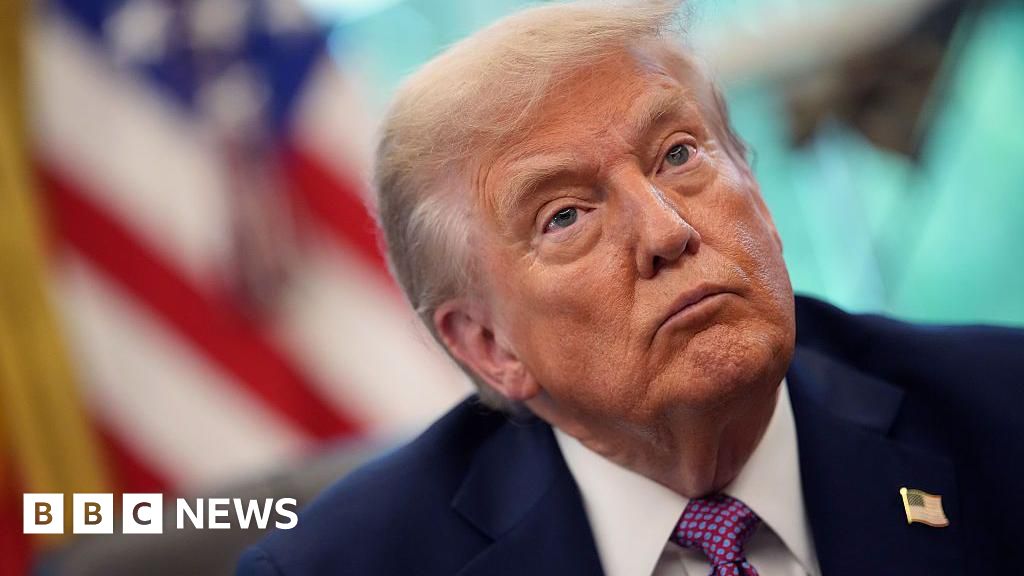
Venezuelan President Nicolás Maduro says “differences” between the countries do not justify a “military conflict”.
Google rolls out ‘preferred sources’ feature. How to add the Daily Press Victorville Daily Press

The assault threatens to displace hundreds of thousands of Palestinians sheltering there from nearly two years of fighting.
bymuratdeniz/Getty Images
- I was struggling to concentrate, sleep, and connect with people because I was addicted to my phone.
- I decided to delete all my apps, including email, so that my phone would only receive calls and texts.
- This drastic change helped me stay more present and clear-headed.
The past year has been all about getting rid of toxic traits and relationships. I ended romantic relationships that drained me. I distanced myself from false friends. I walked away from professional situations that left me burned out, and I cut back on alcohol after realizing it had become more of a crutch than a celebration.
Each of those changes was deliberate. But there was one toxic relationship I hadn’t acknowledged — one I carried in my pocket every single day. My cellphone. More specifically, the apps that turned it from a tool into something that dictated how I spent my time, how I communicated, and even how I thought.
It crept in quietly: the late-night scrolling sessions, the reflex to check notifications during conversations, the way I’d reach for my phone without thinking the moment I felt bored or anxious. It wasn’t dramatic like a fight with a friend or a bad hangover, but it was just as corrosive.
When I finally admitted to myself that my phone might be my most toxic relationship, I knew I had to do something about it.
The breaking point: anxiety, bad sleep, and constant noise
The trigger wasn’t a single event but a buildup of small signals I couldn’t ignore. My sleep was wrecked. I’d lie awake for hours, scrolling TikTok or Instagram, checking X or LinkedIn, convincing myself that one more video or article would relax me. Instead, I’d wake up anxious, already behind, because my brain had been buzzing long before my alarm went off.
On top of that, my mood was unpredictable. I felt more irritable, more distracted, and less capable of focusing. I’d be mid-conversation with someone and realize I hadn’t processed a single thing they’d said because my brain was still spinning from something I’d read online.
I deleted all my apps
So, one Sunday night, I made a decision. I deleted everything: Instagram, TikTok, X, LinkedIn, Spotify, YouTube, Google Maps, WhatsApp, and even email.
The only apps I left were the green phone icon, the blue text bubble, and the other factory ones that come with an iPhone. I wanted to know what my life would be like if my phone stopped being a smartphone.
I didn’t know if the decision would last a week, a day, or even a few hours. And I knew some apps — like my banking app or Uber — would probably have to come back for practical reasons. But I wanted to start as radically as possible, and then adjust as needed.
The first week felt like withdrawal
The next morning, my thumb twitched toward the empty space where Instagram used to be. On the bus, in line for coffee, between meetings, even in the bathroom — every pause in my day triggered the same reflex. I’d open my phone and stare at a blank screen with nothing to offer me.
At first, it was frustrating. I felt restless and bored in a way I hadn’t in years. The quiet moments that I used to fill with scrolling suddenly stretched out like empty hallways. I caught myself inventing excuses to “just check something” online, even though there was nothing left to check.
But after a few days, the withdrawal softened. Instead of reaching for my phone, I started looking around. I noticed the conversations happening on the train. I paid attention to the way light filtered into my apartment in the morning. I FaceTimed my parents instead of sending quick messages in the family WhatsApp group. Dinners with friends felt deeper because I wasn’t glancing down every few minutes.
The absence of apps gave me a kind of presence I hadn’t realized I’d lost.
My life now feels lighter
By the end of the week, I reinstalled a few essentials — Google Maps to avoid getting lost, my bank app, WhatsApp so I could coordinate plans, my browser to access work and AI tools, and YouTube because running in silence was unbearable.
But I never re-downloaded Instagram, TikTok, or X. Even email and LinkedIn stayed off my phone. I just check those on my laptop when I really need to.
The change hasn’t made me perfect. I still check my phone too much, and I still feel the itch to scroll when I’m stressed. But overall, my life feels lighter. I sleep better. I start mornings with my own thoughts, not a flood of other people’s. My conversations last longer. My attention isn’t as fractured.
What started as an experiment has turned into a new habit. Each week, I try to use even the essential apps less and less. The fewer I rely on, the more freedom I feel.
Like the other toxic relationships I’ve left behind, letting go of the ones on my phone has made space for something better: a calmer, clearer version of myself.
Read the original article on Business Insider