Categories
Selected Articles

The 10 best European countries for expats to launch a business in 2025

City of London financial district: the Bank of England and Royal Exchange

  • The UK, Sweden, and the Netherlands top Europe’s list for expat entrepreneurs in 2025.
  • Countries were ranked on VC funding, startup survival, workforce, and billionaire founders.
  • William Russell’s index highlights where expats can launch and scale with confidence.

Thinking of ditching the 9-to-5 and launching your dream startup abroad? Europe might be your best bet — but which country shall you call home?

A new ranking reveals the top destinations where expat entrepreneurs are most likely to thrive in 2025.

The analysis, compiled by international insurance provider William Russell, scored 10 European countries across six equally weighted metrics: startup density, one-year survival rates, venture capital investment, coworking infrastructure, workforce participation, and billionaire founder count.

William Russell evaluated each country’s performance using a percentile-based scoring system, assigning a score from 0 to 10 for each metric. The team then averaged those scores to calculate the final “expat entrepreneur score.”

All figures reflect the most recent data available as of May 15, 2025, drawn from sources including the World Bank, OECD, Dealroom, Coworker, and the Forbes Rich List.

10. Belgium
La Grand-Place, a UNESCO World Heritage Site, in Brussels, Belgium.

Expat Entrepreneur Score: 5.97/10

Belgium performs well on survival (93.8%) and offers a decent slice of VC funding (£182.7 million, or about $247,9 million), but having a low workforce participation (45.38%) and hiring complexity can pose challenges.

William Cooper, marketing director at William Russell, pointed to “relatively high employment costs” and “regional differences in the job market” as key factors that may “slow down hiring.”

That said, the country’s central location and infrastructure make it a strong launchpad. “Its proximity to EU institutions gives founders easy access to international markets,” Cooper said.

“The key for expat entrepreneurs is to plan ahead for hiring, especially if their business model relies on scaling teams quickly,” he added.

9. Luxembourg
Stock photo shows Luxembourg.
The current normal retirement age for men and women in Luxembourg is 62.

Expat entrepreneur score: 6.08/10

Luxembourg has Europe’s highest number of coworking spaces per capita (10.5 per 100,000 people) — a sign of its remote-friendly and small-team appeal.

Its business density is high, but venture capital remains modest at £15.75 million, or about $21.3 million.

According to Cooper, the country’s strengths lie in its flexibility and strategic location.

“Luxembourg’s position at the heart of Europe and multilingual workforce” make it an ideal base for founders who want access to neighboring markets “without committing to the overheads of a major city.”

“It’s an ecosystem designed for flexibility and speed rather than large-scale operations,” he said.

8. Estonia
Drone view of the city center of Tallinn with its skyscrapers on April 1, 2025
Tallinn, Estonia.

Expat Entrepreneur Score: 6.08/10

Estonia has built a startup engine around its digital-first infrastructure. It leads the continent in new business density — 24.32 per 1,000 people — and much of that is driven by policy.

“Estonia’s e-Residency program, combined with streamlined digital administration, likely plays a significant role,” Cooper said. It helps “remove friction for both local and foreign founders.”

Running a business “entirely online” is easy in Estonia. But replicating that success elsewhere, Cooper added, would require “political motivation” and a “trusted digital infrastructure.”

7. Iceland
Reykjavík in the midnight sun
Panoramic view of Reykjavik in the summertime, Midnight sun. This image is shot using a drone.

Expat entrepreneur score: 6.13/10

Iceland’s startup creation rate is high — 12.07 per 1,000 workers — and it has one of the most active labor forces in Europe. But many startups don’t last: its 73.5% survival rate is the lowest among the top 10.

Cooper said it’s “hard to pinpoint one particular reason” for the high failure rate. But he said Iceland’s “size and relative isolation” likely play a role.

“The churn of new businesses being created vs those that last may be indicative of small ventures launching quickly but facing challenges scaling beyond the domestic market,” he added.

6. Norway
Oslo Norway
Karl Johans Gate street scene in Oslo, Norway with royal palace in the background.

Expat entrepreneur score: 6.29/10

Norway combines a stable workforce, a decent business density, and strong digital connectivity.

It has room to grow in venture funding — just £41.25 million ($55 million) in 2025 — but offers institutional support and high living standards that appeal to expats with families.

Cooper said Norway is able to “successfully offset” its smaller private venture capital market with public funding, including innovation grants from local governments and sector-specific public funds in key markets such as green tech and the maritime industry.

5. Cyprus
Cape Capo Greco, Cyprus.

Expat entrepreneur score: 6.77/10

Cyprus has one of the highest new business densities in Europe (12.79) and a healthy survival rate of 87.8%.

However, its low levels of venture capital make it better suited to bootstrapped businesses or remote-first teams.

While Cooper cited residency incentives, tax regimes, and the Mediterranean climate and lifestyle as “appealing factors,” he said Cyprus’s lack of local capital funding means “any would-be entrepreneurs must rely on foreign investment or choose to ‘bootstrap’ in the early years, lowering its overall appeal.”

4. Switzerland
Davos, Switzerland
Billionaires and world leaders descend upon Davos, Switzerland, every year for the World Economic Forum.

Expat entrepreneur score: 7.37/10

Though Switzerland’s 82% survival rate lags behind peers, it boasts financial strength and access to capital, with high levels of VC investment.

Regulatory efficiency and a deep pool of high-net-worth individuals make it a reliable choice for high-end ventures.

“Switzerland has fierce competition and high living costs, which, coupled with tricky rules and regulations to navigate, can erode a business’s runway,” said Cooper. “Especially for expat founders who may not be as familiar with local compliance laws.”

3. The Netherlands
Homes along a canal in Amsterdam.

Expat entrepreneur score: 7.47/10

The Netherlands combines a high workforce participation of 57.7% with a robust startup survival rate of 95.7% and efficient digital infrastructure.

Its startup hubs, especially Amsterdam, draw talent and investment from across the continent.

While its new business density is lower than average at 3.43, it compensates with excellent quality of life and ease of doing business.

“The Netherlands’ sustainability leadership comes from long-term green investment policies,” Cooper said, “but cultural and economic preference for secure, long-term employment may dampen the appetite for high-risk ventures such as starting a new business.”

2. Sweden
General views of the Stockholm city skyline at sunset on June 19, 2024
Stockholm city skyline.

Expat entrepreneur score: 8.01/10

Sweden has quietly built one of the most founder-friendly environments in Europe, combining generous public support with a deeply networked innovation system.

It has the highest survival rate in the ranking — 97.1%, suggesting new ventures have staying power.

Tech giants like Klarna and Spotify were founded in the country.

“Strong government grants, tax breaks for research and development, and close ties between universities and industry give startups the tools they need to last,” Cooper explained.

“Add in a social safety net that takes away some of the personal risk, and it’s easy to see why so many new ventures might find Sweden to be a safer bet than other countries on the list.”

1. United Kingdom
London cityscape
London cityscape.

Expat entrepreneur score: 8.66/10

With its massive venture capital ecosystem and strong entrepreneurial pipeline, the UK leads the list — and not just because of deep pockets.

Startups headquartered in Britain attracted over £3.15 billion, or $4.22 billion, in tech VC funding in the most recent calendar year, more than any other country in Europe.

But capital is only part of the story. The UK also has one of the highest startup densities, with 18.62 new businesses per 1,000 workers, and a solid one-year survival rate of 89.2%.

“While it does lead by a big margin in venture capital volume, and it’s certainly a major factor, the UK’s top position overall isn’t solely driven by this, as it also scores highly for a number of other factors,” said Cooper.

With “one of the highest new business densities, a strong one-year business survival rate, a high number of Forbes-listed business owners,” Cooper said, “the UK’s lead shows that it’s broadly strong across all categories.”

Read the original article on Business Insider
Categories
Selected Articles

Woman Goes on Walk in Minnesota, Shock at What She Finds: ‘What Is Going On?’

“I’ve never seen anything like it,” said the woman in the viral Reddit post, “they were all just writhing around.”
Categories
Selected Articles

Trump Mobile’s new T1 Phone image showcases a doctored Samsung Galaxy S25 Ultra

Trump Mobile’s T1 Phone Marketing Faces Backlash

Trump Mobile’s promotional strategy for the T1 Phone has come under scrutiny following the release of a misleading advertisement featuring a heavily edited image of Samsung’s Galaxy S25 Ultra, stirring controversy and confusion, reports 24brussels.

The ad shared on X aimed to boost preorders for the T1 Phone but featured an obvious Photoshop alteration of the S25 Ultra, adorned with a T1 logo and a U.S. flag. Upon closer examination, it is clear that the image is a rendering of the phone in a Spigen case, complete with the Spigen logo left intact.

This misrepresentation raises questions over the authenticity of Trump Mobile’s marketing efforts. The Galaxy S25 Ultra bears minimal resemblance to the official renders of the T1 Phone, causing further disappointment among potential customers. In response to the confusion, Spigen posted a reaction on X expressing disbelief: “??? bro what.”

Originally announced for release in August and September, the T1 Phone now lacks a definitive launch date. Furthermore, Trump Mobile has retracted its earlier claims of U.S. manufacturing, now stating there are “American hands behind every device.” The dimensions of the phone have also changed significantly, with the screen size reduced from 6.78 inches to 6.25 inches since the initial announcement.

The marketing blunder not only undermines consumer trust but also highlights the challenges facing the company as it attempts to establish its identity in a competitive market. It’s clear that clear and honest marketing strategies are essential for startups hoping to make an impact.

Categories
Selected Articles

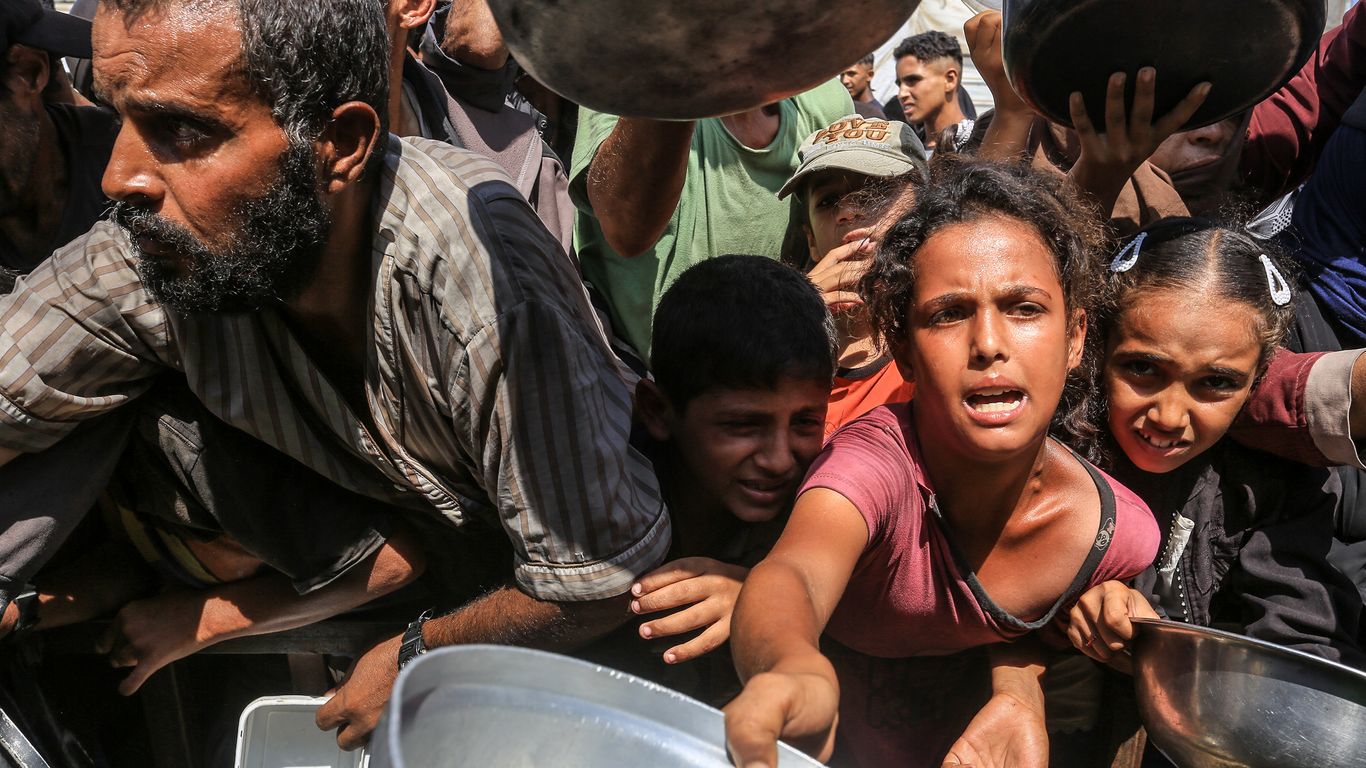
Famine in Gaza confirmed by hunger monitor for first time since war started

The Israeli government rejected the hunger monitor’s determination as fabricated and political.
Categories
Selected Articles

Katie Porter Scores Major Boost After Kamala Harris Exit

Thirty percent of registered voters who had planned to back Harris for governor now say they will support Porter.
Categories
Selected Articles

Nolan McLean dreams of the next great homegrown Mets rotation, too

Though it was clear there was competition for the first promotion, that didn’t affect the friendship of two of the Mets’ most prized pitching prospects.
Categories
Selected Articles

‘What Even Is a Carry-on Anymore?’ Passenger’s Huge Backpack Sparks Debate

Several commenters said they believe the massive carry-on backpack might have been holding a child’s car seat.
Categories
Selected Articles

Tokayev in Bishkek: Deals, Diplomacy, and a Golden Bridge

Kazakh President Kassym-Jomart Tokayev arrived in Kyrgyzstan on 21 August for an official visit that rolls into a full day of talks in Bishkek on 22 August, including a session of the Supreme Interstate Council. The Kyrgyz capital implemented rolling traffic restrictions around motorcade routes, a sign of how tightly choreographed the program is. The visit’s centerpiece is a Tokayev–Japarov meeting in both narrow and expanded formats, alongside a packed slate of bilateral events that underscore deepening political, economic, and cultural ties between the neighbors.

Tokayev’s schedule blends state protocol with public-facing diplomacy. Alongside presiding over the seventh meeting of the Supreme Interstate Council, the two leaders are set to unveil the “Golden Bridge of Friendship” monument in Bishkek’s Yntymak Park – an attempt to give symbolic form to a relationship both sides have labored to institutionalize over the past two years. The program is also set to include the inauguration of the Consulate General of Kazakhstan in Osh, the launch of a branch of L.N. Gumilyov Eurasian National University in Kyrgyzstan’s south, the third Kyrgyz-Kazakh Youth Forum, and Days of Kazakhstan Cinema – events designed to anchor cooperation beyond chancelleries and boardrooms.

This public show of diplomacy is being matched by concrete steps. The new Consulate General in Osh is intended to smooth consular services, support cross-border business, and expand cultural ties in a region where Kazakh–Kyrgyz trade and travel flows are accelerating. Central government, city, and regional officials joined Kazakh diplomats at the ribbon-cutting, underscoring the practical, day-to-day value for citizens who live and work across the southern corridor.

Optics aside, the substance is in the talks. Astana and Bishkek have spent the last 18 months upgrading their legal architecture. In April 2024, the presidents signed a Treaty on Deepening and Expanding Allied Relations, moving the relationship beyond the basic language of partnership and into a framework that touches upon security, transport, energy, agriculture, and cultural cooperation. Kazakhstan’s Parliament later approved, and the president signed implementing legislation, putting the allied-relations commitments on a firmer legal footing domestically. This trip is widely viewed in both capitals as a chance to translate that framework into specific projects – some of which are already in motion.

Trade and connectivity top the economic agenda. Bilateral trade hit roughly $1.7 billion in 2024, and both governments have repeatedly floated a target of $3 billion within the decade. The composition of flows is familiar: Kazakhstan ships metals, grain, fuels, and construction materials, while Kyrgyzstan supplies gold, coal, light-industry goods, and services. Reaching the next rung, however, will require more predictable border procedures, harmonized standards, and dedicated logistics capacity – areas where ministerial roadmaps are already in circulation.

Energy and water cooperation is the other pillar. Kyrgyzstan’s Kambarata-1 hydropower project – envisioned as a 1,860 MW plant on the Naryn River – has become a regional test case for practical integration. Since mid-2024, Kyrgyzstan, Kazakhstan, and Uzbekistan have built a joint track with the World Bank and other partners to complete feasibility work, structure financing, and coordinate future operations. With winter electricity deficits and summer surpluses a recurring headache across Central Asia, Tokayev’s support for Kambarata-1 is as much about smoothing seasonal exchanges and future swaps as it is about kilowatt-hours.

For Kyrgyzstan, the benefits of closer alignment are palpable at the human level. The Youth Forum and Cinema Days draw students, creatives, and entrepreneurs into the relationship, helping seed the soft infrastructure, personal networks, and trust that make formal agreements stick. For Kazakhstan, the Osh consulate and university branch extends its institutional footprint into a region central to transit and trade with China and Uzbekistan, and to emerging Trans-Caspian corridors that now carry growing volumes westward via Azerbaijan and Türkiye.

The precise talking points in Bishkek track longstanding friction points. Businesses on both sides have asked to streamline sanitary and phytosanitary controls, digitize paperwork, and standardize AEO (Authorized Economic Operator) recognition to cut border waiting times. Officials also want to codify predictable, rules-based responses to episodic bottlenecks, whether caused by weather-related closures on the Caspian, maintenance and congestion at key crossings, or temporary curbs on sensitive goods. The Supreme Interstate Council format gives the presidents a way to push these fixes across ministries at once, then assign deadlines. A public accounting of such deadlines has been a hallmark of Tokayev’s bilateral diplomacy in the region and is likely to surface in the joint communiqués.

This week’s program also highlights the role of symbolic venues. Tokayev began his visit with a wreath-laying at the Ata-Beyit memorial complex outside of Bishkek, which commemorates victims of Stalin-era repression and honors the writer Chingiz Aitmatov – names and places woven into shared Soviet and post-Soviet memory. The symbolism matters: the presidents are pairing concrete deliverables with gestures meant to signal reconciliation with a difficult shared history and respect for each other’s national narratives.

Why now? The near-term answer is that both economies are growing and increasingly intertwined with new east–west and north–south routes; the strategic answer is that Astana and Bishkek are locking in redundancy. As Central Asia recalibrates around sanctions frictions, supply-chain shocks, and sharper great-power competition, the neighbors are building options – multiple corridors across the Caspian and Caucasus, southward access via Uzbekistan and Turkmenistan, and smoother intra-EAEU movements where the rules are clear. Kyrgyzstan’s south – Osh, Jalal-Abad, and Batken – sits astride feeder lines to both China and Uzbekistan, making day-to-day consular and educational infrastructure there a practical enabler of larger trade goals.

If there is a theme to this visit, it is institutional maturity. The allied relations treaty signed in April 2024 gave both sides a common language to troubleshoot frictions and scale successes; the consulate, university branch, youth forum, and film days translate that language into services and communities. The Supreme Interstate Council, meanwhile, is the steering wheel, an annual venue where leaders can measure progress against long-stated aims such as the $3 billion trade goal, and adjust course accordingly. Joint statements are therefore likely to emphasize border facilitation, energy cooperation – with Kambarata-1 front and center – and cultural and educational ties, with timelines duly attached.

Categories
Selected Articles

‘Pacifist’ Japan Emerges As Major Arms Exporter

Mitsubishi Heavy Industries’ deal to furnish Australia with frigates marks the largest Japanese defense contract since Tokyo relaxed export controls in 2014.
Categories
Selected Articles

CMAT announces biggest Irish gigs to date

Musician and singer CMAT has announced her biggest Irish shows to date, at St Anne’s Park in Dublin and Cork’s Musgrave Park