
Categories
Selected Articles

The View From Ankara – President Tokayev’s Working Visit to Turkey

The official visit of President of Kazakhstan Kassym-Jomart Tokayev to Turkey on July 29, 2025, carries a multidimensional and strategic significance that extends far beyond the boundaries of diplomatic protocol. This engagement stands out as part of an ongoing multidimensional process of transformation marked by deepening regional alliances in the fields of science, energy, and logistics. Invited by President Recep Tayyip Erdoğan, Tokayev co-chaired the fifth meeting of the Turkey-Kazakhstan High-Level Strategic Cooperation Council. As a result of this summit, 20 bilateral agreements were signed, encompassing new frameworks of regional integration, especially in the fields of mining, energy, transportation, and higher education.

Energy Diplomacy and Resource Geopolitics

One of the most striking dimensions of the visit was the negotiation of new cooperation mechanisms aimed at transporting Kazakh oil to global markets via Turkey. According to President Tokayev, currently 1.4 million tons of Kazakh oil are transported annually through the Baku–Tbilisi–Ceyhan pipeline. Under the newly signed memoranda of understanding, the parties aim to increase this volume. This development not only strengthens Turkey’s ambition to become a regional energy hub but also holds critical importance for Kazakhstan’s strategy to diversify export routes and secure access to safe ports. Furthermore, the expressed intent of Turkish Petroleum Corporation (TPAO) to operate in Kazakhstan signals that the collaboration may extend beyond transport into production processes as well.

Kazakhstan’s reserves of rare earth elements and strategic minerals are of considerable value to both European and Asian economies prioritizing green energy transitions. In this context, the agreements signed in the mining sector may herald a new phase — one that mandates not only commercial but also technological and scientific R&D collaborations.

Strategic Dimensions of the Middle Corridor

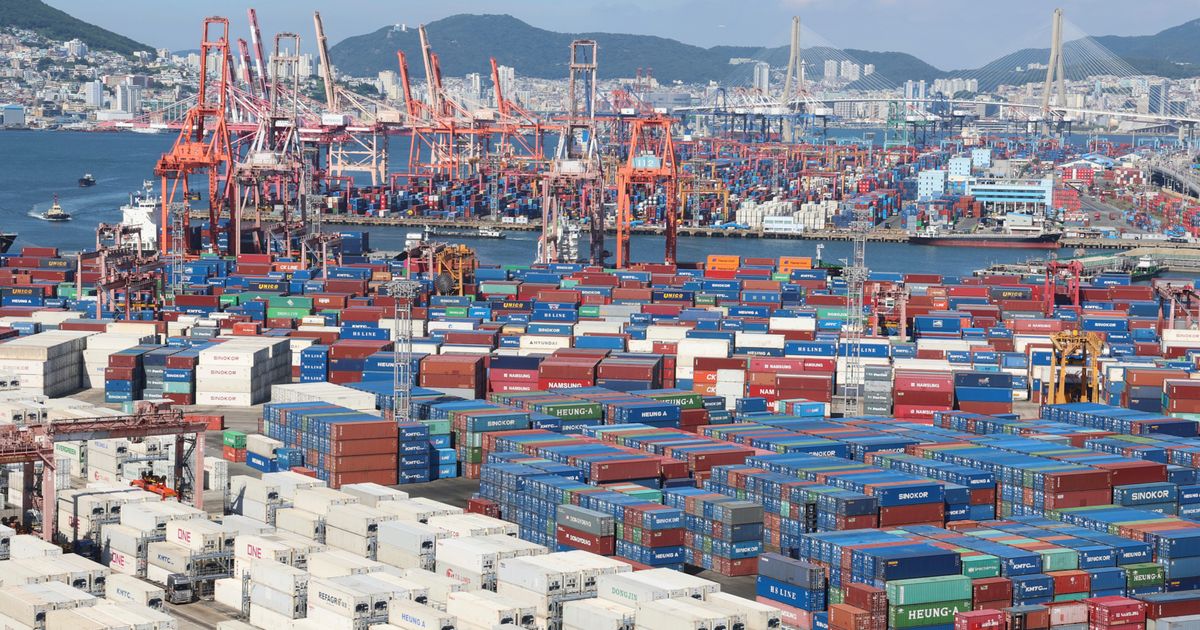
Another key agenda item during the visit was the development and activation of the Trans-Caspian International Transport Route, commonly referred to as the ‘Middle Corridor.’ According to data shared by Tokayev, approximately 85% of road freight transported between China and Europe passes through Kazakhstan. This positions Kazakhstan as the backbone of the region’s logistics infrastructure. Turkey’s central role in the Middle Corridor makes it a decisive actor in the route’s integration with Europe. In this regard, Kazakhstan’s efforts to modernize its rail and road infrastructure, alongside its revival of maritime transport on the Caspian Sea, when combined with Turkey’s port capacity and transportation infrastructure, offer significant synergistic potential. These developments also underscore the strategic importance of the Zangezur Corridor and reinforce the value of uninterrupted transportation from China to Europe via Turkey, bypassing the Iranian route.

Education and Academic Diplomacy

The visit also drew attention for its scientific and cultural dimensions, in addition to its economic focus. Joint initiatives such as Gazi University’s planned establishment of a branch within the South Kazakhstan Pedagogical University can contribute to aligning the Turkish higher education model with Kazakhstan’s ongoing education reforms.

Moreover, the Turkish Maarif Foundation’s new school initiatives in Kazakhstan signify a broadening and institutionalization of bilateral cooperation in education. These efforts may extend beyond student exchange programs to encompass joint research projects, health technologies, distance education systems, and academic mobility, laying the groundwork for a multifaceted partnership.

Rising Investment Intensity

Bilateral economic relations have gained significant momentum – the trade volume between the two countries has reached $5 billion. Kazakh investments in Turkey amount to approximately $1.5 billion, while Turkish investments in Kazakhstan are nearing $5 billion. According to President Tokayev, around 4,000 Turkish companies are currently operating in Kazakhstan, having undertaken projects worth a total of $6 billion. The involvement of these companies in sectors such as energy, construction, agriculture, industry, infrastructure, and healthcare illustrates Turkey’s capacity to transfer its development experience to the region.

A Multi-Layered Partnership Model

The comprehensive cooperation platform established along the axes of energy, transportation, education, and science during the Tokayev-Erdoğan summit could, if institutionalized within a strategic framework, significantly contribute to realizing the two countries’ shared goal of reaching a bilateral trade volume of $15 billion.

As part of the visit, President Erdoğan awarded President Tokayev the State Order of the Republic of Turkey — an act that symbolizes the deepening of bilateral relations not merely on the basis of strategic interests but also through a shared sense of fraternal affinity, thereby adding a distinct and positive momentum to the partnership.
Categories
Selected Articles

Father of Miami sailing camper, 13, reveals final words with ‘perfect daughter’ before deadly boat crash

“I need to honor my daughter because I can’t say goodbye as if nothing (happened). I need to know what happened.”
Categories
Selected Articles

Statehood remains a distant dream for Palestinians as nightmare unfolds in Gaza

Statehood remains a distant dream for Palestinians as nightmare unfolds in Gaza [deltaMinutes] mins ago Now
Categories
Selected Articles

The Latest: US trade partners around the world react to Trump’s new tariffs

U.S. trade partners around the world are reacting to President Donald Trump’s executive order that would introduce new tariffs on many of them in seven days.
Categories
Selected Articles

NBA star Luka Dončić’s offseason diet involves intermittent fasting and 250 grams of protein daily

Luka Dončić
Luka Dončić

  • NBA star Luka Dončić is working out twice daily and practicing intermittent fasting this offseason.
  • His nutritionist says he follows a gluten-free diet and eats at least 250 grams of protein daily.
  • This plan is adjusted to accommodate Dončić’s schedule during the NBA season.

NBA star Luka Dončić, 26, is doubling down on fitness this offseason.

In an interview with Men’s Health, the team responsible for Dončić’s fitness and nutrition spoke about his strict regimen this summer to stay in peak form.

It all starts with his diet and a strict intermittent fasting schedule, Dončić’s physiotherapist, Javier Barrio, told Men’s Health.

Every day except on Sundays, the Lakers player fasts from 8:30 p.m. to noon the following day. At the end of his fast, Dončić heads straight into the first of his two daily workouts.

“It’s not so easy to learn,” Barrio said, adding that the goal of fasting is to reduce any post-workout inflammation that Dončić experiences.

To ensure his muscles stay in top condition, Dončić fuels up with 250 grams of protein a day.

He sticks to eggs and chicken during meals and supplements with shakes made from no-sugar, low-carb whey protein isolate.

Dončić’s nutritionist, Lucia Almendros, said that 250 grams of protein is “the minimum” amount he needs to eat in a day.

“If he wants more, he can eat more,” Almendros told Men’s Health.

But a balanced diet is key: Dončić keeps nuts on hand whenever he needs a nutritious snack, and he consumes lots of vegetables. He also often has fruit for dessert.

Although Dončić doesn’t eat gluten, he consumes other types of carbs like rice and potatoes sparingly, Almendros said.

“Depending on the game, depending on the moment of the season, depending on his physical condition, we use carbs — but in a specific moment to have energy in the game or in the training,” Almendros said.

This strict diet plan gets adjusted to accommodate Dončić’s schedule during the NBA season, Barrios said.

“You can’t eat nothing after 8 p.m.,” Barrios said. “Because half the days you are traveling in this time. You are not able to do a fasting 16:8 during the season — this is impossible.”

In another Men’s Health article from the same interview series, Dončić said his physical condition hasn’t felt this good in years.

“My sleeping, my body, my everything … I felt more rested,” Dončić told Men’s Health.

He said he’s also satisfied with his leaner, more toned physique: “Just visually, I would say my whole body looks better,” Dončić said.

A representative for Dončić did not immediately respond to a request for comment sent by Business Insider outside regular hours.

Despite being a five-time NBA All-Star, Dončić has been criticized for his weight and conditioning throughout his NBA career. In February, he was traded midseason from the Dallas Mavericks to the Los Angeles Lakers for Anthony Davis in a deal that surprised many NBA fans.

Pro athletes’ diet and training routines vary.

In 2022, NFL quarterback Justin Fields told Business Insider that he eats a vegan diet for better performance.

“I think the biggest change for me is just how much lighter and faster I feel all around. This change was very drastic for me after I did the challenge with my family and was ultimately the reason I chose to continue a plant-based diet,” Fields said.

In 2023, NFL running back Raheem Mostert told BI he takes an “everything in moderation” approach to his diet and makes small changes to his meals to ensure he always feels his best.

“Prime example; if I’m eating a burger, I probably have no cheese on it just because I know that it’s an inflammatory issue for me,” Mostert said. “So I try to cut out those little things.”

Read the original article on Business Insider
Categories
Selected Articles

Stanford hires former Nike CEO John Donahoe as athletic director, AP source says

Stanford hires former Nike CEO John Donahoe as athletic director, AP source says [deltaMinutes] mins ago Now
Categories
Selected Articles

Top photos this week from Latin America and the Caribbean

Top photos this week from Latin America and the Caribbean [deltaMinutes] mins ago Now
Categories
Selected Articles

Russia’s rumored jet-powered versions of the Iranian Shahed are appearing in Ukraine’s air defense reports

A Ukrainian officer examines a downed Shahed drone with a thermobaric charge launched by Russia in a research laboratory in an undisclosed location in Ukraine on Nov. 14, 2024.
The Shahed is an Iranian-designed drone that Russia now produces in large quantities at home.

  • Ukrainian reports are starting to document the use of Russia’s new jet-propelled Shahed drones.
  • One version, unofficially dubbed the Geran-3, is said to fly up to 500 miles per hour.
  • Such speeds would pose key problems for Ukraine’s air defenses if jet drones are launched en masse.

More signs are emerging that Russia is launching a new exploding drone said to fly much faster than its current Shaheds.

Ukraine’s Air Force Command reported on Wednesday that it had encountered jet-powered attack drones while defending its airspace the night before.

“A notable feature of the night attack was the use of up to eight jet-powered UAVs in the northern direction,” it wrote in a regular update.

The announcement marks one of the first official reports of Ukraine’s forces encountering the new loitering munition in combat.

In total, the Air Force Command counted 78 Shahed attack drones launched on Tuesday night.

The statement added that 51 drones were shot down or disabled by electronic warfare, interceptor drones, anti-air missiles, and mobile fire groups, which typically use truck-mounted machine guns.

The Ukrainian air force did not specify if any jet-propelled drones were shot down.

“There were 27 drone impacts recorded at 7 locations, and falling debris from downed drones at 2 locations,” Air Force Command wrote.

On Thursday, a Ukrainian Telegram channel that monitors the flight paths of Russian drones also wrote that it recorded launches of jet-propelled drones.

“On the map we’ve drawn for you, you can see the movement of cruise missiles, jet-powered Shaheds, and regular strike/decoy UAVs,” it wrote. While not an official government channel, it’s widely followed in Ukraine for city-specific alerts on incoming drones.

A major problem for Ukraine’s air defenses

Russian jet-propelled drones are believed to be closely modeled after Iran’s Shahed-238, an upgraded long-range loitering munition Tehran unveiled in November.

Moscow has not officially detailed its own version of the new weapon, but Ukraine’s intelligence and Western analysts have reported that it’s likely building a model with the Tolou‑10/13 jet engine to vastly increase the drone’s speed.

Open-source intelligence sources said as early as January that Ukraine may have shot down at least one Shahed-238-type drone, indicating limited Russian use. In June, images published by Ukrainian Telegram channels appeared to show destroyed fragments of such drones in the country.

In both earlier reports and the Air Force Command’s update on Wednesday, it’s unclear if these were prototypes or finalized drones.

But if deployed en masse against Ukraine, the new upgraded drone could pose a major problem for Kyiv’s air defenses.

The Shahed-238 is said to be much faster than the Shahed-136, which is locally produced in Russia as the Geran-2 — the Kremlin’s main attack drone against Ukraine.

While the Shahed-136 is known to fly at top speeds of 115 mph, a Russian general told state media in December that the Shahed-238 could fly as fast as 500 mph. Extended independent analyses on the drone’s still aren’t publicly available, and it’s possible that the munition can only fly that fast while diving.

At such speed, however, the jet-powered drone would be nearly as fast as a cruise missile.

That would be a nearly impossible target for Ukraine’s mobile fire groups, or the vehicle-mounted machine gun crews it’s relied on to fight off Shahed-136s.

This year, mobile fire groups are already being overwhelmed by the sheer number of Russian Shahed-136s launched every night. To shore up the gap, Ukraine has started prioritizing interceptor drones, which also risk being rendered obsolete if jet-powered Shaheds become mainstream.

A Ukrainian holds the Sting, an interceptor drone created by the Wild Hornets.
Ukraine has seen limited use of interceptor drones to down the Shahed, but has in recent months been driving hard at development to counter Russia’s growing drone waves.

Interceptor drones, built secretly by Ukrainian companies, already need to fly much faster than the Shahed-136 since they must catch up to the loitering munition after it’s detected.

A Shahed-238 or Geran-3 moving at 500 mph would require an intercepting drone to fly nearly three times as fast as before.

“In such a case, promising antiaircraft interceptor UAVs, unfortunately, will be powerless,” wrote a Ukrainian military blogger in late June.

Ukraine does have advanced anti-air missile defenses for faster targets, such as the US-made Patriot system, which has even been reported to take down the hypersonic Kinzhal missile.

Still, Ukraine typically reserves these expensive anti-air munitions for ballistic missiles; expending them to neutralize waves of Shahed drones would be unsustainable.

Read the original article on Business Insider
Categories
Selected Articles

Palestinian Islamic Jihad releases video of frail Israeli hostage Rom Braslavski, leaving family reeling: ‘They broke my boy’

“I know how many beatings he is taking. I know because Rom doesn’t cry. If he cries, it is because they are abusing him. Look at him. Thin, limp, crying. All his bones are out.”
Categories
Selected Articles

A look at AP’s top photos in July

A look at AP’s top photos in July [deltaMinutes] mins ago Now