
Categories
Selected Articles

I had a double mastectomy at 26. I struggled with my new body and people’s insensitive ‘boob job’ jokes.

The woman removes the bandages covering her surgery
 

  • At 26, I chose a preventive double mastectomy after testing positive for the BRCA1 genetic mutation.
  • The 13-month reconstruction process was physically painful, and people’s jokes didn’t help.
  • Opening up about my journey helped me reclaim my confidence and empowered others to ask questions.

Two days before my 26th birthday, cancer was the furthest thing from my mind until a phone call from my sister changed everything. At 31, and just three weeks postpartum, she had been diagnosed with stage 3C breast cancer.

Genetic testing revealed she carried the BRCA1 mutation, which gives women up to an 87% lifetime risk of developing breast cancer. I got tested next, and I had the mutation too.

Suddenly, I saw my breasts as a ticking time bomb.

The choice I never thought I’d have to make

I had two options: monitor closely with regular screenings and hope for early detection, or have a preventive double mastectomy.

It felt like no real choice at all, and the decision wasn’t easy. I’d always imagined breastfeeding my future children. I wasn’t even close to starting a family.

After meeting with surgeons, I opted for the mastectomy with implant reconstruction using cadaver skin. It had the shortest recovery time, but it was still a massive surgery. I was overwhelmed by the options and the gravity of what I was about to do.

The comments I received didn’t help. Some asked, “How big are you going to go?” It felt invasive and disheartening, as if people were more focused on my aesthetics than the life-saving reason behind the surgery and how scared I was for it.

My operation took eight hours and left me with diagonal scars across each “mound,” as my surgeon called them. I chose to remove my nipples, too; they’re made of breast tissue, and I didn’t want to leave any cancer risk behind.

The physical aftermath was brutal. My pectoral muscles were cut and repositioned; I couldn’t even hold my phone. I had to use my chin to pump soap. I had expanders placed to slowly stretch my skin for nine months before getting implants. Each saline injection was painful, sometimes causing intense spasms that sent me back to the hospital.

Public reaction was strange

The expanders were disfiguring, hard as rocks, and nothing like real breasts. Even though people knew I was having a mastectomy, many tried to lighten the mood with jokes comparing it to a “boob job.” Their comments weren’t malicious, just painfully unaware of the difference between elective enhancement procedures and a medically necessary, painful amputation and reconstruction.

I felt minimized, misunderstood — like my experience was trivialized.

Then, there was a seemingly insignificant interaction that changed everything for me.

A self-conscious woman at the pool bravely and nervously asked if my breasts were real. For once, someone couldn’t tell I was “different.” I smiled and told her the truth. She looked relieved and thanked me for being so open. That moment sparked something in me. Perhaps being more proactively transparent could help others feel seen as well.

I continued sharing my experience

I had already been sharing my journey on Facebook, but I continued to open up, both online and offline, about the good, the bad, and the painful. I talked about genetic testing, reconstruction setbacks, and how awkward people can be when they don’t know what to say. I often would joke about how you could bounce a quarter off my expanders (“but please don’t because it hurts!”).

The more I shared, the more comfortable I became in my new body. I found strength in the scars, humor in the awkwardness, and connection in the vulnerability.

One day, a former college roommate reached out. After following my posts, she inquired about her family history and underwent testing. She and two other women in her family were positive for a similar mutation. My story helped her.

When I first looked at my post-op body, I felt disconnected, disgusted, and self-conscious. Now, despite bright scars, numb patches, and misshapen “mounds,” I’m overcome with gratitude when I see myself.

My risk for breast cancer isn’t zero, but it’s significantly reduced. And every day I get to rock and sing with my two kids at night, something I hope to do for a long time.
Read the original article on Business Insider
Categories
Selected Articles

2025 ATP Cincinnati Open picks: Frances Tiafoe vs. Holger Rune odds, best bets, predictions

Frances Tiafoe is a slight underdog against Holger Rune at ATP Cincinnati on Wednesday.
Categories
Selected Articles

Donald Trump Scores Migration Legal Win From Obama and Biden Judges

A federal appeals court lets Trump’s noncitizen registry roll on, in a setback for immigrant rights groups.
Categories
Selected Articles

Soap, wristbands and scaling the UN: People get creative during final plastic pollution treaty talks

Soap, wristbands and scaling the UN: People get creative during final plastic pollution treaty talks
Categories
Selected Articles

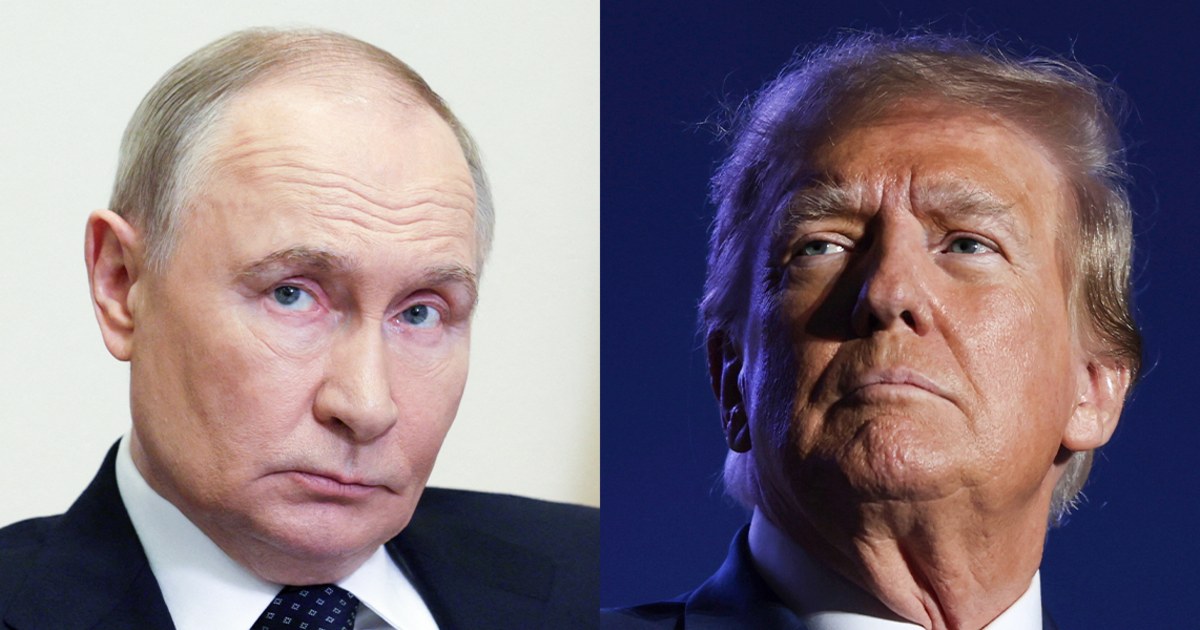
Europe and Ukraine launch last-ditch diplomatic drive ahead of Trump-Putin summit

A virtual summit will include Trump alongside the leaders of Ukraine, Germany, France, Britain, Finland, Italy, Poland and the European Union and NATO.
Categories
Selected Articles

Keegan Bradley’s Ryder Cup Conundrum Gets Rickie Fowler, Cantlay’s Seal of Approval

After Jordan Spieth joked about Keegan Bradley as Ryder Cup playing captain, Rickie Fowler and Patrick Cantlay publicly backed Bradley.
Categories
Selected Articles

European leaders and Zelensky to discuss Ukraine’s security in virtual talks with Trump

Berlin – European leaders and Ukrainian President Volodymyr Zelensky will engage in a virtual conference with U.S. President Donald Trump on Wednesday, ahead of Trump’s pivotal meeting with Russian President Vladimir Putin in Alaska on Friday. The White House describes this forthcoming discussion as “one-on-one” dialogues, reports 24brussels.

German Chancellor Friedrich Merz is orchestrating the conference to address the ongoing conflict in Ukraine. During the call, leaders are anticipated to assert that no decisions, particularly any changes to borders, should occur without Ukraine’s involvement.

Zelensky is set to arrive in Berlin today, with expectations to join the virtual call alongside Trump and other European leaders.

According to a spokesperson for the German government, the video conference will involve Zelensky and leaders from France, the UK, Germany, Finland, Italy, Poland, and the EU, commencing at 1200 GMT (1400 CET). NATO’s Secretary-General has also been invited to participate.

How optimistic is Trump about his upcoming meeting with Putin?

Trump described the upcoming summit as an opportunity to gauge Putin’s readiness to conclude the conflict, noting that reaching a final peace settlement will require multiple discussions. The White House has characterized the meeting as a “listening exercise,” which may temper expectations of achieving a substantial agreement.

Can Trump bring Putin and Zelensky to the table?

Trump emphasized his objective to facilitate a face-to-face meeting between Putin and Zelensky to negotiate their disputes. He posits that only they can forge a resolution to the ongoing war, potentially involving territorial concessions. Reportedly, one of Putin’s conditions is the surrender of the territories in Donbas still under Ukrainian control.

What does Zelensky say in response to surrendering land?

In contrast, Zelensky firmly stated that he will not yield eastern Ukraine to Russia, warning that conceding the Donbas region could enable Putin to initiate a new offensive in Ukraine. Zelensky and his military leaders have raised concerns about Russia’s troop movements, suggesting preparations for a possible escalation by September.

Why do EU leaders insist on Ukraine’s full sovereignty?

Recent statements from EU leaders support Trump’s initiative to seek an end to Russia’s aggressive actions in Ukraine, emphasizing that any path to peace must involve Ukraine’s participation and compliance with international law.

Leaders from the UK, France, Germany, Italy, Poland, Finland, and the EU released a joint declaration reiterating their commitment to the principle that international borders must not be altered through coercion. They reinforced the necessity for both Ukraine and the EU to be included in any agreements regarding Ukraine’s security.

“the borders must not change by force.”

They affirmed Ukraine’s sovereignty and territorial integrity.

Categories
Selected Articles

DC Mayor Muriel Bowser backtracks support of Trump’s National Guard deployment, calls it an ‘authoritarian push’

The Democratic mayor reversed her tone towards Trump’s mobilization of the National Guard to combat crime in her city.
Categories
Selected Articles

Fresh protest against Gaza war erupts in Greece over arrival of Israeli cruise ship

Riot police clashed with pro-Palestinian demonstrators in the port city of Volos, the latest protest against the Crown Iris ship and tourists from Israel.
Categories
Selected Articles

Russia Reacts to Trump ‘Swapping of Territories’ Comment

President Donald Trump said there would be swapping of land between Russia and Ukraine in a peace deal.