
In a rare showing of bipartisanship, her Republican colleagues, including Sens. Ted Cruz of Texas and Susan Collins of Maine, rushed to help her up.
Day: August 1, 2025
Renowned Belgian Choreographer Anne Teresa De Keersmaeker to Receive Prestigious Award
Anne Teresa De Keersmaeker, a prominent figure in the dance world, has been selected to receive the Praemium Imperiale award in October for her lifelong contributions to the arts, marking her as a key representative of Belgium’s artistic community. This announcement was made by the Japan Art Association in mid-July. De Keersmaeker is the second Belgian recipient of this esteemed award, often referred to as the “Nobel Prize for the Arts,” following painter Pierre Alechinsky, and the first to be honored in the Theatre and Film category, reports 24brussels.
The 65-year-old choreographer, who trained at Maurice Béjart’s Mudra school in Brussels in the late 1970s, is set to accept the award in Tokyo this October. She cites her time at Mudra as foundational to her career, after which she expanded her expertise through studies at the Tisch School of the Arts in New York, where she explored American postmodern dance.
De Keersmaeker first gained significant recognition with her piece “Fase, Four Movements to the Music of Steve Reich,” which premiered in the early ’80s. The piece, now considered a contemporary classic, combines intricate choreography with minimalist music. In September, she is scheduled to perform one of the movements, “Violin Phase,” at Bozar in Brussels.
Born in 1960 in Mechelen, De Keersmaeker began her artistic journey with the presentation of her first piece, “Asch,” in 1980. Her groundbreaking work “Fase” established her as a leading voice in contemporary dance. Throughout her career, she has consistently integrated a variety of music genres into her work, including classical and jazz. Among her most recent productions is “BREL,” which features music by the Belgian singer Jacques Brel.
In 1983, De Keersmaeker founded the dance company Rosas in Brussels, which quickly gained international acclaim with its first production, “Rosas danst Rosas.” This work has been celebrated for its feminist themes and innovative choreography, solidifying Rosas’ place in the global dance scene. Notably, in 2011, De Keersmaeker publicly addressed issues of intellectual property rights after alleging that Beyoncé had borrowed choreography from “Rosas danst Rosas” for her music video.
After a brief period of controversy regarding her leadership style, De Keersmaeker expressed regret for the environment at Rosas, stating, “As a leader, I take full responsibility for the working environment that existed within Rosas and as a person, I want to apologize to all the people I have disappointed and hurt along the way.” Despite these challenges, she continues to push boundaries within contemporary dance.
Currently, De Keersmaeker orchestrates an international school for contemporary dance in Brussels, known as the Performing Arts Research and Training Studios (P.A.R.T.S.), which trains students from around the globe. The institution focuses on fostering new talent in the performing arts, with a strong emphasis on re-evaluating past traditions for future relevance.
As she prepares for her award reception and upcoming performances, Anne Teresa De Keersmaeker remains a pivotal figure in the evolution of contemporary dance, continuing to inspire both audiences and aspiring artists worldwide.
Teacher who admitted to killing couple on a hike with their kids in Arkansas to appear in court
The official visit of President of Kazakhstan Kassym-Jomart Tokayev to Turkey on July 29, 2025, carries a multidimensional and strategic significance that extends far beyond the boundaries of diplomatic protocol. This engagement stands out as part of an ongoing multidimensional process of transformation marked by deepening regional alliances in the fields of science, energy, and logistics. Invited by President Recep Tayyip Erdoğan, Tokayev co-chaired the fifth meeting of the Turkey-Kazakhstan High-Level Strategic Cooperation Council. As a result of this summit, 20 bilateral agreements were signed, encompassing new frameworks of regional integration, especially in the fields of mining, energy, transportation, and higher education.
Energy Diplomacy and Resource Geopolitics
One of the most striking dimensions of the visit was the negotiation of new cooperation mechanisms aimed at transporting Kazakh oil to global markets via Turkey. According to President Tokayev, currently 1.4 million tons of Kazakh oil are transported annually through the Baku–Tbilisi–Ceyhan pipeline. Under the newly signed memoranda of understanding, the parties aim to increase this volume. This development not only strengthens Turkey’s ambition to become a regional energy hub but also holds critical importance for Kazakhstan’s strategy to diversify export routes and secure access to safe ports. Furthermore, the expressed intent of Turkish Petroleum Corporation (TPAO) to operate in Kazakhstan signals that the collaboration may extend beyond transport into production processes as well.
Kazakhstan’s reserves of rare earth elements and strategic minerals are of considerable value to both European and Asian economies prioritizing green energy transitions. In this context, the agreements signed in the mining sector may herald a new phase — one that mandates not only commercial but also technological and scientific R&D collaborations.
Strategic Dimensions of the Middle Corridor
Another key agenda item during the visit was the development and activation of the Trans-Caspian International Transport Route, commonly referred to as the ‘Middle Corridor.’ According to data shared by Tokayev, approximately 85% of road freight transported between China and Europe passes through Kazakhstan. This positions Kazakhstan as the backbone of the region’s logistics infrastructure. Turkey’s central role in the Middle Corridor makes it a decisive actor in the route’s integration with Europe. In this regard, Kazakhstan’s efforts to modernize its rail and road infrastructure, alongside its revival of maritime transport on the Caspian Sea, when combined with Turkey’s port capacity and transportation infrastructure, offer significant synergistic potential. These developments also underscore the strategic importance of the Zangezur Corridor and reinforce the value of uninterrupted transportation from China to Europe via Turkey, bypassing the Iranian route.
Education and Academic Diplomacy
The visit also drew attention for its scientific and cultural dimensions, in addition to its economic focus. Joint initiatives such as Gazi University’s planned establishment of a branch within the South Kazakhstan Pedagogical University can contribute to aligning the Turkish higher education model with Kazakhstan’s ongoing education reforms.
Moreover, the Turkish Maarif Foundation’s new school initiatives in Kazakhstan signify a broadening and institutionalization of bilateral cooperation in education. These efforts may extend beyond student exchange programs to encompass joint research projects, health technologies, distance education systems, and academic mobility, laying the groundwork for a multifaceted partnership.
Rising Investment Intensity
Bilateral economic relations have gained significant momentum – the trade volume between the two countries has reached $5 billion. Kazakh investments in Turkey amount to approximately $1.5 billion, while Turkish investments in Kazakhstan are nearing $5 billion. According to President Tokayev, around 4,000 Turkish companies are currently operating in Kazakhstan, having undertaken projects worth a total of $6 billion. The involvement of these companies in sectors such as energy, construction, agriculture, industry, infrastructure, and healthcare illustrates Turkey’s capacity to transfer its development experience to the region.
A Multi-Layered Partnership Model
The comprehensive cooperation platform established along the axes of energy, transportation, education, and science during the Tokayev-Erdoğan summit could, if institutionalized within a strategic framework, significantly contribute to realizing the two countries’ shared goal of reaching a bilateral trade volume of $15 billion.
As part of the visit, President Erdoğan awarded President Tokayev the State Order of the Republic of Turkey — an act that symbolizes the deepening of bilateral relations not merely on the basis of strategic interests but also through a shared sense of fraternal affinity, thereby adding a distinct and positive momentum to the partnership.
“I need to honor my daughter because I can’t say goodbye as if nothing (happened). I need to know what happened.”
Statehood remains a distant dream for Palestinians as nightmare unfolds in Gaza [deltaMinutes] mins ago Now
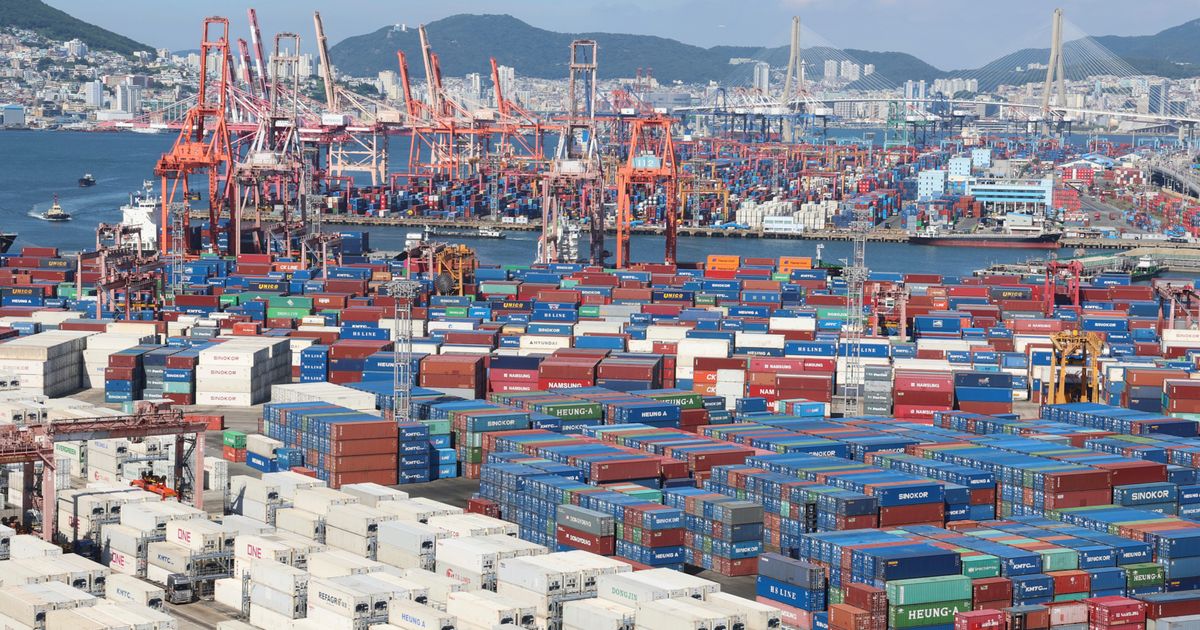
U.S. trade partners around the world are reacting to President Donald Trump’s executive order that would introduce new tariffs on many of them in seven days.
Katelyn Mulcahy/Getty Images
- NBA star Luka Dončić is working out twice daily and practicing intermittent fasting this offseason.
- His nutritionist says he follows a gluten-free diet and eats at least 250 grams of protein daily.
- This plan is adjusted to accommodate Dončić’s schedule during the NBA season.
NBA star Luka Dončić, 26, is doubling down on fitness this offseason.
In an interview with Men’s Health, the team responsible for Dončić’s fitness and nutrition spoke about his strict regimen this summer to stay in peak form.
It all starts with his diet and a strict intermittent fasting schedule, Dončić’s physiotherapist, Javier Barrio, told Men’s Health.
Every day except on Sundays, the Lakers player fasts from 8:30 p.m. to noon the following day. At the end of his fast, Dončić heads straight into the first of his two daily workouts.
“It’s not so easy to learn,” Barrio said, adding that the goal of fasting is to reduce any post-workout inflammation that Dončić experiences.
To ensure his muscles stay in top condition, Dončić fuels up with 250 grams of protein a day.
He sticks to eggs and chicken during meals and supplements with shakes made from no-sugar, low-carb whey protein isolate.
Dončić’s nutritionist, Lucia Almendros, said that 250 grams of protein is “the minimum” amount he needs to eat in a day.
“If he wants more, he can eat more,” Almendros told Men’s Health.
But a balanced diet is key: Dončić keeps nuts on hand whenever he needs a nutritious snack, and he consumes lots of vegetables. He also often has fruit for dessert.
Although Dončić doesn’t eat gluten, he consumes other types of carbs like rice and potatoes sparingly, Almendros said.
“Depending on the game, depending on the moment of the season, depending on his physical condition, we use carbs — but in a specific moment to have energy in the game or in the training,” Almendros said.
This strict diet plan gets adjusted to accommodate Dončić’s schedule during the NBA season, Barrios said.
“You can’t eat nothing after 8 p.m.,” Barrios said. “Because half the days you are traveling in this time. You are not able to do a fasting 16:8 during the season — this is impossible.”
In another Men’s Health article from the same interview series, Dončić said his physical condition hasn’t felt this good in years.
“My sleeping, my body, my everything … I felt more rested,” Dončić told Men’s Health.
He said he’s also satisfied with his leaner, more toned physique: “Just visually, I would say my whole body looks better,” Dončić said.
A representative for Dončić did not immediately respond to a request for comment sent by Business Insider outside regular hours.
Despite being a five-time NBA All-Star, Dončić has been criticized for his weight and conditioning throughout his NBA career. In February, he was traded midseason from the Dallas Mavericks to the Los Angeles Lakers for Anthony Davis in a deal that surprised many NBA fans.
Pro athletes’ diet and training routines vary.
In 2022, NFL quarterback Justin Fields told Business Insider that he eats a vegan diet for better performance.
“I think the biggest change for me is just how much lighter and faster I feel all around. This change was very drastic for me after I did the challenge with my family and was ultimately the reason I chose to continue a plant-based diet,” Fields said.
In 2023, NFL running back Raheem Mostert told BI he takes an “everything in moderation” approach to his diet and makes small changes to his meals to ensure he always feels his best.
“Prime example; if I’m eating a burger, I probably have no cheese on it just because I know that it’s an inflammatory issue for me,” Mostert said. “So I try to cut out those little things.”
Read the original article on Business Insider
Stanford hires former Nike CEO John Donahoe as athletic director, AP source says [deltaMinutes] mins ago Now
Top photos this week from Latin America and the Caribbean [deltaMinutes] mins ago Now