
Categories
Selected Articles

U.S. Cuts Funding for Uzbek Cotton Transparency Project

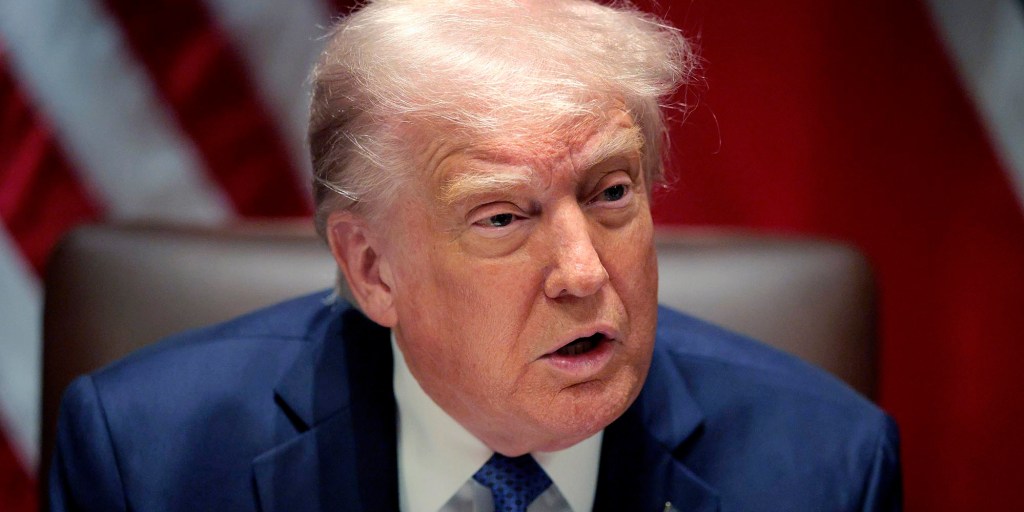
On April 30, during a cabinet meeting at the White House attended by President Donald Trump, U.S. Labor Secretary Lori Chavez-DeRemer announced the cancellation of more than $38 million in foreign aid programs, including funding for a project aimed at improving transparency and labor practices in Uzbekistan’s cotton industry.

“We have saved $250 million by canceling foreign aid programs under ‘America Last,’” said Chavez-DeRemer, referring to initiatives the Trump administration believes do not align with U.S. interests. “It makes no sense for our funds to be spent on such things. Thank you DOGE for the savings. What we found was fraud.”

Chavez-DeRemer’s reference to DOGE, the Department of Government Efficiency, led by Elon Musk, drew laughter in the room. Musk added, “Some of these things are so ridiculous you can’t believe it! Uzbek cotton farmers?! It sounds like a comedy sketch.”

The targeted Uzbek cotton project began in August 2022 and was initially scheduled to run through 2026. It received $2 million in its first year, with a further $1 million planned for 2025. The project aimed to improve labor conditions and prevent forced labor in Uzbekistan’s cotton sector, while helping workers and employers meet international standards.

In a video statement posted on X (formerly Twitter), Chavez-DeRemer reinforced the administration’s shift in aid priorities: “On day one, I promised that putting American workers first will be our top priority. At the direction of President Trump, we have wasted no time. Last week, we terminated several foreign aid grants, saving over $38 million… I bet you didn’t even know your hard-earned tax dollars were being spent on things like enhancing transparency in Uzbekistan’s cotton industry, supporting labor standards in Congo, or climate change programs in Brazil and Colombia.”

Uzbekistan’s cotton industry has long been under international scrutiny for the systemic use of forced labor. In recent years, however, the government has undertaken reforms and introduced strict monitoring systems to address these concerns with support from international partners, leading to organizations such as Cotton Campaign ending its call for a global boycott of Uzbek cotton. Additionally, the industry is being modernized through privatization and investments in technology, aiming to boost efficiency and sustainability.

Categories
Selected Articles

Three siblings rescued from house of horrors after ‘Covid syndrome’ parents kept them locked inside since 2021

Three children were dramatically rescued from a COVID lockdown house of horrors after being forced for years to stay inside and wear face masks long after pandemic restrictions ended. The siblings — 8-year-old twins and a 10-year-old — were finally freed from the home in Oviedo in Spain’s northwest on Monday after being locked inside…
Categories
Selected Articles

Map Shows 23 Million People Facing Severe Thunderstorm Threat

The National Weather Service warns of damaging winds and large hail, with cities like Houston, San Antonio and Nashville in the higher risk zone.
Categories
Selected Articles

Can Knicks-Celtics live up to the drama of Jalen Brunson’s iconic first-round winner?

After winning just one playoff series from 2001 to 2022, the Knicks will play in the Eastern Conference semifinals for the third consecutive season.
Categories
Selected Articles

Putin’s attack dog ‘preparing to flee Russia’ as he puts son, 17, in key role

PUTIN henchman and Chechen leader Ramzan Kadyrov is “preparing to flee Russia” – as he has put his son in charge of the police. The infamous leader of Chechnya has already made se…
Categories
Selected Articles

Putin, Kolokoltsev, UAE official, Kadyrov, his money, and planned escape – Google Search google.com/search?q=Putin… the-sun.com/news/13951492/…

Categories
Selected Articles

Russia, UAE have warm friendly relations — Putin – Russian Politics & Diplomacy – TASS tass.com/politics/19520… The talks were attended by Russian Interior Minister Vladimir Kolokoltsev MOSCOW, April 30. /TASS/. Warm and friendly relations exist between Russia and the United Arab…

Categories
Selected Articles

Trump administration live updates: President seeks to defund NPR and PBS; Ketanji Brown Jackson slams attacks on judges

Live updates and the latest news as Trump seeks to defund NPR and PBS and Supreme Court Justice Ketanji Brown Jackson slams Trump’s and allies’ attacks on judges.
Categories
Selected Articles

Vladimir Putin meets UAE deputy prime minister in Moscow myanmaritv.com/news/vladimir-… Russian President Vladimir Putin hosted UAE Deputy Prime Minister Saif bin Zayed Al Nahyan for a meeting in the Kremlin on 30th April. During the talks, Putin praised warm and friendly relations…

Categories
Selected Articles

Kazakhstan Seeks to Mitigate Impact of U.S. Tariffs

Kazakhstan is working to minimize the economic damage from newly imposed U.S. tariffs, the highest levied on any Central Asian country. The government is assessing the scope of potential losses and pursuing diplomatic efforts to reverse or reduce the trade measures.

A New Front in the Trade War

On April 2, U.S. President Donald Trump announced sweeping new tariffs on imports from over 180 countries. Kazakhstan was subjected to a 27% tariff rate. In contrast, most other post-Soviet countries, including Uzbekistan, Kyrgyzstan, Armenia, and Tajikistan, were assigned a 10% tariff, described by the U.S. administration as the “base rate” for countries that “trade fairly” with the United States. Russia and Belarus, whose trade with the U.S. is effectively suspended due to sanctions, were exempt from the increase. Only Moldova, which reportedly imposes a 61% duty on U.S. goods, received a higher rate than Kazakhstan.

According to Washington, Kazakhstan applies a 54% tariff on U.S. imports, prompting a reciprocal response, though the methodology behind the administration’s calculations has been questioned by many analysts. Moldova’s higher rate of 61% led to a 31% U.S. tariff.

Limited Exposure for Key Exports

U.S. President Trump announced a 90-day reprieve for affected countries on April 9, allowing time for negotiations to take place. While the move signals potential flexibility, the economic impact remains uncertain.

Kazakh Trade Ministry representative Serik Ashitov stated on April 29 that only 4.8% of Kazakhstan’s exports to the U.S. would be affected by the tariffs. Crucially, major exports, such as oil, uranium, silver, and ferroalloys stand to remain untouched. These commodities account for approximately 90% of Kazakh shipments to the U.S.

Despite fears of a broader economic fallout, Kazakhstan’s stock market showed resilience in the first quarter of 2025, according to financial news channels. However, the trade conflict has had a deflationary effect on key exports. Oil prices have dropped below projected baselines amid concerns about declining global demand driven by slowing industrial activity, especially in Asia.

“We’re observing falling oil prices and reduced global trade. The tariffs are cutting into industrial output in China and other key consumers of raw materials, which affects oil demand directly,” noted a representative of the Kazakhstan Stock Exchange. As of late April, Brent crude was trading at approximately $64 per barrel.

Negotiations and Constraints

In response, Kazakhstan has initiated diplomatic talks with the United States and plans to raise the issue at the World Trade Organization (WTO). “At present, there is no reason to believe these measures will significantly affect our exports. Nonetheless, we will continue working with American counterparts to mitigate the consequences of these unilateral measures,” Ashitov said during a press briefing.

However, analysts caution that Kazakhstan may face structural limits in attempting to resolve this dispute. As a member of the Eurasian Economic Union (EAEU), Kazakhstan does not set its tariff policy independently. “Our customs duties are EAEU duties,” economist Almas Chukin explained. “If we wanted to unilaterally lower tariffs for the U.S., as Israel did, it would require the approval of Minsk, Yerevan, Bishkek, and Moscow”.

Chukin also noted that trade volumes between Kazakhstan and the U.S. are relatively modest. Neighboring Uzbekistan, for instance, has double the trade volume with Washington.

While Kazakhstan may not feel immediate direct consequences, the country remains vulnerable to broader instability in global trade and falling export revenues.